
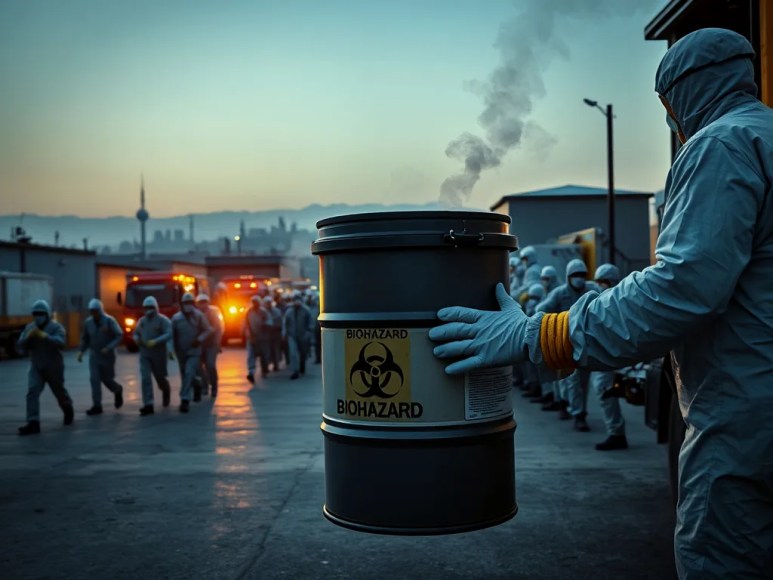
925 pharmacies and multiple collection centers make disposal convenient
Since 2021, a coordinated program run by Ankara Metropolitan Municipality, Ankara University Faculty of Pharmacy and the Ankara Chamber of Pharmacists has collected unused and expired household medicines across the city. Collection points sit inside 925 pharmacies distributed through the metropolitan area, with additional drop-off centers in the districts of Çankaya, Akyurt, Kahramankazan, Keçiören, Kızılcahamam and Pursaklar. Residents locate their nearest drop-off via the “İklim Ankara” mobile app’s Waste Points section.
What items to bring and what to leave at home
Bring: unused prescription and over-the-counter tablets, capsules, liquid medicines in sealed bottles, ointments and topical creams in their original containers, and inhalers with protective caps. Leave at home: household chemical wastes (cleaning products, solvents), sharps (needles/syringes) and radioactive or controlled substances that require special handling. When in doubt, call the participating pharmacy — they can accept, advise or redirect items that need different disposal.
How the collection workflow protects people and the environment
Pharmacies provide clearly labeled collection boxes; staff segregate liquids, solids and topical preparations to avoid dangerous reactions. Collected materials are transferred under chain-of-custody procedures to licensed hazardous-waste carriers. This minimizes spill, diversion and accidental exposure during transport.
Where the medicines go: thermal destruction at 1,100°C
All aggregated pharmaceutical waste from the program is incinerated at a licensed hazardous-waste combustion facility at 1,100 degrees Celsius. At that temperature most active pharmaceutical ingredients decompose into simpler, non-pharmacologically active compounds and are captured by the facility’s air pollution control systems (filters, scrubbers and catalytic units). Incineration at regulated facilities prevents pharmaceutical residues from leaching into soil or contaminating water courses, a primary objective of the project.
Quantified impact: 127 tons and measurable reductions in environmental risk
From 2021 to today the program has safely disposed of approximately 127 metric tons of unused and expired medicines. To give context: a single ton of assorted pharmaceuticals can contain grams-to-kilograms of potent active molecules (eg, hormones, antibiotics, analgesics) that, if improperly discarded, can disrupt wastewater treatment processes and harm aquatic organisms. Removing 127 tons from potential waste streams reduces chemical loadings in municipal waste and wastewater, lowers the risk of accidental pediatric or veterinary poisonings from found medications, and cuts the volume needing hazardous-waste management elsewhere in the system.
How residents use the Climate Ankara app to find a drop-off
Open the Climate Ankara mobile app, tap Atık Noktalar, and either allow location access or enter a postal code. The app lists nearby participating pharmacies and municipal centers with hours and accepted item types. Use the app to confirm whether a chosen pharmacy currently accepts liquids or only solids; some locations temporarily restrict liquids due to storage limits.
Step-by-step: preparing medicines for drop-off
1. Gather all expired or unused medicines in one place.
2. Keep medicines in their original packaging if available; otherwise label containers with medication name and expiration date.
3. Secure caps and tape small caps to prevent leaks. Place liquids in sealed plastic bags to contain spills.
4. Remove personal data from prescription labels (black marker or peel off) if you prefer privacy.
5. Transport medicines in a closed box or bag to the pharmacy or collection center and hand them to staff for placement in the designated container.
Examples and practical benefits for households and communities
Example 1: A family clears a home medicine cabinet after a child recovers from a long illness. By using a pharmacy drop-off they prevent accidental ingestion and remove antibiotics that could otherwise select for resistant bacteria in the environment.
Example 2: A municipality household waste stream study showed lowered concentrations of analgesics and hormone metabolites in wastewater effluent after a comparable take-back campaign — illustrating how centralized collection reduces diffuse environmental inputs.
Program partners and roles
Ankara Metropolitan Municipality: program coordination, public outreach and app integration. Ankara University Faculty of Pharmacy: technical guidance on segregation and safe handling. Ankara Chamber of Pharmacists: enrolling pharmacies, training staff, and operating collection points. Licensed hazardous-waste carriers and the incineration facility: secure transport and final destruction under regulatory control.
How to verify and follow up
Citizens can confirm participation and ask questions at enrolled pharmacies or via the municipality’s information lines. Project reports and periodic tonnage updates are published by the municipality and professional partners; monitoring data for incineration emissions and chain-of-custody is maintained by the licensed facility and available to regulators on request.
Be the first to comment