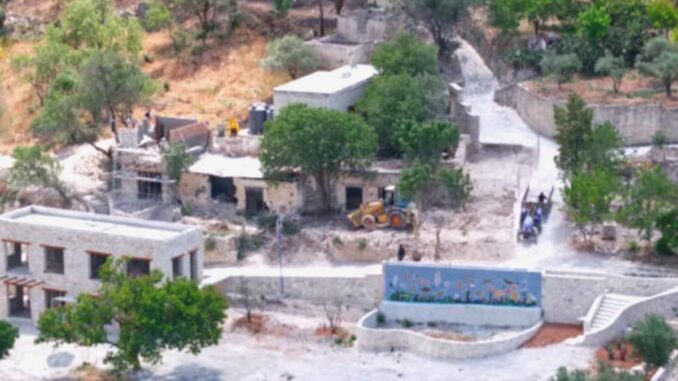
Unveiling the Tensions in Trozena: Israeli Investors and Cypriot Heritage
The quiet streets of Trozena, a traditional village in the Limassol district of South Cyprus, have become the epicenter of a fierce debate that threatens to reshape the local demographic and cultural landscape. At the core stands a controversial real estate venture led by an Israeli-backed company, which has acquired significant land parcels and properties, prompting residents and environmentalists to voice deep concerns.
The Expansion of Israeli Investment and Its Impacts
This company’s aggressive expansion strategy has resulted in the purchase of extensive residential and Agricultural land within the village, essentially creating a private enclave. Such acquisitions raise critical questions about foreign ownership, land rights, and the long-term stability of local communities. Notably, the new owners have declared large segments of these lands as private property, positioning themselves as de facto owners of what once was a community cherished for its heritage and history.
Restrictions on Religious Access and Cultural Heritage
One of the most alarming developments has been the barrier to entry at the St. George’s Church. Local villagers claim that new owners have blocked access to this historic religious site, which has served as a spiritual and cultural symbol for generations. Such actions, if confirmed, could violate Cypriot laws that protect religious sites, especially when they serve the community.
Authorities have acknowledged the situation, noting that property boundaries and ownership rights are critical. Yet, they emphasize that public access to religious and historical sites should prevail unless officially privatized. This balance between private property rights and public interest is at the heart of mounting legal battles and community protests.
Official Response and Legal Challenges
Local law enforcement has confirmed that the owners have not officially obtained the legal rights to restrict access to the church and other communal spaces. Nevertheless, the situation remains tense, with residents demanding authorities intervene to preserve their rights and cultural heritage.
Legal experts suggest that if the owners have encroached upon land designated as public or archaeological sites, they could face criminal charges or forced removal. Meanwhile, the villagers are rallying to gather evidence, organize protests, and request urgent court intervention.
Environmental Concerns and Heritage Preservation
Environmental groups and cultural preservationists warn that these land sales and developments could irreparably damage the natural landscape and historic architecture. They highlight that the village’s unique ecological and cultural integrity is at risk of being overshadowed by private interests.
Furthermore, the destruction of ancient structures or the construction of new developments could violate Cyprus’s heritage protection laws, prompting calls for increased oversight and stricter enforcement of regulations that safeguard the country’s cultural patrimony.
The Broader Implications for Cyprus and International Investors
This controversy extends beyond Trozena, emblematic of a larger trend where foreign real estate investments pose challenges to local sovereignty, social cohesion, and cultural identity across Cyprus. The public outcry underscores concerns regarding the unchecked sale of land to foreign nationals, especially in areas rich in history and ecological value.
While some argue that foreign investment can boost local economies, critics fear that mismanaged or unregulated transactions threaten long-term stability, demographic diversity, and the preservation of national heritage.
How Communities Can Protect Their Heritage Amidst Growing Foreign Investment
- Strengthen legal frameworks: Push for laws that restrict foreign ownership of sensitive lands, especially historical or religious sites.
- Community mobilization: Organized protests, awareness campaigns, and legal actions to oppose unauthorized land deals.
- Enhanced oversight: Improve monitoring and enforcement of existing heritage protection laws with the assistance of international bodies.
- Foster transparency: Ensure all land transactions are publicly scrutinized, with clear documentation and accountability.
- International cooperation: Engage European and United Nations agencies to support preservation efforts and mediate disputes.
Only through a coordinated effort can Cyprus safeguard its rich cultural fabric against the encroachment of foreign land acquisitions that threaten to erode traditional identities and ecological sanctuaries.