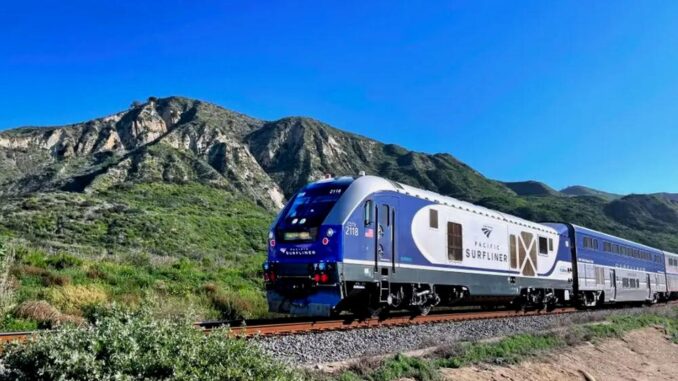
The United States’ freight and passenger rail systems are experiencing unprecedented disruptions as ongoing infrastructure projects reach critical stages. This surge in maintenance and modernization efforts is causing widespread service suspensions, affecting thousands of travelers and freight carriers alike. With investments pouring into upgrading aging tracks, bridges, and signaling systems, the ripple effects are felt across major corridors—from California to the Northeast corridor—highlighting both the necessity and the challenge of modernizing a vast rail network.
In California, the Pacific Surfliner, one of the busiest passenger rail services along the West Coast, has announced full cancellations for an entire weekend. This process is part of a larger initiative to improve rail durability and safety, involving significant upgrades to tracks, crossings, and signaling infrastructure. Organized in coordination between regional transit authorities and Union Pacific, this effort targets key areas such as Santa Barbara, Ventura, and San Diego, where track beds are being reinforced and signal systems modernized to handle increased traffic and speed demands.
Disruptions in California’s Pacific Surfliner and What They Mean
The Pacific Surfliner connects major cities such as Los Angeles, San Diego, and Santa Barbara, serving over 2 million passengers annually. During this weekend’s shutdown, all train services will halt, forcing travelers to seek alternative transportation methods. The reason behind these disruptions is multifaceted: improving track resilience, upgrading electrical systems, and enhancing safety measures in busy corridors. Such large-scale work often involves lengthy closures to allow contractors to safely complete complex tasks, which could include:
- Replacing worn-out ties and ballast to ensure stability
- Upgrading crossing signals and interlocking systems for better safety
- Installing new, more reliable electrical infrastructure for trains and signaling
- Enhancing capacity through track extensions or additional switches
These upgrades are essential for increasing speed limits, reducing delays, and ensuring compliance with safety standards, but at the cost of short-term inconvenience. The weekend closure is a strategic decision aimed at completing critical work efficiently without disrupting daily commuters and freight shipments on weekdays.
Scope of Infrastructure Projects and Long-term Impact
The ongoing infrastructure projects extend beyond California, affecting multiple regions simultaneously. California’s modifications form part of a broader national push to modernize the rail network, including major efforts in the Northeast corridor, the busiest passenger rail route in the US. Significant projects include the replacement of aging bridges, crucial signaling upgrades, and track expansions—all essential to accommodate rising demand and improve reliability.
Across the country, these enhancements aim to achieve measurable benefits such as:
- Higher train speeds: Faster, more efficient journeys across major corridors
- Increased capacity: Reduced congestion, more frequent services
- Enhanced safety: Reduced accident risk from outdated signaling and deteriorated infrastructure
- Economic growth: Improved logistics for freight and increased tourism through reliable passenger services
This seismic shift in infrastructure development reflects an understanding that modern rail systems are crucial for sustainable transportation and economic resilience.
California’s Critical Role and Rising Passenger Numbers
The Pacific Surfliner isn’t just a commuter line; it’s a vital link for regional economies—from tourism to daily business. With over 2 million passengers annually, the route experiences consistent demand, especially in densely populated areas like Los Angeles and San Diego. In 2023, ridership statistics showed a 3% increase over the previous year, driven by increased urbanization and efforts to promote eco-friendly transportation alternatives.
However, this heavily trafficked route is extremely vulnerable to disruptions. When services are interrupted, thousands of commuters face derailment, forcing a shift to slower, less reliable options such as buses or personal vehicles. That’s why these scheduled closures, while inconvenient in the short term, are critical for long-term reliability and safety.
Broader Impact on Northeast and Coastal Corridors
The challenges aren’t isolated to California. In the Northeast, the historic Portal North Bridge project has reached a significant milestone, with the transition to a new, fixed span underway. This change aims to eliminate bottlenecks caused by the aging drawbridge, which previously caused frequent delays for the Northeast Corridor’s flagship trains such as Amtrak’s Acela and Northeast Regional.
During this transition, the old bridge’s continuous service is temporarily replaced by a phased approach that involves redirecting traffic and scheduling partial closures. The move allows for more reliable and faster trains once fully operational, but for now, it causes temporary service reductions, including canceled or rerouted trains—upending schedules for thousands of daily commuters and freight operators.
Implications for Travelers and Freight Industries
Travelers relying on affected routes face multiple challenges:
- Service cancellations: Entire trains may be canceled, leading to long delays or forced reroutes.
- Alternative arrangements: Shuttle buses or regional transit services are often used as temporary solutions, but they cannot match train speed or comfort.
- Elevated costs: Last-minute travel adjustments often come with higher prices, especially during peak periods.
For freight industries, disruptions can mean delays in delivering perishable goods or critical supplies. Many companies have begun planning around these scheduled outages by rerouting shipments or adjusting schedules weeks in advance, but the cumulative economic impact remains significant. Infrastructure upgrades, while costly and disruptive temporarily, promise increased efficiency and reliability in the long run, thus supporting economic competitiveness.
The Future of US Rail Infrastructure
Looking ahead, the US government and private sector are investing heavily in modernizing the rail network to address long-standing deficiencies. The integrated approach involves:
- Accelerated track and bridge repairs
- State-of-the-art signaling and safety systems
- Electrification efforts to reduce carbon emissions
- Construction of new high-speed corridors to compete with air travel
This comprehensive upgrade aims not only to enhance safety but also to elevate the US to a global leader in rail technology and sustainability. Yet, these ambitious projects require significant planning, funding, and, inevitably, periodical disruptions—like the scheduled weekend closures in California and the Northeast—regarded as necessary sacrifices for a more reliable, faster, and cleaner transportation future.