400 Thousand Years of Evidence of Fire Use in England

400 Thousand Years of Evidence of Fire Use in England - RaillyNews

Introduction: Was the Control of Fire a Pill for Humanity?

Controlled fire is not just a tool for heating or cooking; It is also an evolutionary turning point that triggers the basic dynamics of social organization, brain development and cultural transformation. Recent archaeological findings indicate that this skill is much older than today, providing traces in southeastern Türkiye and surrounding regions potentially dating back 400 thousand years. This article takes an interdisciplinary look at the evidence supported by real-world data and shows step by step how keeping fire under control translates into social order.

400 Thousand Years of Evidence of Fire Use in England - RaillyNews

Evidence Dating Back 400 Thousand Years: The First Form of Controlled Fire

In current excavations, sites located around southeastern Türkiye provide the most reliable evidence of the controlled and conscious use of fire. Analyzes carried out with the support of the British Museum and international archaeological networks reveal traces dating back approximately 400 thousand years. These findings suggest that fire was managed in a planned manner rather than burning randomly, and that humans developed the ability to control heat.

Researchers state that fire began to be used consciously in this period, thanks to high-heat-resistant baked clay pieces, cracked stone tools and spark traces obtained from the iron pyrite mineral. Additionally, when we look at the furnace traces, there are findings showing that the fire could reach up to 700 degrees. These figures provide strong evidence that communities at the time had the capacity to contain fire.

Evolutionary Role and Impact on the Human Environment

Beyond simply meeting heat-based needs, the evolution of controlled fire accelerated the transformation of cultural structures and social organization. Fire allowed people to stay safe at night, improve their hunting strategies, and protect themselves against predators. It also changed eating habits through interactive cooking processes and contributed to the evolution of the digestive system. This transformation triggered a radical change in the thought system and supported the development of intellectual capacity. Controlling fire increased social coordination and made group dynamics more complex. New ways of life provided by light and heat also contributed to the preservation of archaeological remains.

Türkiye’s Archaeological Riches and Traces of Ancient Communities

Türkiye is one of the regions that sheds light on the oldest periods of human history with its geological diversity and early archaeological remains. Excavations, especially in the Southeastern Anatolia and Northeastern Anatolia regions, provide a rich record full of stone tools, shelter remains and traces of burnt soil. These findings, together with traces of controlled fire, allow us to understand how humans evolved their lifestyles and how their socio-cultural structures transformed. Experts emphasize that this evidence illuminates the transition process from primitive stone tool production techniques to the conscious use of fire. There are also strong indications that early societies developed innovative survival strategies. These clues help us understand the transitions from rural and cave life to more organized settlements.

Archaeological and Anthropological Horizons of the Future

These discoveries not only strengthen existing knowledge structures but also raise new research questions. In particular, issues such as the spread of fever over time, variations in different regions, and sharing among the young population will be focal points in future studies. Advanced technologies and analytical methods aim to reveal more deeply the lifestyles and cultural structures of ancient communities in these regions. In this process, the processes by which people learn the skill of controlled fire in childhood, the mechanisms of transferring knowledge between generations, and their effects on quality of life will become more clearly visible. Thus, revolutionary advances will be made in the fields of archeology and anthropology and unknown pages of human history will come to light.

Greece Takes Delivery of Second FDI HN-Class Frigate Nearchos - RaillyNews
EUROPE

Greece Takes Delivery of Second FDI HN-Class Frigate Nearchos

Greece commissions second FDI HN frigate Nearchos in Lorient ceremony Greece received the second FDI HN (Belharra) class frigate, Nearchos, after a formal naming and flag-raising ceremony held on 30 October 2026 in Lorient, France. Greek Defense Minister Nikos Dendias attended the ceremony and signed the formal decision to add 🚄
Germany Unveils AI-Controlled Counter-Air Defense System - RaillyNews
EUROPE

Germany Unveils AI-Controlled Counter-Air Defense System

Helsing unveils Contra — an AI-driven layered air defense designed for mass raids Helsing developed Contra to detect, prioritize and defeat large concentrations of fast air threats such as jet-powered UAS and cruise missiles. The system combines distributed sensors, an AI decision-support layer and multiple interceptor types so operators can 🚄
Isle of Wight Island Line Closed Until November 15 - RaillyNews
EUROPE

Isle of Wight Island Line Closed Until November 15

Island Line closure, scope and schedule The Island Line on the Isle of Wight closed on 31 October for a concentrated period of track renewal and infrastructure upgrades. Network Rail Wessex and South Western Railway (SWR) carry out the works in two phases: the first phase runs until 15 November 🚄
CPKC Objects to Union Pacific–Norfolk Southern Merger - RaillyNews
AMERICA

CPKC Objects to Union Pacific–Norfolk Southern Merger

CPKC asks STB to end Union Pacific–Norfolk Southern merger review, citing misconduct Canadian Pacific Kansas City (CPKC) has asked the US Surface Transportation Board (STB) to terminate the review of the Union Pacific–Norfolk Southern merger, arguing that Union Pacific’s conduct—particularly comments by CEO Jim Vena at the March 2026 SWARS 🚄
Amtrak Cascades Schedule Change - RaillyNews
AMERICA

Amtrak Cascades Schedule Change

Vancouver station clocks will show a one-hour advance on Nov 1 Amtrak updated Cascades schedules to reflect local clock differences, not train speed or routing changes. Starting Nov 1, Amtrak’s published timetable lists Pacific Central Station in Vancouver one hour ahead of Seattle local times because British Columbia will remain 🚄
158-Year-Old Vught Station Building in the Netherlands Moved 13.6 Meters - RaillyNews
EUROPE

158-Year-Old Vught Station Building in the Netherlands Moved 13.6 Meters

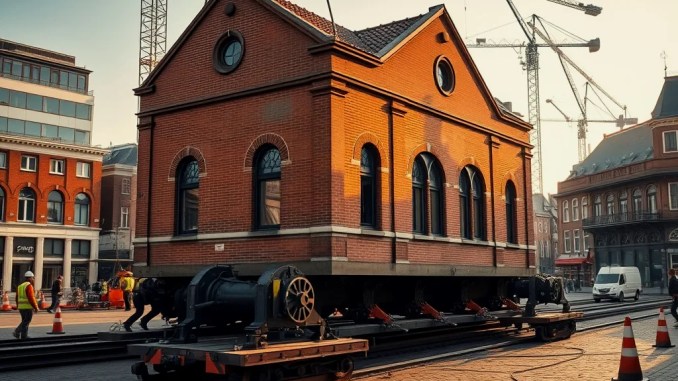
Historic Vught station moved intact to enable sunken railway — what happened ProRail relocated the 1868 Vught station building, including its basement, 13.6 metres east on 30 October using a controlled sliding operation so the structure could remain as a national monument while the railway line is put below the 🚄
EU Rail Passenger Transport Breaks Record - RaillyNews
EUROPE

EU Rail Passenger Transport Breaks Record

EU rail passenger traffic reached an all-time high in 2025 Railway operators across the European Union reported 457 billion passenger‑kilometers in 2025, the most since Eurostat began collecting comparable data in 2004. That volume represents a 2.6% increase on 2024 and stands 14.2% above the 2019 pre-pandemic level. Operators in 🚄
Finland Orders €240M for 21 New Stadler Sm7 Trains - RaillyNews
EUROPE

Finland Orders €240M for 21 New Stadler Sm7 Trains

Sm7 Fleet Expands to 41 Units After New 21-Train Order RailStock Finland, the state-owned rolling stock company, signed a contract in late October 2026 to exercise options within its 2022 supply agreement with Stadler and purchase 21 additional Sm7 electric multiple units (EMUS). That addition brings the total Sm7 order 🚄
Vande Bharat Sleeper Express Launches Varanasi–New Delhi Service - RaillyNews
ASIA

Vande Bharat Sleeper Express Launches Varanasi–New Delhi Service

Vande Bharat Sleeper launches overnight Varanasi–New Delhi service Indian Railways will start the new Vande Bharat Sleeper overnight service between Varanasi and New Delhi on 31 October 2026. The train departs Varanasi at 20:50 and arrives New Delhi at 06:10 the next morning; the return departs New Delhi at 21:40 🚄