
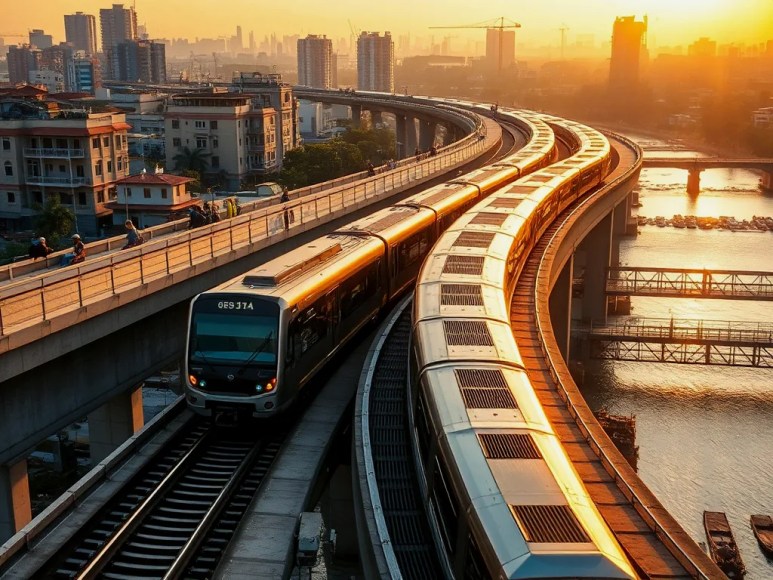
Overview of the three metro extension projects and procurement timeline
Ho Chi Minh City is preparing procurement and contractor selection for three metro extensions that together reach about 89.57 km and 60 stations. The Urban Railway Management Authority (MAUR) has completed an international market review and aims to start construction by the end of 2026, subject to final approvals, package definitions and contractor awards. The market review convened local authorities, Vietnamese contractors, international engineering firms and rail-system suppliers to align on delivery methods, technical standards and bid packaging.
What each extension will deliver: lengths, stations, depots and construction periods
Metro Line 1 (Binh Duong New City–Suoi Tien) — ~30.70 km and 19 stations, with a depot planned at Phu Chanh and an estimated construction duration of 48 months.
Metro Line 2 (Thu Dau Mot–Ho Chi Minh) — ~33.20 km and 24 stations, with roughly 17.7 km elevated and the remainder underground, a depot at Hiep Binh Phuoc, and an estimated construction duration of 68 months.
Metro Line 6 (Ba Queo–Phu Huu first phase) — ~25.67 km and 17 stations, 13 underground and 4 elevated, and an estimated construction duration of 60 months.
Combined scope: ~89.57 km and ~60 stations. Design and alignment details may be refined during final design and approvals.
How MAUR plans to package tenders and which contract types are being considered
MAUR is structuring tenders into two main package groups: (1) civil works and infrastructure (tunnels, cut-and-cover, elevated structures, depots, stations, roadway relocations), and (2) systems and rolling stock (signaling, electrification, telecommunications, control systems, vehicles, and operations). systems). The authority actively evaluated the following delivery approaches during the market review:
EPC (Engineering, Procurement, Construction) — single-contractor responsibility that can accelerate integration and provide clear responsibility lines for schedule and quality.
Joint ventures and consortia — combinations of international technology providers and Vietnamese contractors to meet localization targets while ensuring technical capacity.
Centralized systems procurement — a single systems supplier or coordinated systems package across multiple lines to standardize spares, simplify maintenance and reduce lifecycle costs.
Localisation, technology transfer and supplier strategies
MAUR prioritises a staged localization approach: use international engineering and system expertise in early phases while transferring skills, manufacturing and systems-integration roles to Vietnamese companies over time. Contract evaluation will weigh technical capacity, financial capability, relevant project experience and proposed schedules.
Practical mechanisms under consideration include minimum local content thresholds in equipment supply contracts, phased technology-transfer milestones, on‑the‑job training embedded in supplier contracts, and SME participation via subcontracting or participation in consortia to widen the domestic supply chain.
Key commercial and technical issues bidders raised and how they affect tendering
Bidders emphasized clear and harmonised technical specifications for tunnel boring and cut-and-cover works, firm definitions of payment milestones and risk allocation for utility relocations and land acquisition. To address these concerns, MAUR plans to:
1) define technical standards and interface requirements before issuing major systems tenders;
2) split early enabling works (utilities, access roads, land remediation) into discrete packages to reduce contractor cash-flow risk; and
3) include pre‑bid information sessions and clarifications to minimize ambiguities that inflate risk premiums.
How alignments support airports, new cities and ridership integration
Line 6 first phase strengthens the corridor from Tan Son Nhat towards Airport the city’s east and increases options for future linkage to Long Thanh Airport via the broader network. Line 1 and Line 2 extensions will connect Binh Duong and Thu Dau Mot growth centers to Ho Chi Minh City’s existing network, improving commuter access to employment hubs and facilitating transit-oriented development around new stations.
Milestones to watch and risks that could delay the planned end‑2026 start
Milestones to monitor include finalization of tender documents, land handovers, utility relocation clearances, and lender/donor approvals for financing packages. Principal risks that can adjust the schedule are protracted land acquisition, unresolved design interface issues between civil and systems packages, and changes to funding terms. Contractors have also asked for earlier clarity on Tunnel Boring Machine (TBM) specifications and acceptance criteria to finalize price offers.
How this fits into Ho Chi Minh City’s long‑term metro network plan
Ho Chi Minh City targets ~255 km covering eight priority urban rail lines by 2030 and ~532 km by 2035. These three extensions, representing nearly 90 km, constitute a material step towards that network and aim to increase public-transport capacity and reduce road traffic pressure as the city scales its rail footprint.
Practical next steps for stakeholders: step‑by‑step view
For decision-makers and bidders, the near-term sequence is:
Step 1: MAUR issues detailed bid packages and technical specifications including local content clauses and interface drawings.
Step 2: Prequalification of contractors and consortia, with emphasis on demonstrable TBM and underground delivery experience for tunnel packages.
Step 3: Tender submission and clarifications, followed by technical and financial evaluation against scorecards weighted for technical capacity, schedule realism and local empowerment.
Step 4: Contract award, mobilization of enabling works and phased delivery of civil and system works with coordinated integration milestones.
Step 5: Commissioning, testing and staged service commencement linked to operational readiness and spare‑parts provisioning.
Data points, examples and precedent models that inform procurement choices
Examples from other Southeast Asian metro projects that MAUR can emulate include centralized signalling procurement to standardise maintenance (used in Bangkok’s mass transit expansions) and staged localization programs that pair international system suppliers with local rolling‑stock manufacturers (seen in Indonesia’s recent rail procurements). Contract packaging that separates enabling works from mainline construction has proven to reduce bidder risk premiums and accelerate mobilization in multiple Asian metro projects.
What successful bidders should prepare now
Prospective bidders should assemble multidisciplinary teams combining TBM/tunnelling experience, systems integration capability, and local partner relationships. Prepare clear, bankable program schedules, comprehensive risk allocation proposals for utility and land risks, and concrete plans for local workforce development and supply‑chain localization to meet MAUR’s priorities.