
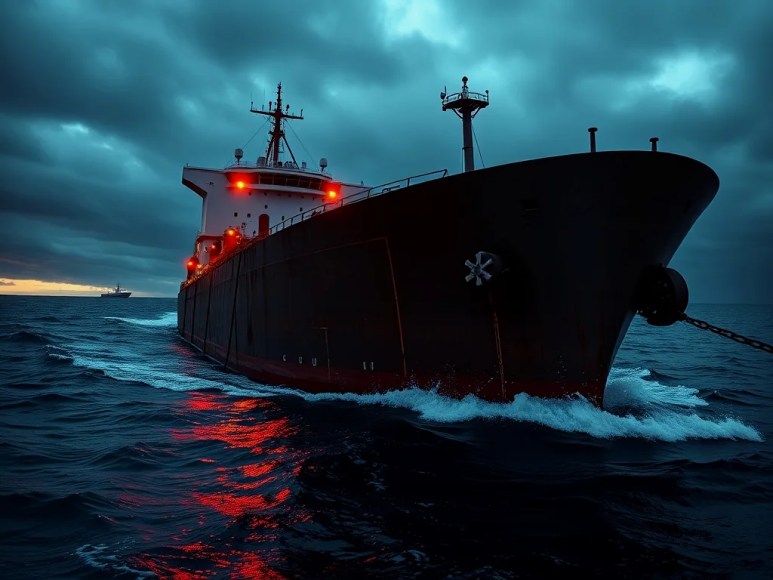
One day after the BETUL 8 bulk carrier sank off Bulgaria, the EPIRB on the Liberia‑flagged LPG tanker Gas Husky activated while the vessel was operating in Bulgaria’s exclusive economic zone near Cape Kaliakra. Bulgarian maritime authorities immediately opened an inquiry to determine cause and crew safety.
Gas Husky’s emergency locator beacon activated: what that means and what to check first
An Emergency Position Indicating Radio Beacon (EPIRB) transmits a distress signal that enables search and rescue (SAR) coordination centers to pinpoint a vessel’s location within minutes. When Gas Husky’s EPIRB is powered on, authorities received a locator transmission but not necessarily corroborating voice mayday traffic. Investigators follow a fixed checklist: verify the EPIRB identification against the ship’s MMSI/serial, cross‑check last known AIS and radar tracks, contact the ship’s management and flag state, and task SAR assets if there is supporting evidence of danger.
Practical signs investigators use to escalate response:
1. Corroborating AIS/radar loss: sudden AIS silence or rapid loss of radar contact increases urgency.
2. Crew communications: absence of VHF/SSB distress calls complicates rescue prioritization but does not rule out an incident.
3. Environmental conditions: wind, sea state and visibility at the GHQ time frame affect survivability and search planning.
4. Cargo and vessel type: LPG tankers pose fire and explosion risks; even buoyant stability changes can trigger automatic EPIRB activation if the unit is knocked free.
Timeline and position data tying Gas Husky to the BETUL 8 area
Maritime.bg reported Gas Husky’s last known position roughly 60 nautical miles from Cape Kaliakra and about 14.5 nautical miles from where BETUL 8 sank. Timeline reconstruction is central: BER (beacon event record) timestamps, last AIS ping, and the BETUL 8 distress timeline on 16–17 November create a narrow window investigators will examine for overlap and causal links.
Example sequence investigators reconstruct:
1) 16 Nov – BETUL 8 transmits distress, lists and sinks near 40 nm SE of Kaliakra.
2) Same day to next – regional SAR assets respond; survivors report alleged drone attack (unconfirmed).
3) 17 Nov – Gas Husky EPIRB activates ~60 nm from Kaliakra; AIS shows last ping ~14.5 nm from BETUL 8 site.
Could the EPIRB activation indicate a related attack, mechanical failure, or accidental trigger?
Assessing causation requires eliminating alternatives. Possible explanations ranked by investigators:
1. False or accidental activation: EPIRBs can activate if improperly stowed, struck by debris, or exposed to water ingress. Modern float‑free units separate and activate automatically when a ship sinks, but manual models can be triggered mistakenly during maintenance.
2. Mechanical or cargo incident: LPG tankers face pressurization, leak or stability events. A gas release or fire could lead crew to trigger the beacon while abandoning ship or preparing abandon‑ship procedures.
3. Hostile action: Given the BETUL 8 crew’s claim of drone attack and the proximity in time and space, authorities will examine for common indicators of hostile activity: blast signatures on wreckage, SAR imagery showing projectile impacts, radio intercepts, and patterns across multiple vessels.
How authorities and operators prioritize their investigation
Investigative steps—researched from standard maritime protocols and SAR best practice—include:
Step 1: Immediate validation. Confirm EPIRB identity and last transmission coordinates with COSPAS‑SARSAT and national MRCC logs.
Step 2: Contact ship management and flag state. Seek direct status from the Gas Husky master and operator; request crew manifests and voyage plan.
Step 3: Cross-source sensor fusion. Aggregate AIS, LRIT, radar, satellite imagery, and nearby vessel reports to reconstruct motions and any hostile tracks such as drone flight paths.
Step 4: On-scene assessment. Dispatch coast guard or naval units to visually inspect the tanker, conduct helicopter overflights, and deploy SAR boats to confirm crew welfare.
Step 5: Forensics and for‑cause evidence collection. If damage is found, collect photographic, metallurgical and electronic evidence (voyage data recorder, VDR, and EPIRB logs) for forensic analysis.
Operational risks for LPG tankers in the Black Sea and immediate mitigation steps
LPG tankers like Gas Husky carry flammable cargo under pressure. In the present security environment, operators mitigate risk through layered measures:
Pre-voyage: vet routes, update contingency plans, brief crew on emergency procedures, and ensure EPIRB and VDR functionality.
At sea: maintain heightened lookouts, restrict non-essential deck activity, and monitor AIS and communications for anomalous tracks.
If threatened: adopt evasive routing to sheltered waters, request naval escort if available, and enact abandon‑ship drills tailored to flammable cargo (use of gas‑tight muster procedures where needed).
What credible evidence would link the two incidents?
Concrete linkage requires time‑stamped, geolocated evidence that ties an external agent or event to both vessels. Investigators will look for:
– Matching strike patterns or explosive residues across wreckage and tanker hull patches.
– Electronic signatures (radar, RF intercepts) of UAVs or weapons launched in the timeframe.
– Witness corroboration from nearby merchant or naval vessels.
– Satellite imagery showing trajectories and impact moments.
Likely short‑term outcomes and what to watch for next
Short term, expect a layered public response: maritime authority situation updates, statements from Gas Husky’s manager in Greece, and regional navies sharing reconnaissance if hostile action is suspected. Operationally, insurers and charterers may re‑route traffic, and port states could issue temporary advisories for the area around Kaliakra.
Key items to monitor in official updates:
– MRCC and flag‑state confirmation of crew safety on Gas Husky.
– Technical analysis of EPIRB and VDR downloads.
– SAR imagery releases showing damage patterns.
– Cross‑border coordination between Bulgaria, Romania and Turkey for any multi-vessel threat pattern.
What shipping companies and mariners should do now
Practical immediate actions for operators and masters navigating the Black Sea:
– Verify all emergency beacons and lift‑free EPIRB housings; test electronics where safe.
– Issue route warnings and brief crews on the nearest safe havens and contingency fuel/ballast plans.
– Keep nonessential personnel off deck during transits through identified risk corridors and maintain continuous bridge watch.
– Share real‑time sensor data with flag state and vet vessels in convoys for mutual situational awareness.
Bottom line: Gas Husky’s EPIRB activation triggered a warranted maritime inquiry but does not on its own prove a hostile strike. A thorough technical and evidentiary sequence—AIS/VDR analysis, on-scene inspection, forensic sampling, and cross-source intelligence—will determine whether the tanker’s distress ties to the BETUL 8 sinking or to an unrelated mechanical or accidental event.