
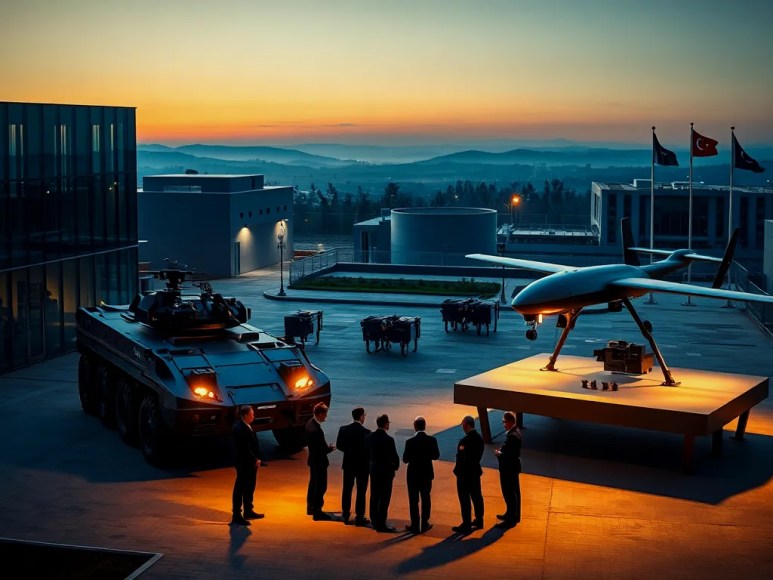
Overview of the 2027 defense budget proposal
The Ministry of National Defense proposed a 2027 budget of 1,532,647,499,000 TL, representing a nominal increase of roughly 86.2% over the 2026 allocation of 822,930,177,000 TL. That nominal rise equals about a 709.7 billion TL expansion in planned resources. The proposal allocates funds across personnel, equipment modernization, logistics infrastructure and international deployments while asserting efficiency and targeted savings to offset cost pressures.
How the increase breaks down and what it will fund
About half of the increase targets capital procurement and modernization: fighter aircraft programs, armored and naval platforms, and integrated air defense. Significant portions also cover personnel (salaries, benefits, training), sustainment (maintenance, spare parts), and upgrades to logistics hubs and bases. The ministry states procurement priorities include Eurofighter-related infrastructure, F-16 modernization packages, renewals tied to F-35 processes, C-130J transport acquisitions, and scaling production lines for KAAN, HÜRJET, KIZILELMA and ALTAY platforms.
Savings and efficiency measures already achieved
The ministry reports approximately 15 billion TL of savings since 2024 through concrete measures: roughly 40% from ammunition recycling programs and 39% from increasing domestic production and reducing reliance on imports. These steps include extending service life for select components, consolidated contracts to obtain volume discounts, and centralized maintenance scheduling to reduce idle time for platforms.
Why nominal increases may not equal real purchasing power
Nominal budget growth does not directly translate to equal growth in operational capacity because and exchange rate volatility affects procurement costs—especially for imported subsystems. The ministry highlights efforts to mitigate exposure by shifting to local suppliers where feasible, negotiating long-term foreign-currency contracts for critical items, and staging multi-year purchases to smooth price impacts.
Aircraft programs: Eurofighter, F-16, F-35 and transport fleets
Eurofighter: the ministry continues coordinated work with the United Kingdom on production and sustainment infrastructure. Plans include establishing local maintenance capability and phased deliveries tied to training and logistics readiness.
F-16: modernization and follow-on acquisitions remain active. Packages emphasize avionics, mission computers, and weapons integration to preserve interoperability with NATO standards.
F-35: engagement persists within international and national-security constraints; activities focus on aligning strategic requirements with diplomatic processes and industrial participation where possible.
C-130J: transport fleet expansion aims to increase reach for expeditionary logistics and humanitarian missions. Procurement includes avionics upgrades and modular cargo handling to support rapid role changes.
Domestic platforms prioritized and their strategic roles
KAAN (national fighter): prioritized to reduce long-term dependency on foreign combat aircraft and to anchor a domestic aerospace ecosystem capable of advanced airframe, engine and avionics workstreams.
HÜRJET (lead-in fighter trainer/light attack): aimed at substituting older trainer fleets and providing a cost-effective combat-capable trainer to bridge pilot conversion to high-end fighters.
KIZILELMA (unmanned combat aerial system): designed for suppressed-risk strike and maritime strike roles, reducing platform exposure while extending reach in contested environments.
ALTAY (main battle tank): focus on survivability, digital fire-control integration, and maintainability to shorten turnaround times between sorties and exercises.
STEEL DOME (air defense): integrated systems combining radars, interceptors and layered command-and-control to protect critical infrastructure and forces maneuver.
Scaling from prototypes to serial production: steps and challenges
Transitioning successful prototypes into mass production requires three coordinated steps: (1) securing multi-year funding lines tied to production milestones, (2) certifying supply chains and subcontractors to repeatable quality, deliver and (3) ramping workforce training and tooling investments to reduce per-unit cost. The ministry plans targeted budget lines for 2026–2028 to accelerate this path but must manage bottlenecks such as specialized suppliers, test-range capacity and export licensing when using foreign-origin subsystems.
Logistics and sustainment investments that multiply capability
Investments emphasize depot-level maintenance, spare-part stocks, and regional logistics nodes. Concrete examples: satellite-enabled logistics tracking for parts, consolidated regional warehouses to cut delivery times by days or weeks, and predictive maintenance programs using operational data to move from calendar-based servicing to condition-based repairs.
International operations and commitments
Funding accounts for ongoing international deployments and training missions, including sustainment of expeditionary logistics tails, rotation costs, and force-protection upgrades. Budgeting for international duties also includes diplomatic and liaison costs tied to cooperative procurement and shared maintenance platforms.
Key risks and mitigation strategies
Top risks: inflation, foreign-exchange exposure for imported subsystems, supplier concentration, and schedule slippage on complex programs. Mitigations: increase local production where feasible, hedge foreign-currency contract exposure, diversify supplier bases, and embed contractual penalties and incentives to protect schedules and quality.
Immediate actions readers can track
Watch for: parliamentary approval timeline across the Turkish Grand National Assembly budget process; procurement notices for major platforms (Eurofighter, F-16 upgrades, C-130J); state-backed investments in production facilities; public procurement awards that indicate preferred suppliers; and quarterly updates on realized savings and program milestones. Those signals show whether planned funds convert to tangible capability and industrial growth.
Bottom line
The 2027 defense budget proposal aims to accelerate modernization, expand domestic production capacity and secure sustainment for current operations. Real impact will depend on parliamentary approval, how inflation and exchange rates evolve, and the ministry’s success at translating prototype programs into cost-effective serial production while maintaining readiness for ongoing operations.