
Modernizing New York’s signals to run more frequent, reliable subway service
The MTA plans to replace legacy fixed-block signals with Communications-Based Train Control (CBTC) across 763 miles by 2050. That shift will let trains follow each other more closely, reduce infrastructure-related delays, and enable more predictable schedules The Authority has staged the work so crews modernize corridors in phases that align with vehicle deliveries and construction windows to limit service disruption.
Why CBTC increases capacity and cuts delays
Fixed-block signaling enforces conservative spacing by dividing track into discrete sections: one train occupies a block at a time. CBTC replaces coarse block occupancy with continuous, precise train location and speed reporting. That reduces the enforced headway between trains. Measured outcomes from early CBTC corridors show 5–10% increases in average train speeds and substantially tighter headways during peak periods, which directly lifts throughput without rebuilding track or adding lanes.
How the program targets the greatest impact first
MTA prioritized the Bronx segments of the 1 and 4 lines because their signal gear is beyond intended service life and because those corridors feed high-demand flows into Manhattan. The agency coordinates signal installation with the procurement of R262 cars — a core order of 1,140 vehicles plus options that could expand the fleet to 2,390 cars — so new rolling stock arrives CBTC-ready and on-time signaling cutovers minimize integration work.
Staged milestones: what to expect by 2030, 2040, and 2050
MTA published target coverage milestones for CBTC-equipped track length and share of daily trips under CBTC control. The plan envisions growth from 51 miles in 2020 to 174 miles by 2030, 465 miles by 2040, and full coverage of 763 miles by 2050. Corresponding ridership coverage goals aim for roughly 27% of daily trips under CBTC by 2030, 71% by 2040, and 100% by 2050. These phasing choices concentrate early work where equipment is most fragile or where benefits compound rapidly (high-frequency Manhattan trunk lines and key Bronx feeders).
Engineering choices that lower cost and shorten schedules
MTA avoids ripping out legacy systems in a single pass. Instead, engineers use hybrid approaches: retrofit axle counters, modern interlockings, radio communications, and staged trackside installations to run CBTC in parallel with portions of existing infrastructure. That reduces out-of-service windows and spreads capital requirements. Interoperability work — ensuring multiple vendors’ onboard and wayside systems communicate reliably — is baked into procurement and test plans to prevent expensive retrofits later.
Vendor ecosystem and interoperability challenges
Suppliers such as Siemens Mobility and Mitsubishi Electric already supply components on different projects. Project managers must coordinate vehicle equipment configuration, wayside radio networks, and software releases so a train from one yard can operate across multiple CBTC vendors’ territories. The program uses systems integration tests, staged revenue-service trials, and fallback procedures to preserve safety and service continuity during cutovers.
Operational and rider-facing effects during and after rollout
During construction riders will see temporary speed restrictions, single-tracking, and occasional station or line diversions. After CBTC activation, expect shorter, steadier headways, fewer unpredictable delays tied to signaling faults, and more consistent on-time performance. Agencies can also run short-turn or express patterns more flexibly because CBTC lets dispatchers alter spacing with finer granularity.
Concrete examples of transition sequencing
One typical cutover sequence the MTA follows:
1. Pre-installation surveys and utility coordination — locate conduits, confirm power and communications paths, and schedule work windows.
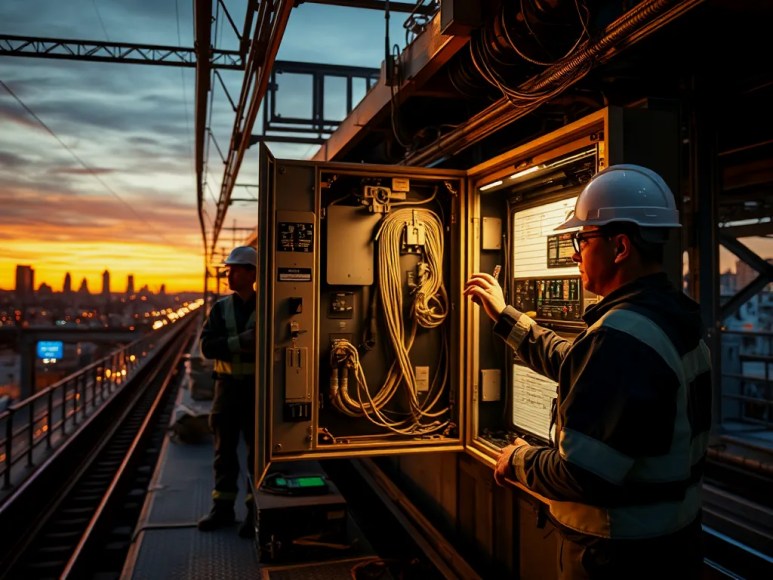
2. Wayside equipment installation — mount transponders, radio nodes, and trackside processors during overnight or weekend possessions.
3. Onboard equipment preparation — outfit new cars with CBTC modules and update yard test rigs.
4. Systems integration testing — simulate mixed traffic, run trains in test service with engineers on board, and validate fallback controls.
5. Limited revenue service — add a few scheduled trains under CBTC to monitor performance and operator procedures.
6. Full cutover and performance monitoring — scale to normal service levels while tracking headway compliance and incident reduction metrics.
Measuring success: KPIs and data to watch
Key metrics include mean time between signal failures, numbers of infrastructure-related delay minutes per month, average scheduled headway versus measured headway, and boarding throughput at key transfer stations during peaks. MTA’s prior reporting showed signal issues accounted for roughly 32% of infrastructure-sourced delays in 2025, equating to more than 11,000 delay incidents per month; program success should reduce both incident counts and aggregate delay minutes.
Risks, budget, and schedule sensitivity
The public roadmap does not list a single program-level budget to 2050. That makes progress vulnerable to capital availability, competing priorities, and supply chain timing for rolling stock and vendor components. Labor availability for night and weekend work, and the pace of contracts for integration testing and commissioning, also influence schedule. The modular engineering approach in use mitigates but does not eliminate those dependencies.
What riders should look for in the coming years
Riders will first notice construction-related service advisories, then incremental improvements: fewer sudden signal-related delays, more consistent trains during peak periods, and gradual increases in off-peak frequency where CBTC unlocks spare capacity. Long term, the system will support faster emergency recovery and more nimble schedule adjustments during major events.