
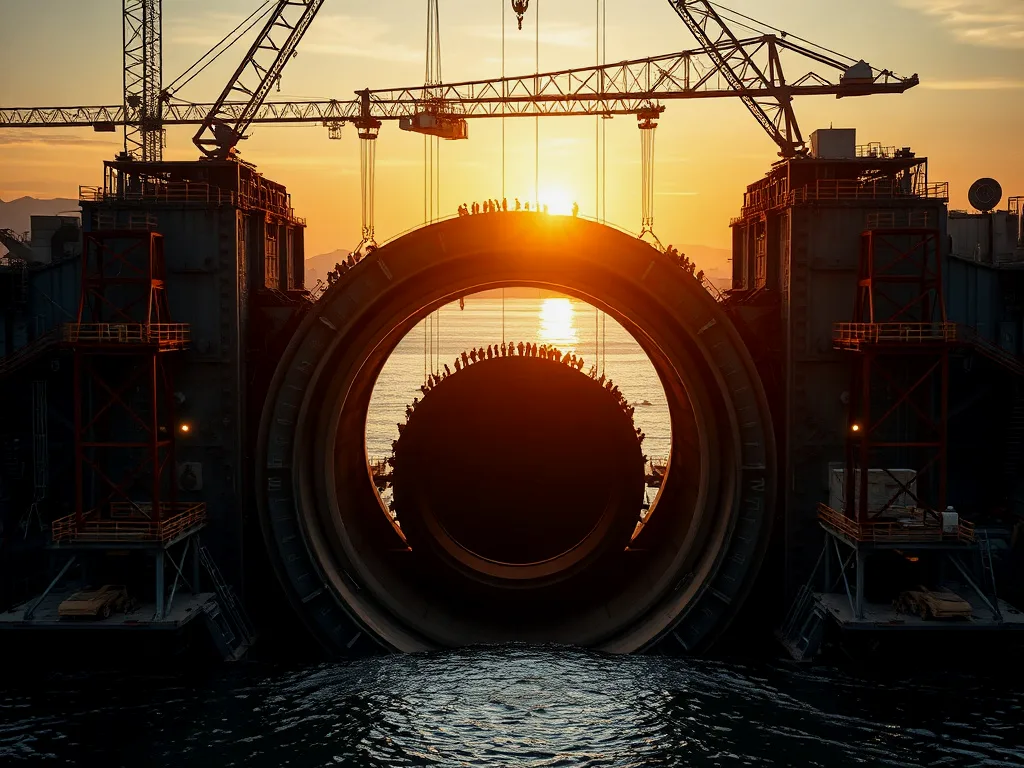
Project milestone: right tube reaches south bank after 14 months
The Jianghai TBM, a domestically produced machine with a 16.6-metre excavation diameter, completed the critical right-tube drive by tunneling 7.46 kilometers beneath the Yangtze and arriving at the river’s south bank. Construction teams operated the machine continuously over a 14-month that focused on precise balance of cutterhead pressure, slurry management and segment erection to maintain face stability through mixed alluvial soils and intermittent sand layers.
Scope and schedule: investment, length and timeline
The project started in September 2022 with a budget of 35.7 billion yuan (about US$5 billion). The full transport corridor will span roughly 39 kilometers; The tunnel element comprises 11.2 kilometers connecting Nantong and Suzhou. Engineers plan to open the corridor to traffic in 2028, following completion of systems installation, road surfacing, ventilation, fire safety systems and final testing.
Design and performance: traffic capacity and travel time gains
The tunnel carries six motorway lanes with a design speed of 100 km/h. At design speeds, the Yangtze crossing time will shrink to approximately 10 minutes, compared with substantially longer ferry or detour alternatives. This time saving improves regional passenger flows and accelerates freight movements between northern Jiangsu and the Suzhou–Shanghai economic zone, lowering operating costs and improving supply-chain reliability.
Construction techniques and risk controls used during the right-tube drive
Project teams applied a blend of methods to keep excavation on schedule and manage geotechnical risk:
1. Slurry balance and pressure control: Operators continuously adjusted face pressure and Slurry density to prevent excessive settlement and to control inflow from permeable sandy horizons.
2. Real-time monitoring: A network of inclinometers, settlement markers and piezometers provided immediate feedback; thresholds triggered follow-up grouting or soil improvement when readings deviated from tolerances.
3. Secondary lining and segmental rings: Precast segmental linings were erected soon after the TBM to lock in geometry and reduce groundwater ingress; gaskets and precision bolting ensured water-tight joints.
4. Emergency response planning: Dedicated stand-by grout plants, compressed-air systems and rapid-decant units reduced downtime during unexpected inflows or cutterhead maintenance events.
How this crossing integrates with regional transport — road, port and rail impacts
The tunnel will become part of a multi-modal corridor that bolsters connectivity across the Yangtze estuary. Expected impacts include:
– Road network: Reduces travel time between Nantong and Suzhou and diverts traffic from congested surface routes.
– Ports and shipping: Tunnel alignment avoids shipping lanes to prevent navigational interference while enabling faster road access to river ports, improving hinterland connections.
– Freight reliability: Shorter, predictable crossings lower fuel use and turnaround time for regional truck operators, improving logistics schedules.
Parallel works: high-speed rail tunnel for 350 km/h trains
Alongside the highway tunnel, construction continues on the Chong–Tai high-speed rail tunnel. That separate project will allow trains designed for 350 km/h service to pass beneath the Yangtze, creating a layered transport solution: high-capacity, high-speed rail for passengers and dedicated highway lanes for vehicular traffic. Coordinated scheduling between the two projects minimizes interference with river traffic and distributes construction-induced load on materials and labor resources.
Environmental and operational controls during and after construction
Teams implemented measures to protect the river and surrounding ecosystems while maintaining construction tempo:
– Sediment and turbidity controls: Cuttings and slurry are treated in settling ponds and closed-loop systems to prevent discharge into the Yangtze.
– Noise and vibration mitigation: Temporary enclosures, reduced night-time operations near sensitive receptors and vibration monitoring preserved nearby infrastructure and habitats.
– Long-term monitoring: Post-construction instrumentation will measure settlement, groundwater and structural performance to guide maintenance intervals and prolong asset life.
What to expect next: remaining works and commissioning sequence
With the right tube breakthrough complete, the immediate sequence includes TBM retrieval and dismantling, completion of permanent segment linings along the new drive, systems installation (lighting, ventilation, traffic control), firefighting and emergency egress works, then staged commissioning. Typical commissioning follows this order: mechanical and electrical testing, trial runs under controlled traffic, progressive increase to full-load operation, and safety certification before opening.
Why this tunnel matters: economic and logistical gains with examples
Reducing crossing time to roughly 10 minutes yields concrete returns: a logistics operator moving containerized cargo between Nantong port and Suzhou distribution centers can save multiple hours per round trip versus existing river or long-route options, enabling an extra daily rotation and lowering unit transport cost. For commuters, a predictable 10-minute crossing creates feasible daily commutes between cities previously separated by longer, less reliable transfers.