
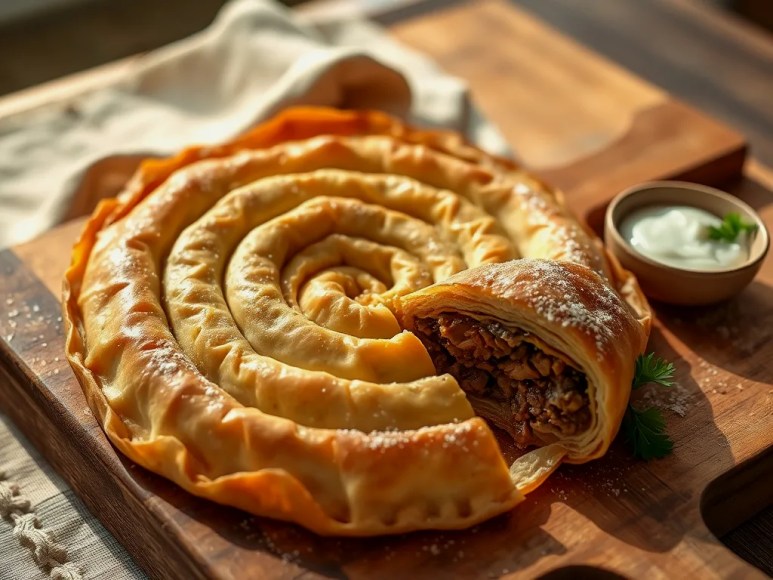
Ingredients for authentic Bosnian burek
For the dough: 600 g high-protein wheat flour, 350–380 ml lukewarm water (add gradually), 1.5 tsp salt, 100 g melted and warm butter, 200 ml sunflower oil.
For the meat filling: 500 g medium-fat ground beef, 2 large onions (finely chopped or grated), 1 tsp freshly ground black pepper, 1.5 tsp salt (adjust to taste), 2 tbsp water.
Optional cheese filling (sirnica): 400 g drained white cheese or ricotta, 2 tbsp cream or yogurt, 1 egg white, pinch of salt if needed.
Why this dough method makes the real Bošnik pastry
Mixing only flour, water and salt yields a gluten network that stretches thin without tearing when rested. Skipping yeast and chemical leaveners preserves the layered, flaky structure: oil and butter separate layers rather than inflate them. Resting the dough after light coating with fat relaxes the gluten so you can pull the dough almost paper-thin over a cloth — that stretched, near-transparent sheet creates the signature contrast of crisp outer layers and tender inner crumb.
Make the dough: precise steps that prevent tears
Combine flour and salt in a large bowl. Pour lukewarm water slowly while kneading for 8–10 minutes until the dough becomes smooth, elastic and slightly tacky but not sticky. Divide into four equal balls and smooth their surfaces. Mix the melted butter with sunflower oil and coat each ball thoroughly. Cover and rest at room temperature for 45–60 minutes; this relaxes the gluten and makes the dough easy to stretch without ripping.
Prepare the meat filling with safety and flavor
Finely chop or grate the onions and squeeze out excess moisture. Combine onions with ground beef, salt, pepper and the two tablespoons of water; mix until homogeneous. Use the filling raw if you prefer a traditional approach, but keep the filling refrigerated until assembly and ensure the baked internal temperature reaches at least 71°C (160°F) for safety. If you brown the meat first, drain excess fat and cool before spreading to prevent soggy layers.
How to stretch dough into the large, near-transparent sheet
Work on a large clean table covered with a cotton cloth. Take one rested dough ball, flatten it by hand then slide your fingers under the mass. Use the backs of your hands and finger pads to pull gently from the center outwards, turning continuously so the dough expands evenly. If edges remain thicker, trim them with scissors or fold trimmed pieces back under the sheet to use later. Pause and let the dough rest a few minutes if it resists; relaxed gluten stretches further and reduces tearing.
Assemble the burek: distributing fat and filling for crisp, separate layers
Brush 2–3 tablespoons of the butter-oil mixture over the stretched sheet. Spread the meat filling in thin, parallel strips along the long edges to prevent a single dense seam that blocks crisping. Lift the cloth and roll each long edge toward the center into loose tubes; cut where the two rolls meet. Grease a 34–36 cm round baking pan. Coil the first roll in the center in a spiral, then add the subsequent spirals around it until the pan is filled. Brush the top liberally with the remaining fat to promote crisping and even browning.
Baking: temperature, time and checking doneness
Preheat the oven to 200°C (392°F) with top and bottom heat. Bake for 35–40 minutes; adjust longer for denser coils or smaller ovens. The visible cues are golden-brown top and bottom, and a firm crust when tapped. For meat safety, insert an instant-read thermometer into the thickest section of the filling — it should read at least 71°C. Rest the baked burek for about five minutes to let layers set before slicing into wedges.
Common problems and fixes
Problem: dough tears while stretching. Fix: rest 10–15 minutes, cover with a damp cloth, then continue; increase kneading time next batch to develop gluten.
Problem: soggy bottom. Fix: use thinner layers of filling, ensure excess moisture is squeezed from onions and avoid overcrowding filling strips; preheat the baking pan slightly to help immediate crust formation.
Problem: dense, heavy pastry. Fix: roll thinner and stretch more; coat each layer evenly with the fat mixture to separate layers during baking.
Variations, serving and storage
Sirnica (cheese) replaces the meat with a mixture of drained white cheese, cream or yogurt and egg white for binding. Zeljanica combines spinach and cheese: squeeze cooked spinach dry before mixing. Serve warm with ayran or plain yogurt; A simple chopped salad or pickled peppers complements the rich pastry. Store leftovers covered in the refrigerator for up to 3 days; Reheat in a 180°C oven for 8–12 minutes to restore crispness. For freezing, wrap cooled wedges individually and freeze up to 2 months; reheat from frozen adding a few extra minutes in the oven.
Practical tips for home cooks aiming for a show-stopping burek
Measure flour by weight for repeatable results. Keep a spray bottle of water at hand to gently mist dough edges if they dry during stretching. Use a heavy, well-heated baking pan to encourage even bottom browning. If you lack space to pull extremely thin sheets, stretch moderately thin and increase the number of coils to preserve a layered texture. Finally, taste and adjust seasoning in the filling before assembly — a correctly seasoned filling makes each flake flavorful.