
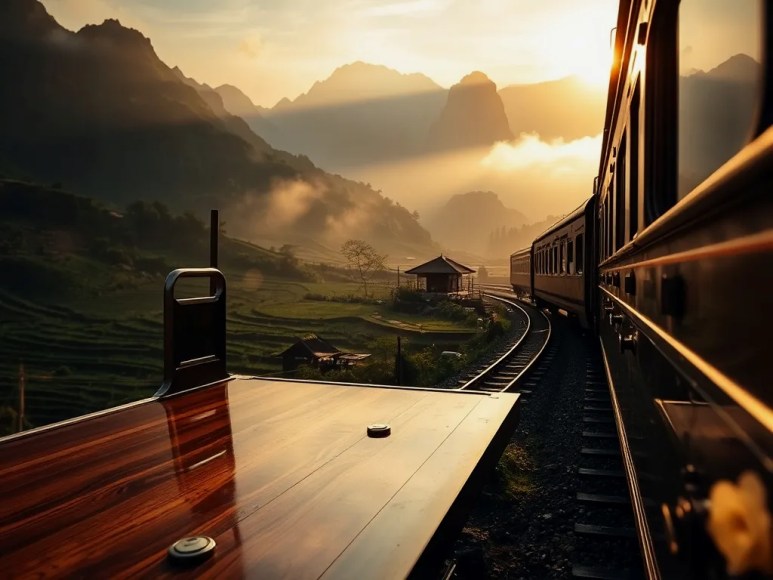
Vietnam launched the renovated Chapa-Tonkin Heritage Express to connect Hanoi and Lao Cai with eight-hour luxury rail journeys that showcase the region’s landscapes and cultures.
Hanoi–Lao Cai route and schedule
The train departs Hanoi in the evening and arrives. in Lao Cai after an approximate eight-hour trip, providing travelers with overnight comfort and full-day access to Sapa and surrounding highland communities. Operators published a timetable that prioritizes late departures to maximize daytime sightseeing before boarding; on average the service completes the roughly 320-kilometer route in eight hours depending on track conditions and station dwell times.
Who currently travels on the service and ticketing details
The inaugural promotional run carried about 160 international visitors from the United States, several European countries, India, South Korea and Singapore. Ticketing includes tiered options: private sleeper cabins, shared couchettes, and premium observation seats. Prices vary by season; early-bird fares and bundled packages that include station transfers and Sapa lodging are available through official VNR channels and partner tour operators.
Design and cultural integration inside the train
Each carriage integrates Sino-Indochinese wood paneling, warm ambient lighting, and textiles drawn from local ethnic groups. K 3 Dao brocade and Hmong motifs appear in cabins and lounges to create a coherent cultural narrative. The onboard layout typically includes private sleeping compartments, a public lounge for regional performances and a bar area that serves local small-plate specialties, allowing passengers to experience regional culture without leaving the train.
Operational and service model for integrated rail tourism
Vietnam Railways (VNR) and tourism partners coordinate end-to-end services: centralized booking, arrival greeting at stations, trained onboard hosts, and prearranged ground transfers to Sapa. VNR emphasizes safety checks, track maintenance, and staff training to ensure consistent service levels. The partnership model combines VNR’s operational control with private-sector marketing, catering and hospitality competencies to deliver a tourism product rather than a pure transport service.
How the service supports local economies and communities
The train’s procurement strategy sources crafts, textiles and food from Sapa-area producers, injecting direct revenue into ethnic minority communities. Operators also design short excursions and homestay options that channel tourist spending into small businesses. For example, a two-night package pairs an overnight train ride with guided treks, village visits, and locally run guesthouses to keep economic benefits inside the destination.
Comparative context and examples from other rail-tourism models
Operators studied successful models such as Japan’s luxury sightseeing trains and Europe’s heritage routes to adapt features that work in mountainous, single-track environments: reduced top speeds for scenic viewing, soundproofed sleeping compartments, and curated onboard programming. Unlike high-speed intercity services, the Heritage Express emphasizes immersive cultural and landscape experiences, not fastest point-to-point travel.
Practical tips for travelers planning to use the Chapa-Tonkin Heritage Express
Book at least four to six weeks ahead during high season. Choose private cabins for longer rest and privacy; shared couchettes work for budget travelers. Pack layers for Sapa’s cooler nights and bring local-currency cash for small purchases at stations and villages. Travelers with mobility needs should contact VNR in advance to confirm accessible assistance at departure and arrival stations.
Performance indicators and growth potential
Vietnam’s tourism rebound in 2026—roughly 19.54 million international visitors in the first ten months, a 13.8% year-over-year increase—creates rising demand for differentiated transport experiences. Measuring the train’s success will require tracking cabin occupancy rates, ancillary revenue per passenger (transfers, excursions), and local supplier income. Operators plan incremental capacity increases and seasonal adjustments if occupancy stays above break-even thresholds.
Safety, infrastructure and future upgrades
VNR lists priorities: track improvements to reduce travel time variability, enhanced onboard safety equipment, and digital booking integration to streamline multi-leg itineraries. Future upgrades may add observation cars, multilingual guides, and more frequent departures to match peak demand without compromising the curated guest experience.
Photo credit: AI-generated representational image.