
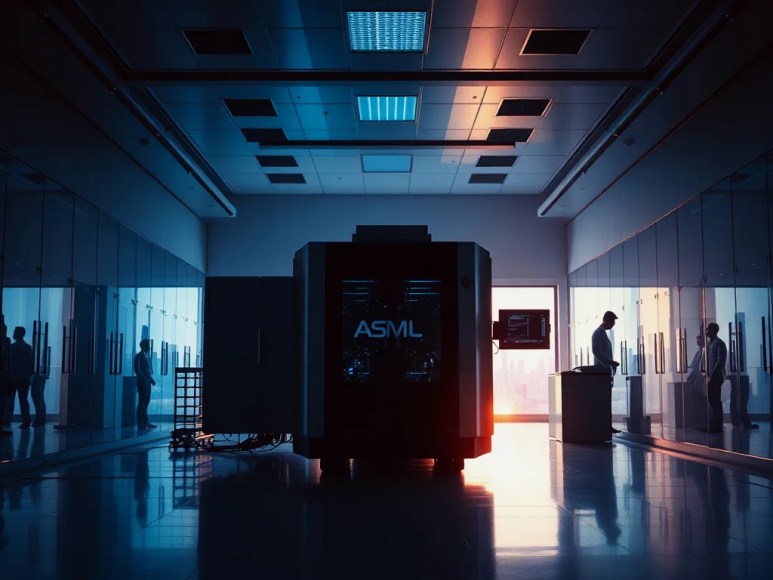
Overview of the dispute and why ASML matters
ASML builds the lithography machines that define chip feature sizes; controlling access to those machines shapes where advanced semiconductors can be produced. In the current US-China technology rivalry, proposed US export rules aim to curb China’s ability to make advanced chips. That plan places ASML — a Dutch supplier of both deep ultraviolet (DUV) and extreme ultraviolet (EUV) systems — squarely in the middle of an international tug of war over trade policy, technical support, and national security.
What the MATCH Act proposes and which allies it targets
The MATCH Act is designed to limit China’s access to semiconductor manufacturing capacity by tightening export controls on equipment and know‑how. Rather than only imposing unilateral US restrictions, the Act would create a framework pressing allies such as the Netherlands and Japan to impose parallel limits on sales and services. If allies do not align, the legislation contemplates mechanisms for the US to take additional measures to block downstream transfers.
How controls on DUV and EUV equipment would affect production
DUV systems remain essential for high-volume production of many logic and foundry nodes, and EUV enables the most advanced nodes under 7 nm. Preventing new machine sales, restricting spare parts, or curtailing maintenance contracts degrades yield and uptime over months to years. Example: a foundry relying on ASML DUV scanners can compensate short-term with inventory and workarounds, but without routine calibration and genuine spare parts, defect rates climb and throughput drops — directly raising costs and lengthening time-to-market for advanced chips.
Practical impacts on ASML’s business model
ASML’s revenue depends not only on new-tool sales but on multi-year service contracts, upgrades, and global parts logistics. If export rules bar service or spares to Chinese fabs, ASML would confront three simultaneous effects: reduced new orders from risk‑averse customers, lost recurring service revenue, and rising warranty or liability exposure for installations it cannot fully support. ASML’s past operating model — sell complex systems then provide lifetime field service — becomes hard to sustain in restricted markets.
Diplomatic and commercial strategies the Netherlands is using
Dutch officials are engaging US prosecutors and technical agencies to shape the final scope. Their arguments combine legal, economic and technical points: (1) many ASML systems sold previously already sit in China and rely on continued support to operate safely; (2) blanket bans could violate existing trade commitments and damage the Netherlands’ high‑tech cluster; (3) selectively calibrated controls tied to specific components or software are more enforceable and less disruptive than sweeping prohibitions. In practice, the Netherlands seeks exemptions, phased approaches, or technical carve-outs to limit collateral damage to European industry.
How industry and customers might adapt — five likely responses
Semiconductor players and equipment makers will respond with a mix of technical and commercial measures:
1) Supply‑chain segmentation: Customers in restricted markets may be required to isolate fleet tools, create clean‑room workarounds, or use legacy nodes that need less sensitive equipment.
2) Localize service capabilities: Firms could train and certify local engineers, transfer diagnostic software in controlled ways, and stockpile spare parts at regional hubs.
3) Design around constraints: Chip designers may optimize for process nodes that remain serviceable without the most advanced scanners.
4) Legal and contractual hedging: Original equipment manufacturers (OEMs) might restructure contracts to limit liabilities where support becomes legally restricted.
5) Investment shifts: Expect more onshoring of critical subsystems in friendly countries, while constrained markets invest in alternative architectures or older-node fabs.
Real‑world timeline and technical degradation scenarios
Effects appear on a staggered timeline. Short term (0–6 months): installation and integration programs already underway continue under existing authorizations. Medium term (6–24 months): lack of routine maintenance and parts begins to reduce yields and increase downtime. Long term (2–5 years): without upgrades and calibration, fabs drift from target process windows; achieving leading-edge density becomes infeasible and capital expenditure pivots toward less-sensitive nodes and architectures.
Examples and data points to weigh the economic stakes
Concrete indicators to monitor include: ASML’s order backlog and service revenue split by region; Foundry utilization rates in China; spare‑parts inventory levels at local depots; and published maintenance‑turnaround times. Industry cases show that decreased tool availability can cut effective wafer starts per month by double‑digit percentages within a year if critical spares or field engineers are unavailable.
Legal, enforcement and technical implementation challenges
Designing enforceable controls that distinguish between machine classes, software, and personnel support is technically difficult. Tools incorporate components sourced globally; software keys and remote diagnostics often cross borders. Enforcement will require granular licensing, export tracking, and cooperation on inspection — all of which increase administrative cost and leave room for evasion if not tightly coordinated among allies.
Questions policymakers and companies should ask now
Before adopting or complying with new rules, ask: What specific components, firmware, or service actions are restricted? How will existing installed bases be supported? What certification paths exist for local service providers? What contingency plans preserve product safety and avoid environmental hazards in the event of reduced equipment support? Who bears long‑term liability if performance gradients after contractual support ends?
What to watch next — signals that will change the outlook
Key indicators include: whether the MATCH Act passes in its current form or an amended version; formal consultations between the US, Netherlands and Japan; ASML’s public guidance on servicing installed systems; and any licensing decisions denying or approving specific sales. Changes in these signals will quickly reshape commercial planning for foundries, OEMs and equipment suppliers worldwide.
Bottom line: calibrated controls matter
Blanket prohibitions produce faster political headlines but create large operational risks and unintended industrial fallout. Calibrated, technical‑component‑level controls combined with allied coordination are more complex to design and enforce but better preserve industrial stability while achieving targeted national‑security goals.