
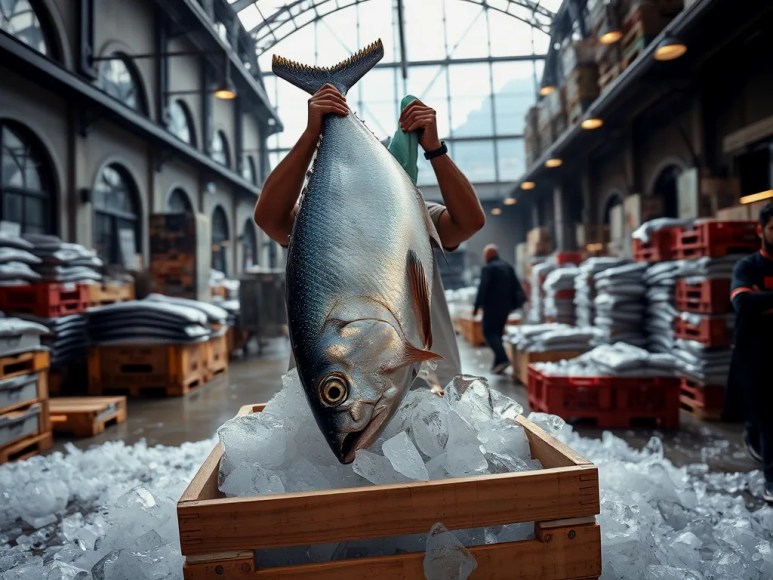
Ankara Metropolitan Municipality’s Wholesale Fish Market processed 8,800 tons of seafood during September and October 2026, with palamut (Atlantic bonito) accounting for roughly 6,500 tons and reshaping local consumption patterns.
Two-month volume and logistics breakdown
From early September through late October, 1,410 vehicles delivered seafood to the Ankara Wholesale Fish Market, representing a 135% increase versus the same period last year. The market receives daily deliveries that begin around 03:00 to supply retail points across the city. This surge required daily handling plans that emphasized speed, temperature control and traceability:
Operational example: handlers unloaded fish from trucks, performed immediate visual and dimensional checks at a primary inspection bench, transferred products into insulated carts with crushed ice, and recorded origin, weight and truck ID into a centralized log within 30 minutes of arrival.
Why palamut dominated this season
Local market managers report that a larger-than-usual Mediterranean and Black Sea catch of bonito combined with competitive prices shifted consumer preference away from anchovy (anchovy). Data from the market indicate about 6,500 tons of palamut entered the market in two months, while anchovy entries show a discrepancy: 1,600 tons in aggregate unloading records versus 1,000 tons cited in a managerial comment. This discrepancy highlights the need to reconcile field logs with public statements for accurate supply-chain transparency.
Daily hygiene and size compliance inspections
Veterinary Services teams at the municipality perform routine daily inspections focusing on two measurable controls: minimum legal size compliance and cold-chain integrity. Inspectors measure sample fish lengths across shipments and verify that storage temperatures remain consistently within regulated ranges. When an out-of-spec condition appears, the team isolates the lot, records nonconformance, and prevents distribution until corrective action is documented.
How inspections work step-by-step
1) Receive and log delivery data (vessel/boat ID, catch area, truck plate, weight). 2) Random sampling for length and organoleptic signs (smell, color, texture). 3) Temperature control of transport and holding units with calibrated probes. 4) Document findings on a digital form and tag any rejected lots. 5) Release cleared lots to traders with QR-linked records for traceability.
Reconciling conflicting hamsi figures: what to examine
To resolve the 1,000 etc. 1,600-ton anchovy inconsistency, analysts should inspect: aggregated dock delivery manifests, handheld inspector logs, trader receipts, and end-of-day reconciliation sheets. A practical audit approach is to match vehicle serial numbers to unloading weights and cross-check those entries with vendor sales slips. This method quickly identifies transcription errors or duplicated entries.
Food-safety emphasis and consumer protection
Inspectors prioritize prevention of temperature abuse and the sale of undersized fish. Examples of safety controls enforced on-site include mandatory iced holds, segregated handling areas for gutted etc. whole fish, and visible calibration stickers on thermometers. The municipality’s program aims to ensure that products leaving the wholesale market meet hygiene standards and arrive safely at retail outlets.
Market implications and trade activity
The high-volume intake in the opening months of the season signals robust trade activity for Ankara’s seafood supply chain. Increased supply of bonito at competitive prices can expand consumption, shift menu offerings in restaurants, and influence wholesale-to-retail pricing dynamics. Traders who adjusted procurement schedules to take advantage of larger bonito landings reported faster turnover and reduced spoilage loss, since bonito’s firm flesh tolerates short distribution intervals well.
Practical advice for retailers and consumers
Retailers: maintain a 0–2°C display for whole pelagic species, rotate stock using first-in first-out (FIFO), and require suppliers to present inspection tags linked to delivery records. Consumers: buy fish that smells clean (sea-like), has clear eyes and firm flesh that springs back when pressed; ask for the catch date and origin when possible.
Key takeaways and recommended next steps for stakeholders
1) Reconcile and publish consolidated statistics to eliminate public data inconsistencies. 2) Continue daily, documented inspections focused on size and temperature control. 3) Educate retailers and consumers about bonito handling to sustain the seasonal demand while minimizing waste. 4) Use digital traceability (QR tags tied to inspection logs) to strengthen trust and speed up audits.