
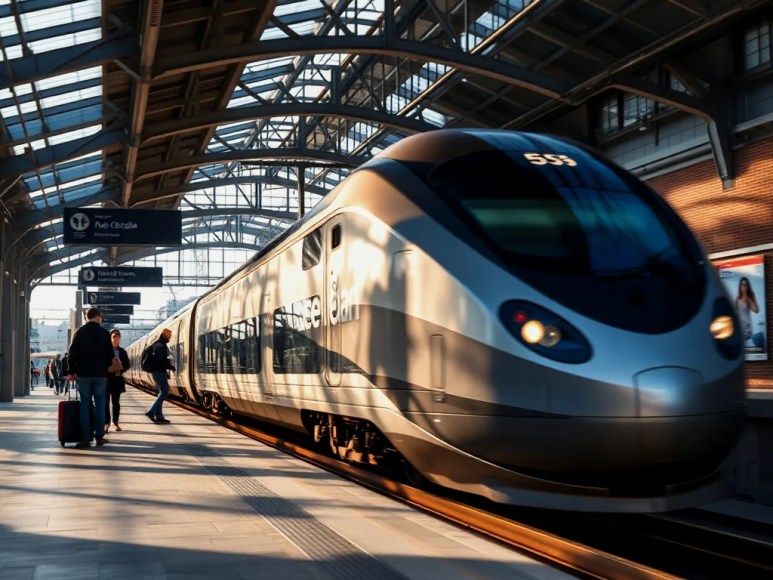
Amtrak increased NextGen Acela service across the Northeast Corridor to meet rising travel demand and improve connectivity between Washington, New York and Boston. New weekday schedules now exceed 40 daily runs, Saturdays offer 25 services and Sundays provide 32, reflecting a substantial capacity expansion since July 2026.
NextGen Acela fleet growth and schedule changes
Amtrak added to its NextGen Acela fleet during 2026, moving from 13 trainsets in July to 15 by early November. That fleet growth enabled the company to expand weekday departures from the previous 32-run schedule to over 40 runs per weekday. The revised timetable deliberately targets peak and holiday travel windows—especially Thanksgiving and the year-end holiday season—so Amtrak can transport more passengers without sacrificing recovery time between trips.
How the increased frequency benefits travelers and operations
More frequent Acela services reduce wait times, offer greater schedule flexibility for business and leisure travelers, and improve asset utilization during high-demand periods. Practically, passengers gain more options for same-day round trips and shorter minimum connection windows in New York for onward travel. From an operational perspective, running more services with additional trainsets spreads passenger load across more departures, easing crowding and smoothing station platform usage.
Technical profile: speed, capacity and on-board amenities
Alstom-designed NextGen Acela sets reach a maximum service speed of 160 mph (about 257 km/h) where infrastructure permits. Each new trainset seats 386 passengers compared with 304 in the legacy Acela—an approximate 27% per-train seating increase—while adding modern amenities such as high-speed Wi-Fi, individual power outlets, USB ports, dedicated reading lights and refreshed café service. Those features target frequent business travelers and long-distance commuters who value reliability and connectivity.
Quantifying the service increase: percent changes and examples
According to Amtrak figures, weekday departures rose by more than 50% compared with pre-NextGen levels; Sunday services climbed roughly 50% and Saturday runs roughly doubled. For example, a traveler who previously had a single convenient midafternoon connection between Washington and Boston may now choose among multiple afternoon departures spaced at shorter intervals, improving the odds of finding a seat and making a same-day trip feasible.
Infrastructure constraints and where speed limits apply
While NextGen Acela trains can reach high top speeds, actual operating speeds depend on track geometry, signaling, and corridor electrification. Sections of the Northeast Corridor possess curves, grade crossings, speed restrictions and maintenance windows that limit maximum speed; on those segments the trains operate at reduced velocities to maintain safety and schedule adherence. Amtrak coordinates with corridor owners and federal regulators to identify priority upgrades that would allow higher sustained speeds on additional segments.
Maintenance, reliability challenges and mitigation steps
Amtrak’s internal reviews in 2026 flagged several maintenance and reliability topics during NextGen deployment—mechanical teething issues, workshop capacity limits and the need to scale depot staffing and tooling. To mitigate risk, Amtrak is phasing train introductions, expanding maintenance shifts, investing in additional shop equipment and updating predictive maintenance software to detect wear patterns earlier. Those changes aim to keep increased daily rotations sustainable as the fleet grows toward the planned 28 trainsets.
Economic and mobility impacts along the Washington–New York–Boston corridor
Higher Acela frequency strengthens economic ties across the corridor by shortening effective travel time through better timed departures and more same-day options. Commuters and day-trip business travelers gain flexibility, which can shift short-haul air trips to rail where train frequency and on-board productivity match or exceed aviation alternatives for city-center to city-center journeys. Cities along the corridor may see marginal increases in demand for hotels, meeting spaces and transit connections as rail becomes a more attractive choice.
What travelers should expect and practical tips
Expect more departure choices but also variable travel times depending on infrastructure constraints. Book early for peak holiday windows even with higher frequency; additional trains reduce—but do not eliminate—sold-out departures. For the best experience: reserve seats on popular time slots, arrive at stations earlier when traveling with luggage, and use Amtrak’s mobile tools for real-time platform and delay information.
What will determine long-term success of the expanded service
Long-term success depends on timely delivery of the remaining NextGen trainsets, continued investment in maintenance facilities and targeted corridor infrastructure upgrades that raise permissible speeds. If Amtrak sustains reliability while expanding capacity, the corridor can capture modal shift from air and car travel and realize the service’s intended benefits for passengers and regional economies.