
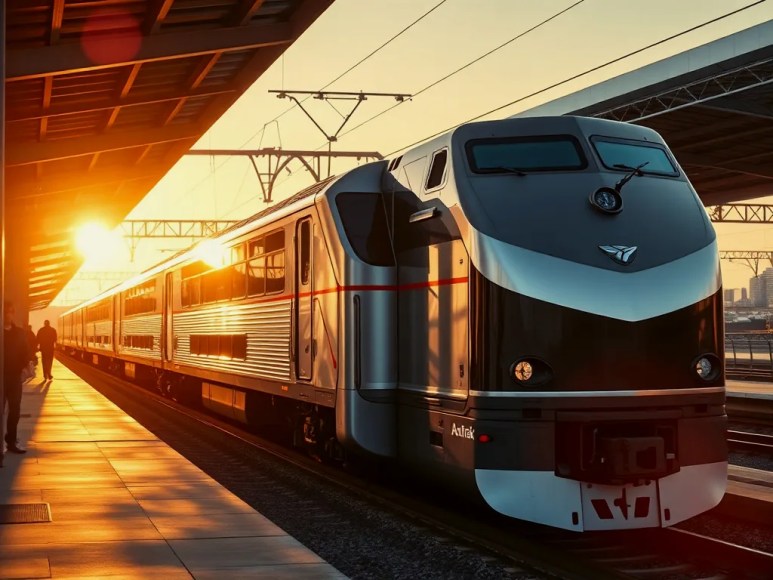
Amtrak to Add Eight 10-Car Airo Trainsets to Northeast Regional Fleet
Amtrak has ordered eight new 10-car Airo trainsets from Siemens Mobility to boost capacity on the Northeast Regional corridor, with commercial service for the longer sets targeted for 2031. The 10-car configuration increases per-set seating by roughly 34% compared with the earlier eight-car Airo sets, enabling each trainset to carry more than 640 passengers. Amtrak plans to integrate these higher-capacity sets specifically where demand concentrates: New York, Washington, and Boston service patterns.
How the Capacity Increase Will Work in Practice
Each 10-car Airo set adds two coaches compared with the initial eight-car design. Practically, this delivers more seats per scheduled departure without adding trains to the timetable, which reduces platform crowding and frees scarce slot capacity on congested segments of the Northeast Corridor. Operationally, Amtrak will deploy the longer sets on peak and holiday runs where boarding volumes exceed seat supply. The rollout timeline staggers: the eight-car Airo sets begin passenger service in late 2027 while the 10-car sets enter revenue service beginning in 2031, allowing crews and maintenance teams to adapt systems and procedures gradually.
Ridership Trends Driving the Decision: Data and Implications
Amtrak’s fiscal-year 2025 ridership shows why the expansion is urgent. Northeast Regional patronage rose from about 10.79 million in FY2024 to roughly 12.02 million in FY2025 — an 11.3% year-over-year jump. Combined with Acela’s 3.15 million riders in the same period, the corridor handled nearly 15.2 million passengers. These numbers create recurring capacity pinch points on peak departures; increasing seat counts per train is one of the fastest ways to relieve those pressures without immediate additional track or timetable changes.
Manufacturing and Supply Chain: Where the New Airows Are Built
Siemens Mobility conducts final assembly and component sourcing across US facilities to support Airo production. Primary manufacturing sites include Sacramento, California and Lexington, North Carolina. Additionally, nearly 100 suppliers in 31 states produce more than 3,500 parts for the Airo program — from carbody shells to braking subsystems and interior furnishings — creating a geographically distributed supply chain that also spreads skilled manufacturing jobs and procurement spend across the country.
Operational Example: Replacing Two Shorter Trains with One Longer Departure
Consider a typical weekday corridor segment with two consecutive departures at 10:00 and 11:00 that historically sold out. Deploying a single 10-car Airo at 10:00 with 640+ seats instead of two shorter 8-car trains scheduled close together can reduce operational complexity: one locomotive set, one crew package, and one maintenance window versus two. That change can improve resource utilization and reduce crew scheduling conflicts while delivering equivalent or greater capacity concentrated on peak demand windows.
Maintenance and Facility Upgrades to Support the Larger Fleet
Longer trainsets require corresponding investment in depot footprint and equipment. Amtrak is upgrading Northeast Corridor maintenance facilities, including work at the Southampton yard near Boston, to handle the Airo fleet’s dimensions and systems. Upgrades include extended maintenance tracks, updated lifting and inspection gear sized for 10-car consists, and enhancements to parts staging so higher-turnover components stay in stock. These investments aim to keep onboard reliability high as more passengers board each train.
Staged Rollout: Why Amtrak Phases Airo Deployment
Phasing eight-car sets into service first (late 2027) and 10-car sets later (2031) reduces operational risk. Early deployment lets Amtrak validate passenger flows, boarding times, dwell impacts at constrained platforms, and crew training programs. Lessons learned during initial service — such as optimal door management, luggage placement, and station boarding patterns — guide timetable and platform assignment changes before introducing the longer trainsets broadly.
Real-World Benefits for Passengers and Network Efficiency
For passengers, the immediate benefit is availability: more seats on peak trains and fewer sold-out departures. For the network, longer trains provide higher people-throughput per platform slot, an especially valuable metric where track capacity limits adding additional trains. Fewer train movements for the same or greater passenger volumes reduce dispatch complexity and can lower per-passenger operating costs over time.
What to Expect on the Northeast Regional When 10-Car Airows Arrive
By 2031, commuters and travelers should notice more available seats on high-demand runs and potentially adjusted schedules to optimize platform use. Stations may implement minor platform assignment changes to accommodate longer consists and boarding flows, while Amtrak’s onboard amenities for Airo trains — modern seating, power outlets, and accessible restrooms — remain consistent across the fleet, preserving passenger experience even as capacity grows.
Key Takeaways and Timeline Summary
– 2027 (late): Eight-car Airo sets begin revenue service on selected routes.
– 2031: Eight new 10-car Airo trainsets enter service, boosting per-train capacity by ~34% and carrying 640+ passengers per trainset.
– Immediate operational impact: greater seat availability on peak and holiday trains; staged facility upgrades to support longer consists of; supply chain activity across 31 US states.