
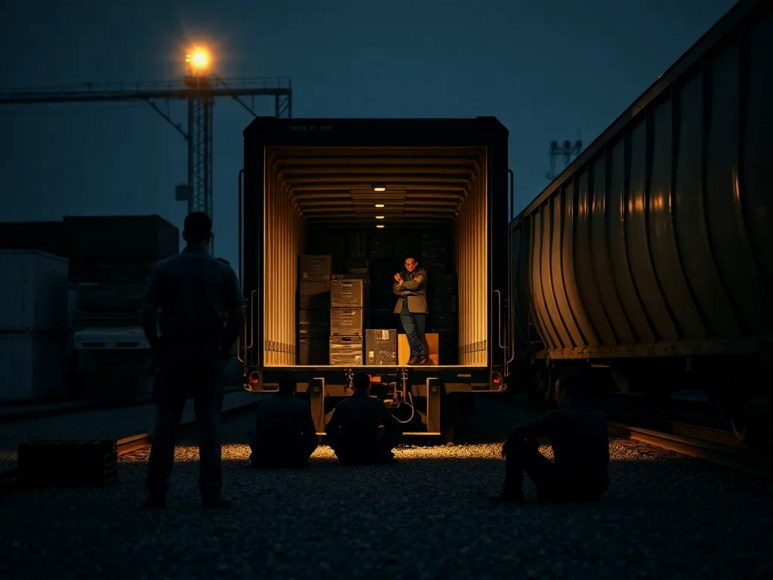
At least 36 freight trains and more than 70 containers targeted
Federal prosecutors say an organized repeatedly crew struck high-value shipments carried by freight trains that originated at the ports of Los Angeles and Long Beach. Investigators tie the alleged scheme to at least 36 separate trains and over 70 individual containers between February 2024 and August 2026. Officials describe patterns that point to preselection of containers carrying consumer electronics, footwear, and power tools — goods that resell quickly on secondary markets.
How the alleged scheme operated, step by step
Prosecutors allege a coordinated sequence of actions used to intercept rail shipments:
1. Identification: The group allegedly monitored rail manifests and observed container patterns to identify high-value loads moving inland from the ports.
2. Interception: At planned points along rail routes, vehicles met trains at slow-speed segments or where trains paused; suspects then breached container seals or doors.
3. Transfer and temporary storage: Stolen cargo moved quickly into pickup trucks and box vans, then to transient yards and storage sites in areas such as Pico Rivera and Fullerton.
4. Redistribution: Items were allegedly funneled into local resale networks and informal marketplaces to mask origins and realize quick cash.
Evidence types prosecutors cited and what they indicate
Authorities describe a mixed evidentiary picture that includes communications records, audiovisual material, and logistics traces. Example evidence the indictment highlights:
• Call and text logs: Patterns of coordination timed to train movements suggest organized planning rather than opportunistic theft.
• Photographs and videos: Imagery allegedly shows suspects at rail sites and items being moved into vehicles, helping link people to locations and dates.
• Movement records: Surveillance and GPS traces of vehicles potentially connect temporary storage sites with resale points.
Charges, potential penalties, and legal context
The federal indictment lists 14 defendants and combines conspiracy charges with counts tied to interstate theft of rail freight and two counts alleging violence against a rail carrier. The legal maximums noted by prosecutors include up to five years for conspiracy, up to ten years for each theft-related charge, and life imprisonment for violence against certain rail carriers. Those maximums represent potential exposure under federal law, not presumptive outcomes; every defendant’s case will proceed independently through the courts.
Why port-to-rail thefts matter to supply-chain resilience
Stealing goods during rail transit amplifies economic loss beyond the sticker price of items. Examples of cascading effects include delayed deliveries that trigger stock shortages at regional distributors, insurance premium increases for shippers, and added security costs at intermodal yards. In concentrated logistics corridors such as Southern California, a small number of repeated theft events can raise route risk assessments and shift cargo to alternative (more expensive) modes of transport.
What investigators and agencies coordinated the probe
Law enforcement combined local and federal capabilities: the US Attorney’s Office in Los Angeles led the indictment with investigative support from the Los Angeles Police Department, federal security units, railroad police, and port authorities. Coordinated evidence collection over roughly 14 months enabled prosecutors to map networks suspected that allegedly exploited predictable rail operational behavior.
What businesses can do now to reduce exposure
Shippers, carriers, and terminal operators can adopt practical measures that reduce vulnerability without disrupting throughput:
• Tighten visibility: Improve manifest-level tracking and deploy geofencing alerts when containers deviate from expected transit windows.
• Harden handoffs: Use tamper-evident seals and schedule fewer unplanned stops at known high-risk nodes.
• Shorten dwell time: Reduce time containers sit at transient lots and prioritize rapid transfer to final-mile carriers.
• Vet distribution partners: Verify temporary storage operators and track payment flows to limit channels that launder stolen goods.
Possible commercial and criminal outcomes to monitor
Practically, businesses should expect investigations to produce operational changes: increased rail police presence on critical corridors, expanded surveillance around vulnerable junctions, and insurance audits. Legally, defendants face lengthy proceedings where indictments must be proven beyond a reasonable doubt; civil remedies by affected shippers and insurers could follow if losses are quantified and traceable to defendants’ acts.
Key takeaways and next steps for stakeholders
The indictment signals intensified scrutiny on port-to-inland logistics. Supply-chain managers should review container visibility, reinforce chain-of-custody practices, and liaise with law enforcement to input threat indicators into routing decisions. Regulators and carriers may also pursue collaborative data-sharing pilots to detect manifest-level anomalies faster and reduce the window of opportunity for theft.
Note: The indictment alleges criminal conduct but does not establish guilt. Defendants will have the opportunity to contest charges in court.