
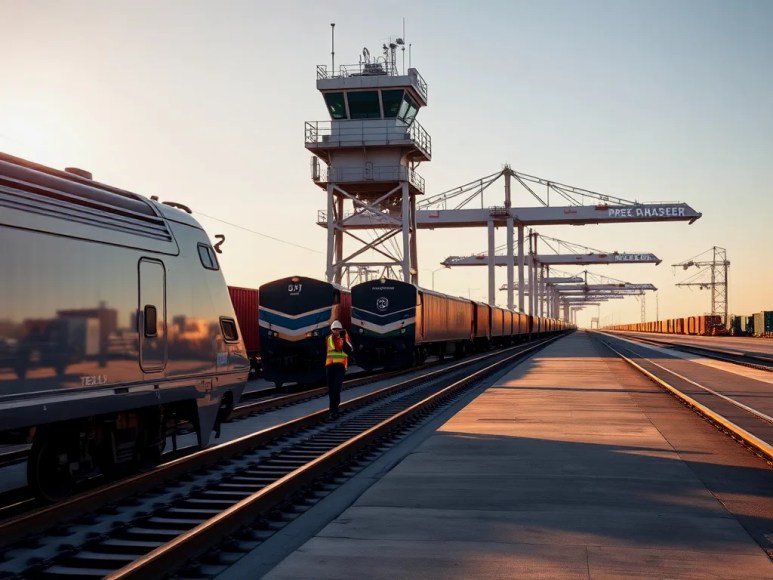
120-car unit trains handled by a new rail unloading system
BWC Terminals commissioned a rail unloading system that accepts 120-car block trains to receive crude delivered from the Uinta Basin. The system uses heat-traced manifolds, insulated transfer lines and controlled-flow pumping to manage high-paraffin crude without cold‑flow blockages. Operators route railcar offloads directly into the seven on-site storage tanks; from there product flows by pipeline to Chevron’s Pascagoula refinery or out by vessel. CSX will operate the block-train moves into the terminal, improving service reliability and linking the facility to the national freight network.
Seven new aboveground tanks and integrated multimodal connections
The first phase includes seven storage tanks, rail offload infrastructure and marine mooring facilities, enabling the site to switch between rail, pipeline and vessel movements. Each tank has independent secondary containment, leak detection and in-tank temperature monitoring suitable for temperature-sensitive crude blends. The arrangement shortens ship-to-refinery transit by removing intermediate handling steps: vessels and barges can take product from the same storage pool that feeds the pipeline, reducing transfer time and operational complexity.
How the terminal improves Chevron’s feedstock flexibility
By combining rail, pipeline and waterborne access, the terminal expands sourcing options for the refinery. When rail receipts increase in winter, heated piping preserves flow rates; When Gulf spot tanker volumes are favorable, the terminal can load marine cargoes. The pipeline tie-in provides immediate suction to the refinery, lowering truck haul demand and smoothing refinery feedstock variability. Example: a coordinated week in winter can route Uinta crude by rail to storage, then slowly pipeline it to align with refinery draw patterns, avoiding sudden swings in refinery intake.
Planned Phase Two: capacity, timeline and what changes operationally
BWC projects Phase Two construction could begin in Q1 2027, subject to Chevron’s confirmed uplift and regulatory approvals. Phase Two plans include additional tanks, expanded rail handling (more simultaneous tracks or faster unloaders) and higher-pressure pipeline pumps to speed transfer rates. Operational changes will include staggered receipt windows, expanded tank-turnover scheduling, and increased shore-side berthing to permit concurrent vessel loading while rail offloads continue.
Site reuse and environmental controls on a former industrial tract
The project repurposes a former Mississippi Phosphates industrial parcel enrolled in EPA remediation programs. Developers installed updated stormwater systems, multi-layer soil covers and monitored groundwater wells as part of site preparation. These controls reduce fugitive emissions, minimize runoff risk to nearby waterways and enable safer long-term industrial use. The conversion demonstrates a predictable remediation-to-redevelopment pathway for brownfield sites adjacent to port infrastructure.
Operational workflows and step-by-step crude routing scenarios
Typical rail-to-refinery workflow: 1) CSX delivers a 120-car unit train and spots it at the unloading rack; 2) operators heat and circulate lines to stabilize paraffinic crude; 3) offload pumps transfer product into designated tanks with level alarms; 4) pipeline pumps pull product to the refinery on scheduled draw windows; 5) tank gauging and custody-transfer systems reconcile volumes and quality.
Marine export workflow: 1) storage nomination for vessel cargo; 2) transfer pumps route product to dock-side loading arms; 3) meter and sampler verify batch quality; 4) vessel receives cargo with pre-agreed pump rates and vapor control procedures; 5) departure follows tide and pilot scheduling to optimize port calls.
Commercial and network implications for regional energy logistics
Integrating the terminal into the Gulf logistics chain increases market optionality. For Chevron, the terminal provides a buffer against regional pipeline constraints by enabling periods of increased rail receipts. For local port users and barge operators, the facility adds shore-side inventory that supports short-haul movements and lightering. For the rail network, concentrated unit-train traffic creates scheduling advantages—CSX can offer dedicated slots that reduce dwell and improve throughput.
Key data points, examples and projected scale-up potential
Investment and scale: the overall project is part of a $316 million investment plan spanning multiple phases. Expansion potential: BWC’s CEO cites the capability to expand storage and handling capacity by three to four times over five years depending on demand. Example throughput: a single 120-car crude unit train can carry roughly 3–4 million gallons depending on car size; with continuous scheduled receipts, phase expansion would multiply weekly inbound volumes and increase pipeline draw frequency to the refinery.