
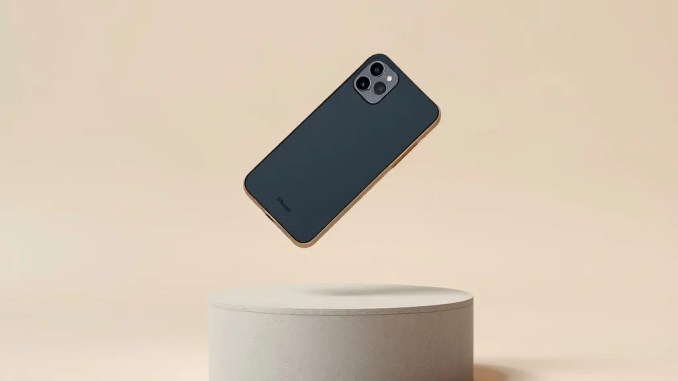
Overview: Which segment is the iPhone 18e targeting?
The iPhone 18e is positioned as a budget-friendly iPhone alternative focused on everyday use. Its 6.1-inch LTPS OLED panel and 60Hz refresh rate offer a balance of energy efficiency and cost. The A20 chip, claimed to have a 2nm manufacturing process, promises advantages in performance and battery management, while the single rear camera ensures the device remains thinner, lighter, and more compact.
Screen and display experience: Why is 6.1″ LTPS OLED important?
LTPS OLED technology provides lower power consumption while maintaining pixel density; this, combined with the battery savings brought by the 60Hz refresh rate, is a significant advantage in daily use. The 6.1-inch screen size is an ideal size for users seeking one-handed control and portability. For most users, it offers a smooth experience in fluid motion, media consumption, and social applications; while not as smooth as 120Hz panels in fast-paced games, the difference is not noticeable in most applications.
Processor: What does the 2nm A20 bring, and what performance gains should be expected?
The 2nm node theoretically provides higher clock speeds with the same thermal budget or lower power consumption at the same speed. If the A20 comes with this production, the expected gains are:
CPU performance: Faster response in single-core tasks, shorter application opening times.
GPU performance: Higher frame rates and more stable graphics processing in mid-level games.
Energy efficiency: Equivalent performance with longer screen-on times or a smaller battery in the same usage profile.
AI/ML acceleration: Faster results in photo processing and real-time features.
Camera layout: Which user does the single rear camera approach appeal to?
A single rear camera module reduces cost and device size. Software-based processing (ISP) and the A20’s ML capabilities can produce satisfying results for a wide range of users. The following examples show when a single lens is sufficient:
Casual photographers: A single high-quality lens may suffice for social media posts, landscape shots, and street photography.
Portraits: Software-based depth maps and AI-powered background blurring provide realistic portraits.
Professionals: For those who want multiple focal lengths, optical zoom, and advanced cinematic shots, a single lens will be limiting.
Front camera: What does the 24MP upgrade mean?
The 24MP front camera provides more detail; this is advantageous, especially for cropping and producing high-resolution social media content. However, in the real world, the factors that determine quality are the sensor size, lens optics, and the capabilities of the image processing processor. Key gains:
Sharper selfies: Facial details and fine lines are better preserved.
Digital cropping flexibility: Reduced quality loss during cropping for content creators.
Video calls: Provides sharper and more detailed live images; software noise reduction plays a critical role in low light.
Design and ergonomics: What is retained, what may change?
A single rear camera module keeps the iPhone 18e thinner and lighter. The 6.1-inch screen, narrow bezels, and compact volume offer comfortable one-handed use. The likely material choice is an aluminum frame and glass back panel; this reduces costs while maintaining a premium feel to some extent. Color and finishing variations will be determined by pricing.
Battery life and expected daily use
The combination of a 60Hz display and 2nm A20 increases battery life. Expected scenarios:
Daily user: Comfortable day use with social media, email, browsing, and short videos.
Heavy user: Moderate heating and battery consumption during long gaming sessions or continuous video streaming; performance management becomes important.
Charging options: Likely compatible with Apple’s existing fast charging and wireless ecosystem; exact times will be clarified with official announcement.
Who it makes sense for: Who is recommended to buy the iPhone 18e?
The iPhone 18e appeals to the following profiles:
Daily communication and social media users: With simple, reliable camera and battery management.
Those who prioritize portability: Those who want one-handed use and a lightweight device.
For those who want a more affordable iOS experience: Users who don’t need the advanced features offered by Pro models.
Frequently Asked Questions (Short Answers)
What are the main differences between the iPhone 18e and iPhone 18?
The 18e is more affordable, comes with a single rear camera and a 60Hz LTPS OLED; while the iPhone 18 will likely offer a more advanced multi-camera, higher refresh rate, and additional sensors.
Will the A20 chip provide a real performance increase?
With the combination of 2nm manufacturing and the A20 architecture, significant improvements in single-core performance and energy efficiency are expected; truly meaningful results will be confirmed with benchmarks and software optimizations.
Can you take good photos with a single camera?
Yes. A strong ISP and software optimizations can provide satisfactory results with a single lens; It will be limiting for those who need optical diversity.
Conclusion: Why consider this model?
The iPhone 18e offers a balanced option between performance, battery life, and portability. The 2nm A20 claim has the potential to provide future-proof efficiency; the 24MP front camera is an attractive plus for content creators and frequent selfie takers. The final decision will become clear when pricing and real-world tests are announced.








Be the first to comment