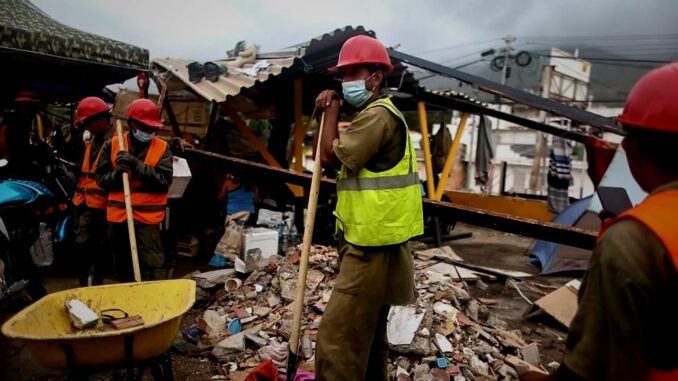
The recent series of devastating earthquakes in Venezuela, with magnitudes of 7.2 and 7.5, has plunged the nation into immediate chaos and crisis. These powerful tremors have caused widespread destruction, tragically claiming over 4,300 lives and leaving thousands injured or displaced. With infrastructure crippled and access roads damaged, rescue efforts face numerous hurdles. This comprehensive guide breaks down the urgent response, from lifesaving rescue operations to rapid reconstruction plans, ensuring you stay informed on how Venezuela is tackling this emergency. ## Urgent Humanitarian Impact and Current Statistics The death toll sits at approximately 4,333, with 315 victims yet to be identified. Over 16,740 individuals have sustained injuries that demand immediate medical attention. Additionally, more than 17,000 people are displaced from their homes, seeking shelter amid the chaos. These figures are rapidly changing as rescue teams continue their operations and new data emerges. In such scenarios, real-time updates and efficient resource allocation are critical to saving lives. ## Impact on Infrastructure and Essential Services Venezuela’s infrastructure has suffered significant damage. Roads, bridges, hospitals, and power grids are either compromised or entirely destroyed in the hardest-hit zones such as Osma and Chuspa. These disruptions hinder the movement of aid and complicate emergency response efforts. Restoring roads and access routes should be prioritized to facilitate medical aid, food distribution, and transportation of rescue teams. Establishing temporary communication networks is essential to coordinate effectively on the ground. ## Rapid Construction of Temporary Shelter and Long-Term Housing Venezuela’s government has pledged to build around 25,000 new housing units within the coming months to accommodate displaced families. Initial phases involve deploying temporary shelters like tents and modular containers, which can be set up within one to two weeks in the severely affected areas. Step-by-step to address immediate housing needs: 1. Identify the most vulnerable: elderly, families with children, and those with medical conditions. 2. Deploy mobile units and quick-install shelters immediately upon damage assessment. 3. Accelerate the production and distribution of prefabricated modular homes over the first 4 to 8 weeks. 4. Initiate long-term reconstruction projects for permanent housing, targeting key zones like Osma and Chuspa, with a timeframe of 6 months or more. In parallel, infrastructure must be upgraded to support water, electricity, and sanitation in these new settlements. ## Managing Logistics, Funding, and Human Resources Effective disaster response hinges on streamlined logistics, robust funding strategies, and skilled human resources. Critical steps include: – Implementing damage assessments to direct resource deployment effectively. – Establishing logistics hubs for the prompt supply of construction materials, medical supplies, and relief goods. – Securing funding from national budgets, international aid, and humanitarian organizations. Incorporating rapid donor mechanisms can accelerate resource flow. – Mobilizing qualified personnel—engineers, medical teams, and logistical coordinators—through rapid deployment programs. Tip: Building local capacity through quick training programs empowers communities to assist in relief efforts, reducing dependency on external teams. ## Search and Rescue Operations: Techniques and Technologies In life-threatening situations, timely rescues can mean the difference between life and death. The most effective methods involve cutting-edge technologies: – Thermal imaging cameras that detect body heat amid debris. – Acoustic sensors to identify sounds such as calling for help. – Search-and-rescue dogs trained specifically to locate survivors. – Aerial drones equipped with high-resolution cameras for mapping inaccessible areas. Step-by-step rescue approach: 1. Rapid debris assessment using drones and sensors. 2. Deploy specialized rescue units with dogs and thermal cameras. 3. Create a real-time data-sharing platform to coordinate rescue teams. 4. Focus efforts on areas with the highest likelihood of survivor presence. Once the survivors are located, immediate medical treatment, stabilization, and extraction are paramount. ## Medical Response and Psychological Support The influx of injuries strains healthcare facilities, making mobile clinics and field hospitals indispensable. Priorities include: – Triage stations to assess and prioritize patients. – Rapid transportation of critical cases to functioning medical centers. – Ensuring the availability of blood supplies, surgical kits, and medication. – Providing psychological counseling to victims and rescue personnel to cope with trauma. In addition, establishing mental health hotlines and community support systems helps address the widespread psychological toll. ## Ensuring Transparency and Community Engagement Successful disaster management involves transparent communication with the public. Authorities should regularly publish data on rescue progress, resource allocation, and safety advice. Engaging local leaders and community groups enhances the effectiveness of relief efforts. – Use local media and social platforms for updates. – Organize community meetings to address concerns. – Train residents on basic safety and first aid. Real-time data sharing accelerates decision-making and builds public trust. ## Potential Risks and Mitigation Strategies Despite meticulous planning, unforeseen challenges may arise. Risks include: – Delays in housing projects due to logistical hurdles. – Resource misallocation caused by inadequate assessments. – Security threats in unstable regions. To mitigate these, implementing independent audits, prioritizing most affected zones, and ensuring security protocols are vital. Local employment programs stimulate community buy-in and reduce vulnerability. ## Long-term Recovery and Resilience Building Recovery extends beyond immediate relief. Venezuela must invest in building resilient infrastructure, adopting earthquake-resistant architecture, and strengthening early warning systems. Capacity-building initiatives for local communities foster independence and preparedness. Key strategies: – Conduct detailed seismic risk assessments. – Integrate disaster risk reduction into urban planning. – Promote community awareness campaigns. – Establish regional cooperation frameworks for shared knowledge and resource pooling.