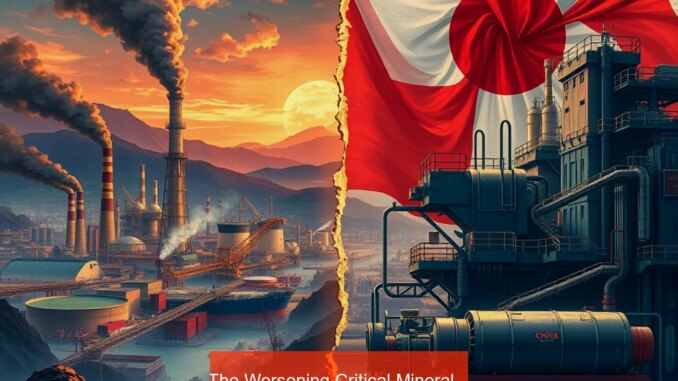
China’s Sudden Export Restrictions on Strategic Minerals Disrupt Global Industries
In a bold move that sent shockwaves through the global market, China completely halted the export of four essential rare minerals—Gallium, Dysprosium, Terbium, and Ithrium—to Japan in June. This decisive action underscores China’s strategic leveraging of natural resources in geopolitical disputes and has profound implications for industries worldwide. From semiconductor manufacturing to electric vehicle production, the ripple effects threaten to escalate costs and slow down innovation cycles across multiple sectors.
Understanding the Significance of the Restricted Minerals
Each of these minerals plays a critical role in modern technology:
- Gallium: Vital for manufacturing high-speed semiconductors and LED technology. Its unique properties enable faster, more efficient electronic devices.
- Dysprosium: An essential component in high-performance permanent magnets used in wind turbines, electric motors, and defense systems.
- Terbium: Used in phosphors for lighting and displays, as well as in advanced magnetic materials.
- Ithrium: Key in laser technology, high-temperature superconductors, and turbines in aerospace and energy sectors.
Before June, Japan imported substantial quantities of these minerals from China, accounting for a significant share of their supply chain. The sudden cessation reflects China’s desire to exert economic and political influence, with other nations watching closely as supply lines tighten.
The Global Impact of China’s Export Ban
Although China has historically controlled more than 60% of the world’s rare earth reserves and a commanding share of processing capacity, this move marks a pivotal shift. The immediate effects include:
- Manufacturing Delays: Industries relying on these minerals face shortages, leading to postponed production schedules.
- Increased Costs: Scarcity drives up prices, particularly for high-tech sectors such as aerospace, defense, and renewable energy.
- Supply Chain Realignment: Countries now scramble to find alternative sources, invest in recycling, or develop home-grown production capacities.
- Geopolitical Tensions: The export ban exacerbates existing diplomatic frictions and accelerates discussions over resource sovereignty.
The global market has experienced a surge in prices—up to 30-50% for certain minerals—and a rush among manufacturers to secure supplies. Companies are exploring new sourcing strategies, including tapping into reserves in Australia, United States, and Africa.
Resilient Strategies: Diversifying Supply Chains
To mitigate China’s dominance, nations and corporations are actively pursuing alternative sources and advanced recycling techniques. Notable efforts include:
- Investing in Alternative Mining Operations: Australia’s Lynas Rare Earths plans to expand its processing capacity, aiming to produce dysprosium and terbium domestically by 2026, reducing reliance on China.
- Enhancing Recycling Technologies: Companies are developing innovative methods to reclaim rare earths from electronic waste, decreasing dependency on newly mined materials.
- Forming Strategic Partnerships: The US and EU are creating multi-national consortiums to share resources and accelerate the development of sovereign supply chains.
- Innovating in Material Substitutes: Researchers are exploring alternative materials that can replace these critical minerals in certain applications, helping industries adapt.
The Road Ahead: Long-term Implications and Opportunities
This export ban acts as a catalyst for global resource re-evaluation. It highlights vulnerabilities in the current supply chain and urges an urgent shift towards sustainability and self-sufficiency. Countries that act swiftly can turn the challenge into an opportunity to develop technologies for mineral recovery, expand domestic mining, and diversify supply sources.
In particular, investment in R&D for material substitutes and recycling could redefine the future landscape of the high-tech industry. Meanwhile, industries must prepare for increased costs and supply uncertainties by building strategic reserves and adapting product designs for greater resource efficiency.
Conclusion: Navigating the New Mineral Economy
As China enforces these restrictions, global industry players face a critical inflection point, requiring innovative strategies and collaborative efforts. The move underscores the importance of resilient supply chains, technological innovation, and geopolitical savvy in securing the future of high-tech manufacturing. Leaders across sectors must evaluate their dependencies, accelerate alternative sourcing projects, and invest heavily in recycling and material science to stand with future shocks in the mineral supply ecosystem.