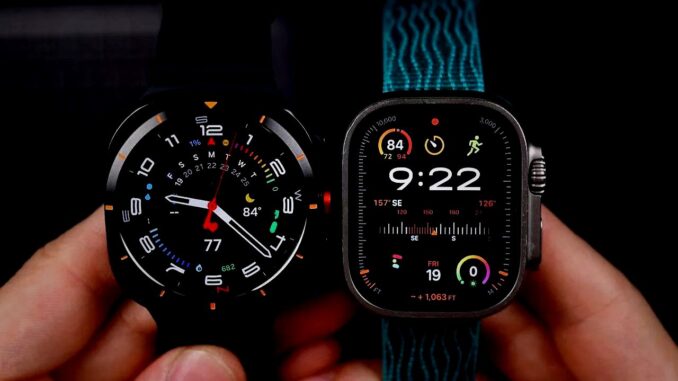
When you think about the rapid evolution of smartwatches, what often comes to mind is sleeker design, longer battery life, or more health-tracking features. But behind the scenes, a technological revolution driven by artificial intelligence (AI) is fundamentally transforming how these devices operate — making them smarter, faster, and more private than ever before. At the core of this revolution is Edge AI. Unlike traditional AI that relies heavily on cloud servers, Edge AI processes data locally on the device itself. This shift addresses crucial concerns about privacy, latency, and power efficiency, while unlocking the potential for real-time health monitoring and instant alerts. Let’s explore how on-device AI models are changing the face of smartwatches and what this means for users worldwide. ## Unpacking Edge AI and Its Impact on Wearables Edge AI refers to deploying artificial intelligence capabilities directly on smartwatch hardware rather than relying on internet/cloud connectivity. This means your watch can analyze complex data streams such as heart rate, oxygen levels, and motion signals instantly, without needing to send information to distant servers. This local processing delivers several key advantages: – Reduced latency: Instantaneous insights mean faster alerts for abnormal heart rhythms or falls. – Enhanced privacy: Sensitive health data remains on the device, significantly limiting exposure risks. – Lower power consumption: Processing data locally consumes less energy than transmitting large datasets constantly. Imagine a smartwatch detecting atrial fibrillation almost immediately and alerting you to seek medical attention — all without transmitting sensitive data until you explicitly choose to do so. This seamless, privacy-preserving approach signifies a milestone in wearable technology. ## How On-Device Inference Works in Practice Let’s break down a typical on-device inference process on a modern smartwatch: | Step | Description | |———|————–| | 1. Data Collection | Sensors capture data (eg, ECG signals, accelerometer data). | | 2. Data Preprocessing | The device filters noise, segments data into manageable windows, and normalizes inputs. | | 3. Model Inference | A lightweight AI model, optimized for low power, analyzes data for anomalies. | | 4. Decision & Action | If irregularities are detected (eg, arrhythmia), the watch issues a real-time alert or initiates a predefined protocol. This entire pipeline executes instantly, ensuring users receive timely insights. Unlike cloud-based systems, which often experience latency or failures under poor internet conditions, local inference guarantees reliability. ## Leading Advanced Chips Powering AI on Smartwatches The hardware backbone is crucial for realistic AI deployment on a compact device. Advancements in specialized chips now enable efficient, powerful AI models to run on tiny batteries. – Apple S9 Chip: Introduced with the latest Apple Watch models, this 4-core neural processing unit (NPU) accelerates on-device AI tasks, supporting features like health anomaly detection and personalized workout recommendations. – Huawei Kirin W80: This customized wearable chipset combines optimized radio modules with a dedicated NPU, focusing on continuous health monitoring and low-power operation. – Qualcomm Snapdragon Wear Platform: The newest generation offers high-performance AI accelerators designed to handle more complex models for on-the-fly health analysis and smart notifications. These chips exemplify how integrating AI-specific hardware elevates smartwatch capabilities to new heights, with energy efficiency and processing power working hand in hand. ## Transforming Healthcare with On-Device AI The integration of on-device AI in smartwatches does more than just enhance user experience; it redefines healthcare through early detection and continuous monitoring. – Atrial Fibrillation & Arrhythmia Detection: AI models analyze real-time ECG data to identify irregular heart rhythms with high accuracy. Early warnings allow for prompt medical intervention, potentially preventing strokes. – Sleep Apnea Screening: By analyzing sleep patterns and breathing signals, smartwatches can flag possible sleep disorders, encouraging users to seek clinical evaluation. – Blood Pressure & Vascular Health: Continuous analysis of PPG data helps estimate vascular age and hypertension risk, facilitating preventive health management. These capabilities are especially vital for elderly users or those with chronic conditions, where timely alerts can save lives. ## Privacy and Security Advantages of Device-Localized AI Deploying AI models directly on watches significantly improves data privacy. With local inference: – Users control what data is processed and shared. – Sensitive health information stays on the device unless explicitly shared. – It reduces the attack surface by limiting data transmission. This creates a trustworthy platform where individuals feel comfortable sharing their health metrics, knowing their data remains protected. ## Practical Guidance for Developers and Manufacturers For those developing wearable AI applications, focus on creating lightweight, efficient models. Use model compression techniques like quantization to reduce size without sacrificing accuracy. Design adaptive algorithms capable of operating reliably across diverse conditions and user behaviors. Prioritize user personalization by enabling models to fine-tune on individual data, improving relevance and accuracy. Also, consider hybrid inference strategies, where critical alerts happen locally, while less urgent insights are uploaded for deeper analysis. In hardware, opt for APUs or NPUs designed for low energy consumption but high throughput. Regularly update AI models to incorporate new health insights and improve robustness, reinforcing user trust. ## Future Outlook: Smarter, Safer, and More Independent Devices As the technology continues to mature, expect to see wearables that seamlessly integrate advanced AI for predictive analytics, early diagnostics, and personalized health regimes. The emphasis on edge processing will grow, ensuring devices become more autonomous, privacy-centric, and reliable. This evolution will empower users to take charge of their health with confidence, while healthcare providers receive more continuous, real-time data streams to inform smarter interventions and personalized care plans. The fusion of wearable technology and edge AI promises a future where health monitoring is instantaneous, accurate, and respecting individual privacy at every step.