
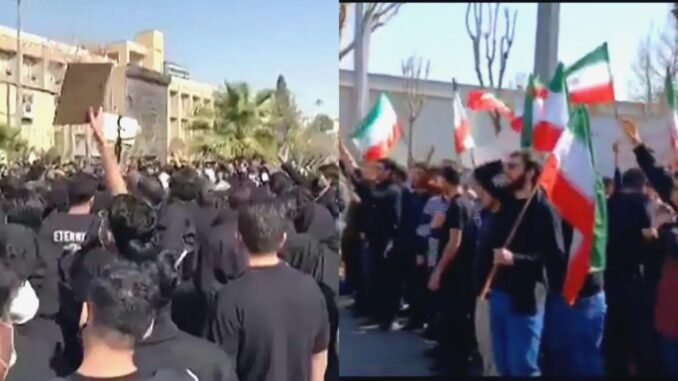
Unrest Erupts in Iranian Universities as Student Protests Intensify
Recent weeks have seen a wave of unrest sweeping across Iran’s universities, signaling a resurgence of political activism among students. These protests are not isolated; they echo a broader dissatisfaction with the current regime and reflect the deep-seated frustrations of a generation seeking change. With students mobilizing en masse, their demonstrations have become a focal point of national tension, drawing international attention and raising questions about the future of Iran’s socio-political landscape.
Many students have openly voiced their discontent with government policies, particularly those impacting freedoms, economic conditions, and social justice. Amidst heavy security presence, campus protests often escalate into passionate chants and confrontations, creating a volatile environment that authorities are struggling to control. The clashes are rarely limited to peaceful demonstrations, as students sometimes engage in direct confrontations with security forces, throwing stones and setting fires as symbols of resistance.
The Significance of Top Universities in These Movements
Institutions like Sharif University of Technology and the University of Tehran stand out as epicenters of activism. These universities have historically been hotbeds for reformist ideas and political dissent, and their student bodies continue that legacy today. The presence of students rallying against perceived injustices signifies a deep-rooted desire for social change that transcends superficial reforms.
At Sharif University, videos circulating on social media show students chanting slogans against Iran’s Supreme Leader Ayatollah Ali Khamenei, as well as protests targeting broader governmental policies. Such open defiance is part of a long-standing pattern of student-led movements challenging authoritarian control, which now appears more energized than ever.
Government Response and Escalation of Violence
The response from authorities has been swift and often brutal. Security forces deploy tear gas, rubber bullets, and physical force to disperse demonstrators. In some instances, they have detained dozens of students during protests, a tactic aimed at intimidating the youth. However, such measures frequently backfire, fueling further anger and galvanizing more students to participate.
Footage from various campuses shows students throwing stones at police lines, setting barricades, and, in some cases, engaging in small skirmishes. The use of special student militias such as the Basij has been instrumental in suppressing these demonstrations. Nevertheless, these tactics only deepen the unrest, as they reinforce the narrative that the government suppresses legitimate demands through violence.
New Patterns of Student Engagement and Digital Mobilization
Today’s protests leverage social media platforms to coordinate and amplify their messages. Videos and live streams from campuses are rapidly shared, creating a sense of unity among dissenters and attracting international solidarity. Hashtags calling for justice and freedom trend worldwide, bolstering the movement’s visibility.
Particularly, students have been using platforms like Twitter, Telegram, and Instagram to organize flash protests, share information about arrests, and document police brutality. This digital mobilization bypasses traditional state-controlled media, voicing to a generation eager to redefine their nation’s future.
Notable Incidents and Symbols of Resistance
Some protests have gained attention due to their symbolic acts, such as chanting slogans against the monarchical remnants, including the exiled Riza Pahlavi. Students also remember the brutal repression during previous uprisings, emphasizing the continuity of their struggles.
In Takharan and Mashhad, students have tried to commemorate fallen scholars by laying flowers near security checkpoints or displaying banners calling for justice. These acts serve as powerful symbols of resilience, illustrating that despite harsh crackdowns, the spirit of resistance remains alive among youth.
Implications for Iran’s Political Future
The current wave of student protests indicates a potential shift in Iran’s internal dynamics. Historically, universities have acted as incubators for reformist ideas that eventually influence broader political currents. If this momentum persists, it could spark larger democratic movements that challenge the current regime’s legitimacy.
Expert analyzes suggest that the persistence of such protests may pressure the government to reconsider some policies or risk increased instability. The international community closely monitors these developments, with many calling for greater respect for human rights and the freedom of expression.
What Comes Next?
While the immediate future remains uncertain, the resilience shown by Iranian students signals a significant shift. Their ability to mobilize, despite repression, demonstrates a profound desire for change. Whether this will lead to tangible reforms or further crackdowns remains to be seen, but one thing is clear: Iran’s universities are at the heart of a movement that could reshape its political landscape.
As the protests continue, awareness around student activism grows, emphasizing the importance of protecting fundamental rights. This ongoing unrest underscores a critical point—youth-led movements often serve as catalysts for societal transformation, and Iran’s students are firmly at the forefront of this historic moment.







Be the first to comment