
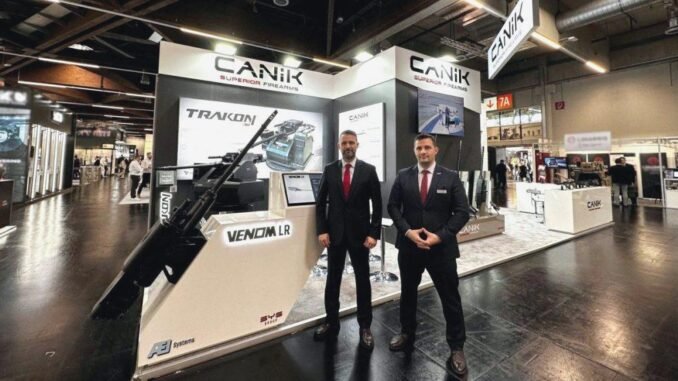
In an era where global security landscapes are rapidly shifting, Turkish defense firms are stepping into the spotlight with innovative solutions that are redefining Europe’s approach to internal security and military preparedness. As threats evolve from traditional border conflicts to complex cyber and drone warfare, companies like SAMSUN Yurt Defense (SYS Group), CANiK, AEI Systems, and UNIROBOTICS are emerging as key players on the international stage, especially within the European continent. Their cutting-edge technologies and strategic collaborations are not just supplementing existing security infrastructure but actively transforming regional defense systems.
The competitive edge of these Turkish companies lies in their ability to combine advanced engineering with flexible, cost-effective production. Unlike many European defense manufacturers constrained by legacy systems or bureaucratic hurdles, Turkish firms are characterized by their agility, rapid innovation cycles, and a clear understanding of modern threats. This agility allows them to develop tailored solutions capable of countering diverse dangers, from conventional military threats to asymmetric attacks involving unmanned aerial vehicles (UAVs) or cyber intrusions.
Emergence of Turkish Defense in Europe’s Security Ecosystem
Amid rising geopolitical tensions, especially in eastern Europe and the Mediterranean, Turkish defense entities are positioning themselves as strategic partners capable of filling critical gaps. Their presence at major international arms shows like ENFORCE TAC 2026 underscores this shift; Nations seeking reliable, state-of-the-art solutions find Turkish companies increasingly attractive. Not only do they provide high-performance weaponry and surveillance systems, but they also emphasize rapid deployment, interoperability, and affordability — values highly prized in the fast-paced European defense landscape.

In particular, Turkey’s export success with small arms, sniper systems, and unmanned systems demonstrates a clear demand for high-quality yet budget-conscious military equipment. The Turkish manufacturers’ adherence to NATO standards ensures their products integrate seamlessly with existing European forces, fostering cooperation rather than disruption. This compatibility gives Turkish firms a competitive advantage in markets traditionally dominated by European and American manufacturers.
Innovation at the Core: Turkish Solutions to New-age Threats
Turkish companies are not merely replicating older systems but integrating AI, sensor fusion, and autonomous operation into their designs. For instance, the development of UAVs and drone defense systems allows security agencies across Europe to respond swiftly to asymmetric threats. Companies like AEI Systems are pioneering counter-drone technologies, which are increasingly vital given the proliferation of commercial and militarized drones used in espionage or attacks.

Meanwhile, independent firearms manufacturers such as CANiK continue to push the boundaries of small arms technology. Their high-precision rifles and military-grade pistols are gaining recognition for durability and performance under extreme conditions. Recent models like the M2 QCB sniper rifle can fire over 650 rounds per minute, combining firepower with reliability essential for modern combat scenarios.
Furthermore, unmanned robotic systems developed by firms like UNIROBOTICS are bringing automation into Europe’s defense sector. These systems serve multiple roles—from reconnaissance missions to logistical support—reducing risks to human personnel and improving operational efficiency. Their modular design and ease of integration enable military units and security agencies to customize solutions based on specific threat profiles.
Strategic Collaborations and Export Markets
Turkish defense firms do not operate in isolation; They actively forge partnerships across Europe to expand their reach. These collaborations involve technology sharing, joint ventures, and co-production agreements, especially in countries seeking to diversify their procurement sources amid ongoing geopolitical shifts. Turkey’s strategic view emphasizes building long-term relationships, aligning their innovations with European Union and NATO standards, and offering flexible procurement options.
Export figures reveal a significant uptick; Turkish defense exports have increased by over 25% in recent years, with European accounting for a substantial share. Countries in Eastern Europe, the Balkans, and even parts of Western Europe increasingly source Turkish-made weapons and systems, citing quality, affordability, and rapid customization as key reasons.

Defense Fairs as Launchpads for Turkish Technologies
Major international defense expos act as critical platforms for Turkish companies to showcase their latest innovations. Events like ENFORCE TAC serve as gateways for Turkish firms to demonstrate their capabilities, attract buyers, and negotiate strategic alliances. At these fairs, Turkish companies gain visibility by presenting state-of-the-art weapon systems, surveillance equipment, and unmanned platforms, often surpassing legacy European alternatives in affordability and adaptability.
Participation in such events also positions Turkey as a trusted partner within Europe’s security matrix. By exhibiting advanced counter-drone systems, portable missile defense units, and autonomous combat robots, Turkish firms cement their reputation in high-stakes defense markets, challenging traditional manufacturers and reshaping supply chains.
European Security and Turkish Innovation
Faced with evolving threats from hybrid warfare, cyber attacks, and irregular combat, European nations increasingly seek versatile and reliable defense partners. Turkish defense companies step into this role by providing integrated solutions tailored to address these multifaceted challenges. Their modular systems enable rapid upgrades and flexible deployment, ensuring that European security forces stay ahead of malicious actors.
For example, integrating cybersecurity modules with physical defense systems grants a comprehensive safety net. Companies like AEI Systems develop cyber-defense platforms that protect critical infrastructure and military networks, aligning with EU cyber strategies. Similarly, indigenous Turkish innovations in battlefield robotics support European armies in autonomous surveillance, explosive disposal, and perimeter security—particularly crucial in regions where traditional manpower shortages or threats from unconventional combatants exist.
Looking Ahead: Strengthening Turkey-Europe Defense Ties
The sustained growth of Turkish defense exports, coupled with their technological advancements, signals a major shift in Europe’s security procurement landscape. As the region faces new threats, Turkish companies position themselves as agile, innovative, and cost-effective partners capable of bridging existing gaps. This evolution fosters an environment where mutual cooperation and technology transfer become central themes, with Turkey transforming from a traditional regional military actor into an influential leader shaping Europe’s future safety paradigm.








Be the first to comment