
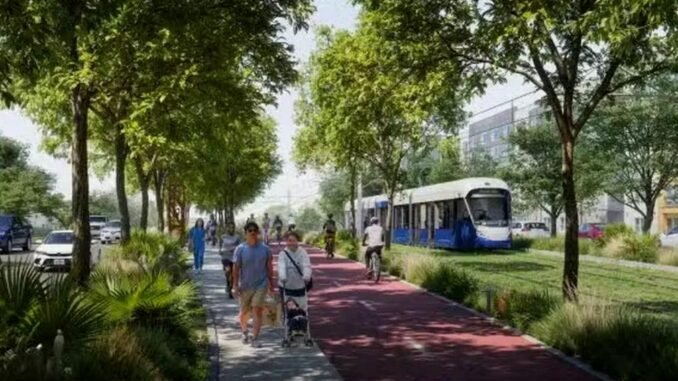
Transforming Austin’s Transit Landscape with the New Light Rail Project
Imagine a city where congestion, pollution, and inefficient commutes are relics of the past. Austin is taking bold steps toward making this a reality through its ambitious light rail initiative. As urban populations swell and transportation demands evolve, the city’s leadership recognizes the urgent need for a modern, sustainable, and efficient transit solution. This groundbreaking project, valued at approximately $7.1 billion, promises to revolutionize how residents and visitors traverse the city, offering a seamless, eco-friendly alternative to current transportation modes.
The core of this transformation lies in a meticulously planned 15.8 km light rail line that aims to connect key parts of Austin—spanning from vibrant urban centers to bustling suburbs. It’s not just about reducing traffic jams; It’s about shaping a smarter urban environment that prioritizes connectivity, environmental sustainability, and economic growth. This comprehensive effort is powered by innovative design-build practices, promising a swift delivery timeline and long-term operational excellence.
Strategic Partnership Driving Innovation
One of the most significant elements of this project is the formation of a specialized consortium of industry leaders. Stacy Witbeck and Sundt Construction form the backbone of the Austin Rail Contractors (ARC) team, tasked with executing the critical infrastructure works. Their responsibilities encompass constructing bridges, laying down new tracks, developing passenger stations, and installing advanced signaling systems that ensure safety and efficiency. This collaboration combines expertise across civil engineering, construction management, and transit planning, offering a holistic approach to deliver a project that meets top-tier standards.
On the design front, two prominent firms, Stantec and Mott MacDonald, are responsible for the detailed planning and urban integration. Their work ensures that each station, each track, and the overall system harmonize with Austin’s unique cityscape and future growth plans. Such integration guarantees that the transit system remains flexible and scalable to accommodate future expansions and technological advancements.
Adopting a Forward-Thinking Delivery Model
To accelerate construction timelines and minimize potential budget overruns, Austin Transit Partnership (ATP) adopts a design-build procurement strategy. This integrated method streamlines the entire process by combining design and construction phases into a single contract, fostering greater coordination and innovation. It ensures the project remains adaptable, allowing for quick adjustments in response to unanticipated challenges or community input.
Furthermore, this approach encourages contractors like ARC to incorporate sustainability practices, advanced materials, and construction efficiencies that reduce environmental impact and lifecycle costs. This proactive management style positions Austin’s transit system as a leader in modern urban transit projects.
Route Overview and Service Details
The planned light rail line will serve 15 strategic stations, connecting key neighborhoods, commercial hubs, and cultural districts. Notable stops include areas near Lady Bird Lake, downtown Austin, and the University of Texas. These stations are strategically placed to maximize accessibility and promote transit-oriented development.
- Frequency: During peak hours, trains are scheduled every 5 to 10 minutes, providing rapid and reliable service for commuters and visitors.
- Expansion Plans: The project envisions extending the line further north toward urban residential zones, and southward toward the Austin-Bergstrom International Airport, aiming to create a comprehensive transit corridor across the city.
Benefit analysis suggests that commuters can expect a significant reduction in travel time, improved air quality, and a decrease in road congestion within the next decade.
Project Timeline and Future Outlook
Austin’s transit authorities have mapped out an aggressive schedule to ensure project delivery. The initial phase, including community consultations and detailed design, is scheduled to conclude by 2026. The physical construction kick-starts in 2027, with the goal of completing the entire system by 2033.
This timeline is synchronized with Austin’s broader urban development and climate strategies, ensuring that the light rail system aligns with city goals for sustainable growth and smart mobility. Once operational, the light rail will serve as a backbone for Austin’s public transit, supporting economic vitality, reducing reliance on personal vehicles, and contributing to a greener future.







Be the first to comment