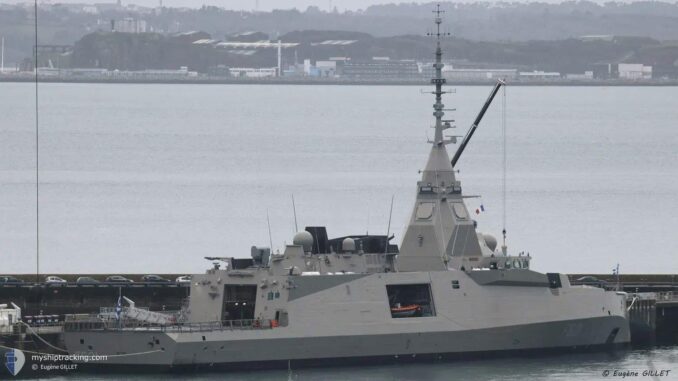
Greece’s FDI Class Frigates: A Turning Point in Naval Power
When Kimon, the lead ship of Greece’s FDI class frigates, rolled into port after a grueling acceptance phase in Brest, it signaled more than a routine delivery. It marked Greece’s deliberate leap into modern naval warfare, embracing advanced sensor suites, integrated weapon systems, and a phased modernization path that aims to keep the fleet ahead of evolving threats through 2030 and beyond. From the shipyard to active service, the Kimon program illustrates how national strategy, industrial collaboration, and disciplined timelines converge to redefine regional maritime balance.
Strategic Context: Why the FDI Class Matters for Greece
Greece faces a demanding maritime frontier, with critical trade lanes and sensitive territorial waters. The FDI class frigates offer a scalable solution that blends: long-range air and surface defense, multi-mission capability, and rapid integration of new systems. The program envisions four ships, delivering in stages through 2026 to 2028, with full operational capability by the end of 2028. This phased approach ensures operational continuity and preserves warfighting relevance as defenses evolve.
Delivery Milestones: From Lorient to the Aegean
The initial Kimon was ceremonially handed over in Lorient, France, on 18 December 2025. The handover was witnessed by Nikos Dendias, Greece’s Minister of National Defence, and Catherine Vautrin, then-Minister of Armed Forces and Veterans of France. Less than two months later, the ship completed its acceptance tests in the Port of Brest, advancing to a naval base that has historically hosted carrier and multipurpose operations. The trajectory from test to home basing highlights a meticulously staged onboarding process designed to minimize risk and maximize early mission readiness.
The fleet’s deployment plan includes bringing similar ships into Greek service in 2026, with the final unit scheduled to commence operations in 2028. Each vessel spans approximately 122 meters, a length that embodies significant endurance, sea-keeping, and payload capacity for modern combat systems. The Kimon class names pay homage to storied commanders—Kimon, Nearhos, Formion, and Themístoklis—emphasizing a lineage of strategic thinking and naval prowess.
Modernization Roadmap: From Standard Configurations to Full Integration
The modernization plan unfolds in clearly defined phases culminating in an integrated, networked combat environment. The journey begins with Standard 1, representing the French Navy’s baseline configuration, and progresses through Standard 2 and Standard 2+ before finalizing with Standard 2++. This staged approach accommodates budget cycles, supplier maturation, and evolving threat landscapes, while ensuring the ships remain capable in parallel with domestic and alliance plans.
Central to this modernization is the deployment of ASTER 30 surface-to-air missiles in an eight- and sixteen-missile configuration, distributed across a robust air defense topology. The planned 21-cell RAM Block 2B batteries provide layered protection against anti-ship missiles and aircraft, forming a versatile shield around the frigate’s mission sets. Coupled with upgrades to sensors, propulsion, and combat management, the ships acquire a resilient, all-weather defensive posture.
Setis, the combat management system, undergoes a comprehensive upgrade, ensuring sensor fusion, improved target prioritization, and faster decision cycles. The result is a coherent battlefield picture that supports higher tempo operations and more effective threat engagement. In addition to traditional sensors and radar suites, the program guarantees full integration of CAMCOPTER S-100 unmanned aerial systems, enabling persistent reconnaissance, target designation, and rapid attack coordination without crew exposure to hazard zones.
Operational Readiness: Crewing, Training, and Interoperability
Operational readiness hinges on more than hardware. The Greek Navy has structured a comprehensive approach to crew training, long-range sustainment, and interoperability with NATO allies. The schedule anticipates crew training and equipment integration to align with ship deliveries between January 15 and 20, 2026, a tight window that prioritizes hands-on readiness while ensuring safety and technical proficiency.
The Kimon program demonstrates a deliberate emphasis on interoperability with European, American, and allied systems. This ensures that Greek frigates can operate within joint task forces, share real-time data, and leverage allied sensor networks. The integration of the CAMCOPTER S-100 platform, for instance, highlights a modern battlefield approach where unmanned assets extend sensor reach and enhance decision-making without compromising crew safety.
Weapon Systems and Defensive Capabilities: A Modern Battlefield Footprint
At the heart of the FDI’s combat capability is a modular, layered defense scheme that prioritizes both anti-access/area denial (A2/AD) and local superiority. The ASTER 30 surface-to-air missiles provide high-value air defense coverage against modern fighter and missile threats, while the RAM Block 2B system completes the close-in defense envelope. This combination ensures the ships can defend themselves and critical groups against coordinated salvos and stand-off attacks.
Beyond air defense, these frigates feature robust anti-ship and littoral capabilities, a flexible gun system, and capable anti-submarine warfare (ASW) provisions. The ongoing integration of new electronic systems and sensors enhances situational awareness, allowing the crew to identify and respond to threats in a dynamic maritime theater. The modernization also includes SETIS-based enhancements, enabling faster target tracking, improved engagement sequencing, and a more resilient command-and-control framework for complex missions.
Operational Deployment and Strategic Impact
As Greece progresses toward full activation of its FDI-class fleet, the strategic impact becomes increasingly tangible. The ships’ presence in the eastern Mediterranean strengthens deterrence, while their interoperability with alliance forces enhances regional security architectures. The program’s emphasis on phased delivery and continuous modernization ensures the fleet can adapt to evolving threats, from long-range air defense challenges to advanced coastal and maritime access operations.
In practical terms, the Kimon and its sister ships will perform a spectrum of missions: protective escorts for critical assets, sea control in contested environments, intelligence, surveillance, and reconnaissance (ISR) tasks, and rapid response to crises. With unmanned aerial and surface systems integrated into the shipboard architecture, crews gain extended reach, enabling proactive threat management rather than reactive defense.
Industrial Collaboration and Capacity Building
The Kimon program also represents a significant industrial and technological partnership between Greece and France, along with broader European suppliers. This cooperation not only accelerates capability-building but also fosters a domestic ecosystem for sustainment, maintenance, and potentially future evolution of the fleet. By anchoring the program in a multi-national framework, Greece secures access to cutting-edge innovations while preserving national autonomy in defense planning.
A Glimpse into the Future: 2030 and Beyond
Looking ahead, the FDI class modernization trajectory is designed to absorb new weapon systems and platform-level enhancements that may emerge in the 2030s. The architecture’s openness supports ongoing upgrades without requiring a wholesale replacement, ensuring Greece maintains strategic mobility in a rapidly changing regional security environment. The plan to keep ships fully operational through 2028 and beyond reflects a long-term commitment to maritime superiority and national resilience.
Ultimately, the Kimon and its sister ships will become the backbone of Greece’s maritime power, delivering persistent presence, robust defense, and agile response capabilities that align with national priorities and alliance obligations. The program demonstrates how deliberate modernization, careful phasing, and strong industrial partnerships can produce a fleet capable of shaping outcomes at sea in the 21st century.