
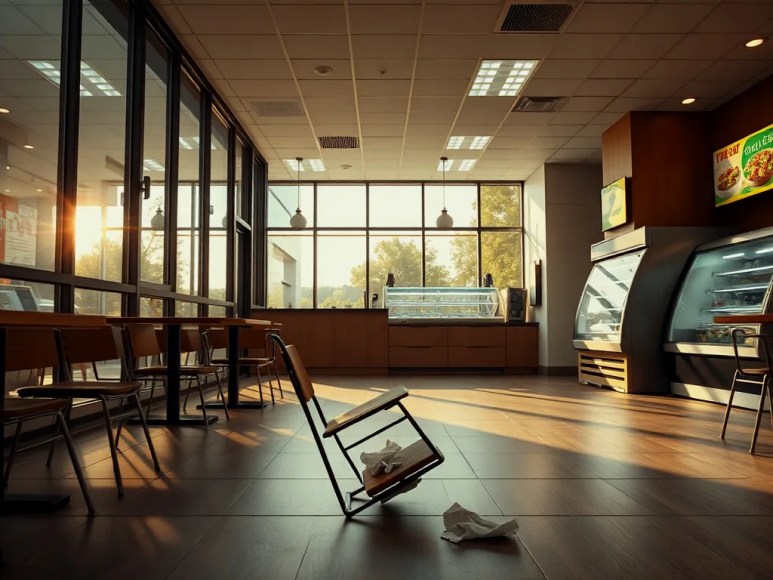
Vinaigrette Salad Kitchen closes remaining US locations
Vinaigrette Salad Kitchen ceased operations when its last two locations closed on November 25, 2026. The chain reached six restaurants before announcing the shutdown once on its social media channels. Management cited sustained financial headwinds and declining in-store traffic as immediate reasons for shuttering the final units.
How market-wide pressures affected healthy fast-casual brands
Several health-focused chains have curtailed footprints or entered restructuring over the past year. For example, Salad and Go closed 70 locations following a mid-2026 restructuring, and True Food Kitchen reduced its national presence, closing 12 units in October while keeping 34 restaurants operating. Sweetgreen reported a 6.4% decline in comparable restaurant sales and a 4.9% drop in customer traffic in Q3 2026; Despite new openings that raised total revenue, the company posted a $30.1 million net loss for the period. These examples illustrate that supply-side expansion alone did not offset weakening per-unit sales.
Why price sensitivity matters more than demand statements
Research from Purdue University in 2025 found that interest in healthy eating often fails to convert into purchase behavior. Roughly half of survey respondents identified the higher cost of healthy options as a barrier, and 42% said they preferred the taste of their current, less-healthy foods. When consumers face a trade-off between price and perceived value, many choose lower-priced familiar options rather than premium healthy offerings. Chains that priced salads and bowls at a significant premium to comparable fast-food items struggled to maintain repeat visits.
Operational and unit economics challenges for healthy chains
Operators in this segment face multiple cost pressures: higher raw ingredient costs for fresh produce, shorter shelf life that increases waste, labor costs for assembly and customization, and capital expenses for refrigerated displays and prep kitchens. Margin math shows how sensitive profitability can be: with average ticket prices in the $10–$14 range, a 4–6% fall in traffic or a 3–5% rise in produce costs can shift a location from modest profit to loss. Chains attempting to expand rapidly exposed corporate overhead to those same per-unit fluctuations, amplifying balance-sheet risk when comp declined sales.
Practical steps brands used to respond and what worked
Successful mitigation strategies that proved effective for some operators included:
1) Controlled menu simplification. Reducing SKU count reduced waste and simplified labor. Removing low-velocity dressings and add-ons improved inventory turns and cut spoilage.
2) Price-tiering and bundling. Introducing lower-priced core bowls and value bundling—meal combos at modest discounts—helped capture price-sensitive customers without eroding brand positioning.
3) Local sourcing partnerships. Shorter supply chains reduced freight and sometimes cut procurement costs for seasonal produce when negotiated with regional farms.
4) Loyalty and frequency programs tied to personalization. Rewarding repeat visits with targeted offers based on past orders increased customer lifetime value and helped recover lapsed traffic.
Examples and data-driven outcomes
A regional chain that implemented menu simplification and a two-tier pricing model reduced food waste by an estimated 12% and increased transactions per location by 5% within six months, according to company internal reporting. Another operator that negotiated direct contracts with local growers reduced outbound produce costs by 7% year-over-year, which translated to a 1.5–2% improvement in net margin at the store level.
Step-by-step checklist for a healthy fast-casual brand facing decline
1. Audit menu SKUs by weekly sales and margin contribution; identify 10–20% of items to remove.
2. Model price elasticity on core items: test modest price points and a lower-priced core bowl to attract value shoppers.
3. Negotiate seasonal contracts with local suppliers to smooth price volatility and shorten lead times.
4. Launch a targeted loyalty pilot focusing on frequency-based rewards, not just discounts, and measure incremental visits.
5. Revisit labor scheduling to match peak demand windows; cross-train staff to handle both prep and front-of-house duties.
6. Monitor five KPIs weekly: transactions per day, average ticket, ingredient waste %, labor cost %, and comparable store sales.
What the Vinaigrette closure implies for investors and operators
The closure underscores that product-market fit for healthy fast-casual is fragile in an environment of tight household budgets and rising food costs. Investors should expect higher operational volatility and demand proof of resilient unit economics—low churn, predictable margins, and a clear pathway to breakeven at the store level—before committing capital. Operators should prioritize margin engineering and targeted value offerings to retain customers without diluting brand identity.
Search-focused FAQ-style points (People Also Ask targets)
Why do healthy fast-casual restaurants close? Lower foot traffic, higher ingredient and waste costs, and price-sensitive customers can erode margins quickly.
Are salads too expensive for most consumers? Many consumers perceive salads as more expensive; Price-tiered offerings and bundles help overcome that perception.
Can local sourcing make a big difference? Yes—local sourcing can reduce freight and procurement costs and improve margin stability for seasonal items when contracts are well managed.
How can a chain cut waste without hurting choice? Use data to remove low-selling SKUs, standardize portioning, and employ weekly forecasting tied to promotions.
Bottom line and actionable takeaway
Vinaigrette Salad Kitchen’s exit reflects a structural challenge for healthy-focused chains: desire for healthier food does not automatically translate into sustainable economic unit when customers prioritize price and taste. Brands that survive and grow will be those that combine disciplined cost control, simpler menus, smart pricing, and loyalty systems that drive repeat visits.