
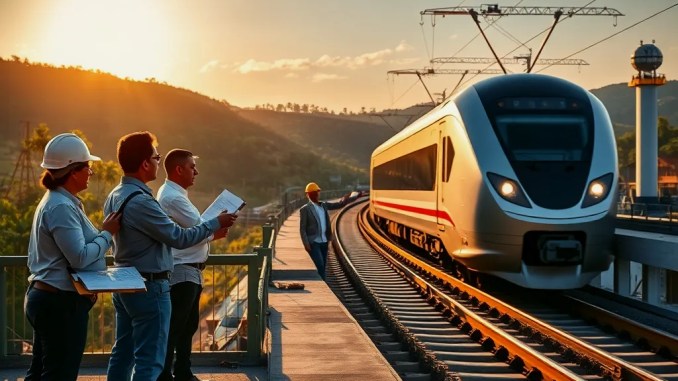
Event Launch and Strategic Context
The 2026 Railway and Infrastructure Industry Week opened on 11 November in Hanoi’s Dong Anh district at the Vietnam Exhibition Center (VEC). Organized by Camel Events in partnership with the Vietnam Society of Civil Engineers (VSCE), the three-day program attracted more than 100 domestic and international brands and over ten exhibiting companies. The timing coincides with Vietnam’s acceleration of major transport projects—most notably the North–South high-speed rail and expanded urban rail networks—creating immediate demand for construction capacity, advanced systems and supply‑chain localization.
Three Focused Exhibitions and Seven Seminars
The event hosts three specialized exhibitions covering railway technologies, construction machinery and civil engineering services, plus seven seminars. Seminar tracks address practical implementation topics: phased deployment of high‑speed rail ecosystems, Transit‑Oriented Development (TOD) integration for urban rail networks, modern bridge and tunnel construction methods, workforce skills development, capital mobilization strategies, and steps to localize component supply chains. Organizers scheduled industry matchmaking sessions and live product demonstrations to convert dialogue into tangible partnerships.
How AI, IoT and Data Platforms Improve Railway Operations
National Data Center Director and Deputy Chair of the National Data Alliance Major General Nguyen Ngoc Cuong emphasized that modern railway upgrades demand integrated data and digital infrastructure as much as physical track and rolling stock. He outlined concrete applications: AI models for predictive maintenance that reduce unscheduled downtime by identifying failure signatures from vibration and acoustic sensors; IoT sensor networks that streamline asset health monitoring across stations, tunnels and bridges; and centralized data platforms that correlate operational, maintenance and passenger-flow data to optimize schedules and energy use. Cuong also highlighted the need to embed cybersecurity and data‑privacy controls into each deployment phase to preserve operational safety.
Practical Examples: Predictive Maintenance and Incident Forecasting
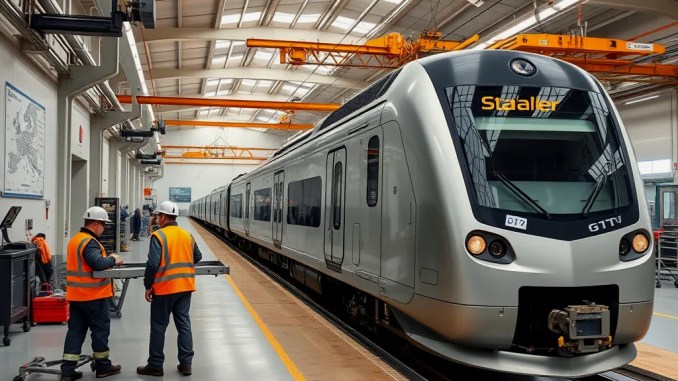
Examples presented at the fair included a pilot where on-board accelerometers and axle temperature sensors feed a machine learning model to detect bearing wear weeks before failure — lowering maintenance costs and preventing derailments. Another demonstration used short‑term passenger-flow forecasting derived from ticketing and mobile‑location data to adjust train frequency dynamically during peak hours, improving punctuality and passenger experience. These case studies showed step‑by‑step implementation: sensor selection, edge data preprocessing, model training on historical failure logs, cloud deployment for fleet‑wide inference and operational feedback loops to retrain models.
Boosting Local Industry Participation and Capacity Building
VSCE President Tran Dinh Tung called for policies and programs that move beyond awarding large contracts to foreign suppliers and instead strengthen local firms’ roles in the value chain. He proposed multi-track initiatives: targeted training programs to upskill technicians and engineers on modern signaling and HVAC systems; joint ventures that pair domestic manufacturers with global component producers; and staged procurement rules that favor certified local suppliers for sub-assemblies. Tangible outcomes he suggested include certification roadmaps, pilot procurement quotas for domestic content and shared R&D facilities to accelerate technology transferral.
Creating an Integrated Railway and Infrastructure Ecosystem
At the event the VSCE launched a Railway and Infrastructure Committee tasked with coordinating research, training and technology transfer across stakeholders. The committee intends to map the sector’s skills gaps and investment needs, then broker collaborations among universities, private manufacturers and international partners. Complementing this, the event introduced an ecosystem initiative designed to link policy makers, investors, operators, human‑resource developers and suppliers to fast‑track project delivery while expanding local industry participation.
Business Opportunities and Investment Pathways
Delegates identified clear business windows: localization of signaling and control systems, depot maintenance and refurbishment services, modular bridge and tunnel components, and software solutions for traffic management. Investment pathways discussed included blended finance structures that combine public concessional loans with private equity, milestone‑based disbursements tied to localization targets, and PPP models where private partners assume technical implementation while the public side secures right‑of‑way and regulatory approvals.
Takeaways for Stakeholders: Concrete Steps to Capture Value
Stakeholders left the week with actionable recommendations: map core competencies against project timelines to prioritize immediate capability-building; launch pilot projects with clear KPIs (reliability, cost, localization percentage); create consortia that bundle local SMEs with international system integrators; and implement data governance frameworks that allow safe sharing of operational data across partners. The combined emphasis on technology, workforce development and procurement reform provides a pragmatic route for Vietnamese companies to increase their share of the rail and infrastructure supply chain.
Outlook: From Exhibitions to Long‑Term Impact
The 2026 Railway and Infrastructure Industry Week positioned itself as a catalyst for commercial agreements, technology transfer and skills-building. By pairing seminars and live demonstrations with formal matchmaking, organizers aimed to convert dialogue into contracts and pilot projects that can scale. If the proposed localization measures and data‑driven maintenance models are adopted, Vietnam could accelerate project delivery, reduce life‑cycle costs and create a more resilient domestic supply chain for decades to come.






Be the first to comment