
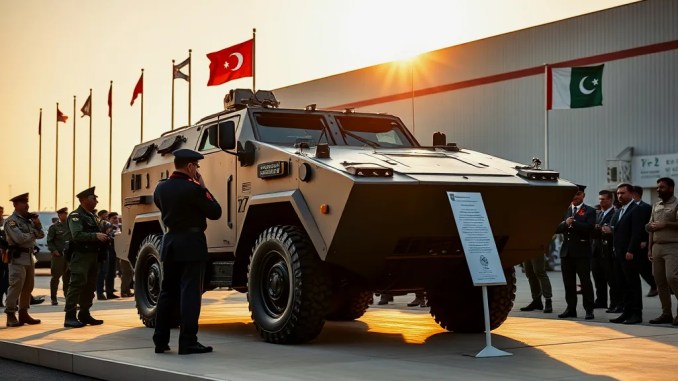
Pakistan Air Force showcases six Turkish defense systems in Iqbal Day video
The Pakistan Air Force released a commemorative Iqbal Day video that actively displays six Turkish-developed platforms and systems. The footage features Baykar’s SİVRİSİNEK kamikaze UCAV, AKINCI MALE UCAV, K2 kamikaze system, and the Bayraktar TB2 SİHA, together with ASELSAN’s KORKUT short-range air defense and ŞAHİN medium-range air defense systems. The video also names Turkey’s national fighter program KAAN under a “TF‑X Cooperation” label, signaling deepening industrial ties between the two air forces.
Why Iqbal Day frames the military message
Pakistan timed the release for 9 November, the birthday of Allama Muhammad Iqbal, whose Shaheen (falcon/eagle) metaphor is widely used in Pakistan to signify soaring capability, self-reliance and courage. The Air Force connects those symbolic themes to its identity: mottos, squadron slogans, and recruitment messaging incorporate Iqbal’s imagery to reinforce a narrative of technological and doctrinal ascent.
Breakdown of the Turkish systems shown and their roles
The video deliberately pairs strike, reconnaissance and layered air defense systems to present an integrated capability picture.
Baykar MOSQUITO — a small loitering munition optimized for short‑range strike against high-value soft targets. Its low weight, low radar cross-section and low logistics footprint make it suitable for asymmetric, agile missions.
Baykar AKINCI — a high-end MALE (Medium Altitude Long Endurance) UCAV with extended ISR and weapons carriage. AKINCI provides wide-area persistence, long-range precision strike and sensor fusion options when integrated into a networked combat architecture.
Baykar K2 (kamikaze) — a tactical loitering strike munition designed for rapid deployment from forward bases to suppress air defenses and high-value targets. It complements both TB2 and AKINCI roles by offering a cost-effective strike layer.
Bayraktar TB2 — a combat-proven tactical UAV for persistent ISR and precision strikes. TB2’s combat record shows how unmanned systems can shift operational tempo by enabling continuous overwatch and timely kinetic interdictions.
ASELSAN KORKUT — a rapid-firing, radar-integrated short-range air defense system designed to defeat low-altitude threats such as helicopters, drones and cruise missiles through automatic target acquisition and high rates of fire.
ASELSAN ŞAHİN — a medium-range air defense family intended to fill the gap between point defense and longer-range systems, using radar cues and command-and-control links to provide area protection for formations and critical infrastructure.
How the combination improves layered defense and force projection
Displaying these systems together illustrates a layered approach: long-endurance ISR/strike (AKINCI, TB2) detects and fixes targets; loitering munitions (MOSQUITO, K2) provide rapid, low-cost strike; and KORKUT/ŞAHİN offer point and area air defense to protect friendly assets. This mix shortens sensor-to-shooter timelines and raises complexity for an adversary’s suppression‑of‑air‑defense campaign.
Bedir Memorandum: multilateral defense industrial cooperation
Turkey, Pakistan, Qatar and Indonesia signed the Bedir (Badr) Memorandum in Doha to expand defense industrial cooperation. The agreement outlines joint production, technical training, research & development collaboration and capacity building in military manufacturing. Turkish signatories included the Minister of National Defense and the Presidency of Defense Industries; partner states signed through senior defense ministers and deputies.
What the memorandum enables in practice
Concrete steps the memorandum facilitates include:
1. Joint production programs. Partner nations can co-design and co-produce airframes, turret systems and subsystems with shared workshares to reduce unit costs and transfer manufacturing know-how.
2. Technology transfer and localization. Agreements can create localized production lines (assembly, subassembly, and final integration) that grow sovereign maintenance and upgrade capacity.
3. Combined R&D projects. Multi-party funding and shared engineering teams accelerate development cycles for sensors, electronic warfare suites and propulsion improvements.
4. Training and sustainment networks. Standardized technical training and regional spare-parts pooling cut downtime and enable faster repairs during operations.
Statements from Turkish Defense Industry leadership
Defense Industry President Haluk Görgün framed the Bedir Memorandum as a platform for “together producing and developing technology,” emphasizing that Turkey seeks partnerships beyond sales: shared engineering, joint development and sustained industrial ties. Görgün highlighted that durable partnerships focus on capacity building and moving past turnkey procurement toward collaborative ecosystems.
Operational and strategic implications for Pakistan
For Pakistan, integrating Turkish unmanned strike assets and layered air defenses expands options for deterrence, border security and expeditionary support for operations short of conventional large-scale conflict. Examples include:
– Establishing persistent ISR coverage in contested border sectors using TB2/AKINCI pairings.
– Using loitering munitions for rapid counter-battery or counter‑UAS missions where traditional strike aircraft aren’t available.
– Deploying KORKUT and ŞAHİN units to protect forward operating bases and critical infrastructure against low‑altitude aerial threats.
Practical steps for interoperability and fielding
To make such an integrated force operationally effective, defense planners should follow these steps:
Step 1: Conduct systems-integration trials. Run joint live‑fire and live‑data link exercises to validate sensor-to-shooter chains and identify latency or encryption issues.
Step 2: Establish common C2 and datalinks. Implement standardized datalink protocols, unified battle-management software and cross‑certified encryption to allow shared targeting and deconfliction.
Step 3: Localize maintenance and supply chains. Create regional depots for spares, develop local MRO (maintenance, repair, overhaul) capabilities, and train technicians through exchange programs.
Step 4: Develop joint tactics and doctrine. Publish combined-operation doctrines and drill integrated missions that use UAVs for persistent ISR while air defenses form protective bubbles around high-value assets.
Risks and mitigation
Rapid acquisition and integration carry risks: cybersecurity of datalinks, logistics bottlenecks, and doctrine mismatch across partners. Mitigation measures include rigorous cybersecurity certification, establishing multi-national logistics agreements, and phased doctrine harmonization with realistic joint exercises.
Takeaways
The PAF’s Iqbal Day video does more than show hardware; it constructs a narrative of capability synergy that aligns symbolic national identity with concrete industrial and operational partnerships. The Bedir Memorandum creates mechanisms to turn that narrative into collaborative programs that can accelerate capability development through shared production, technology transfer and joint R&D. For operators, success will depend on methodical integration steps: trials, common C2, localized sustainment and harmonized doctrine.







Be the first to comment