
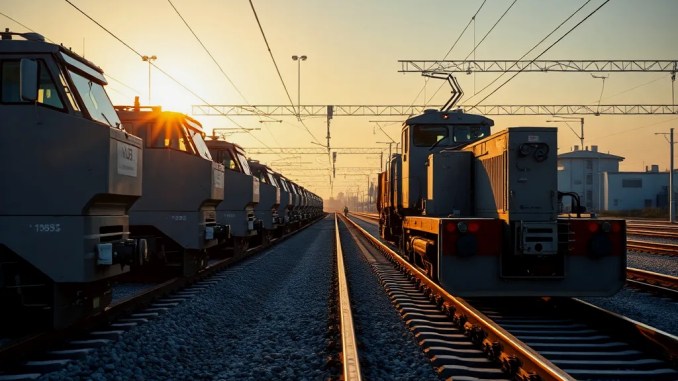
Turkey secures €350 million AIIB financing to modernize rail maintenance
The Ministry of Transport and Infrastructure and the Asian Infrastructure Investment Bank (AIIB) signed a €350 million loan to finance the Turkish State Railways’ (TCDD) Rail Maintenance Modernization Project. The financing procures 99 next‑generation maintenance vehicles and support equipment, reduces the average age of the maintenance fleet, and increases operational capacity to shorten repair times and improve network reliability.
How the investment will increase maintenance capacity and safety
The project replaces aged machines with modern multi-purpose units that streamline track, turnout and catenary maintenance. By shifting from patch repairs to purpose-built mechanized interventions, teams will complete standard maintenance cycles faster and with fewer manual processes. Expected outcomes include:
Reduced track possession times: Coordinated use of specialized units—such as ballast regulators and dynamic stabilizers—will enable teams to restore line geometry faster after works, shrinking overnight or daytime possession windows and minimizing service disruption.
Higher safety through automation: New machines incorporate remote controls, diagnostics, and ergonomic operator stations that lower the exposure of rail workers to live track risks. Predictive maintenance data from these assets will allow preemptive interventions before failures occur.
Operational capacity uplift: New equipment expands the hours and types of maintenance tasks TCDD crews can execute, enabling simultaneous works in multiple locations and improving network during peak traffic.
Which machines will join the TCDD fleet and why each matters
The 99 vehicles break down into specific types chosen to address recurring failure modes on modern rail networks. Each category below includes purpose, a practical example of use, and estimated productivity gains.
8 turnout tamping machines (turnout tamping machines) – Purpose: compact, high-precision tamping of turnouts. Example: one turnout tamping pass reduces alignment defects that otherwise force speed restrictions; productivity: 2–4x faster than manual tamping crews.
11 continuously operating 32‑shovel tamping units – Purpose: continuous ballast tamping along long stretches. Example: on a 50 km renewal campaign these units maintain consistent track geometry at production rates that prevent rework; productivity: maintains tolerances across long sections with minimal stoppage.
6 dynamic track stabilizers – Purpose: rapidly consolidate newly tamped ballast to achieve required track stiffness. Example: after corrective tamping on high‑speed corridors, stabilizers reduce the time needed before reopening the line to scheduled speeds.
7 ballast regulators – Purpose: redistribute and profile ballast for drainage and track support. Example: regulators shape shoulders and free drainage paths after undercutting or tamping works; productivity: lower ballast consumption and fewer rework cycles.
1 rail milling machine – Purpose: remove corrugation and profile rail heads to extend rail life. Example: milling on heavily trafficked curves reduces noise and rail defects, deferring costly rail replacement.
1 rail grinding machine – Purpose: fine grinding to restore optimal contact geometry after welding or milling. Example: post‑weld grinding extends fatigue life and improves wheel/rail contact quality.
24 catenary maintenance vehicles – Purpose: inspect, repair and adjust overhead contact systems. Example: fast response to contact wire failures on electrified lines reduces delays for passenger and freight services.
41 service/inspection units (pose car) – Purpose: versatile on-track cars used for inspection, small repairs and logistics. Example: crews use these units to transport materials and personnel directly to work sites, cutting mobilization time by half.
Procurement timeline, delivery schedule and implementation plan
Tender (procurement) preparations are complete and notices have been published with tenders scheduled for December 2026. Contracts will include performance and delivery milestones, warranty commitments and training packages. The agreed delivery window begins on contract signature and requires full fleet delivery within 48 months.
Implementation steps (typical sequence):
1) Contract award and kick‑off: finalize technical specifications, accept factory production schedules and establish acceptance test protocols.
2) Factory acceptance tests (FAT): validate functionality, safety systems and remote diagnostics before shipment.
3) Sea/rail logistics and commissioning: staged deliveries with on-site commissioning at TCDD facilities; initial units enter pilot operations to validate workflows.
4) Training and knowledge transfer: manufacturer‑led operator and maintenance training for TCDD crews, plus documentation and spare parts provisioning.
5) Ramp‑up to full fleet operation: progressive replacement of older units, scheduling a balanced maintenance‑delivery program so service availability is preserved.
Strategic value beyond machine procurement
The project goes beyond equipment purchase: it modernizes TCDD’s maintenance model. New diagnostic outputs from vehicles will feed centralized asset management systems to prioritize interventions by risk and cost, enabling life‑cycle based maintenance planning. That shift typically reduces total maintenance cost per track‑km over time while improving availability for commercial traffic.
Example impact: a corridor that historically required frequent minor interventions may see a 20–40% drop in emergency repairs once continuous tamping and stabilizing capabilities are in place, because geometry defects are removed earlier and more consistently.
What rail operators and passengers will notice
Passengers and freight customers will experience fewer unscheduled speed restrictions, fewer cancellations caused by infrastructure faults, and smoother rides on sections where grinding and milling reduce corrugation Freight operators will benefit from more predictable transit times and fewer velocity restrictions that affect capacity and costs.
Risks, mitigations and performance monitoring
Key risks include supply chain delays, integration challenges with existing depot infrastructure, and workforce adaptation. Mitigations in the contracts and implementation plan address these risks:
Supply chain clauses: set delivery windows, liquidated damages and alternative sourcing options.
Depot upgrades: phased civil works and temporary staging yards to accept large vehicles.
Workforce training: modular training programs and manufacturer-supported maintenance hubs reduce ramp-up risk.
Performance monitoring will rely on acceptance tests, warranty KPIs, and operational metrics such as mean time to repair (MTTR), percentage of planned maintenance completed on schedule, and reduction in track possession hours per annum.
Why this financing matters for Turkey’s rail future
By pairing targeted capital for equipment with contractual requirements for delivery, testing and training, the financing accelerates a shift from reactive repairs to planned, mechanized maintenance. That change supports higher line speeds, better safety records and a more competitive rail sector for passenger and freight markets. Over the next five years, better asset availability should translate into higher commercial throughput and lower lifecycle costs for the national network.







Be the first to comment