
Project overview and purpose
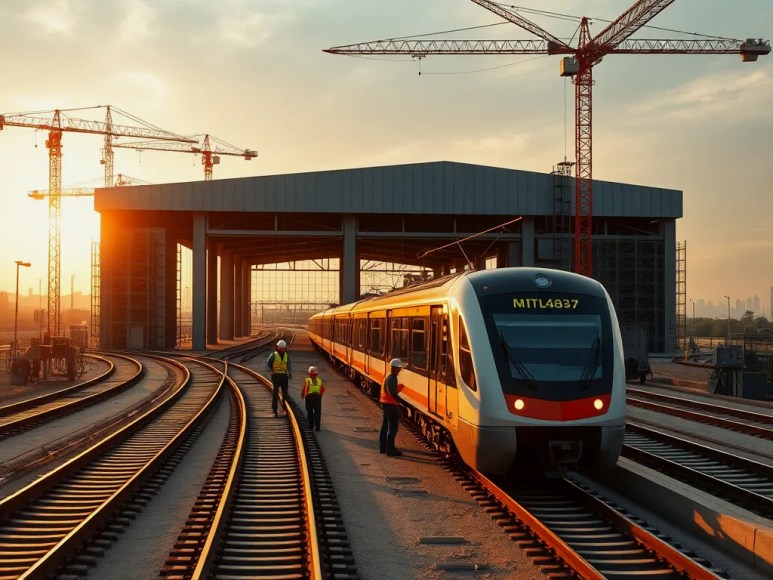
Western Railway will build a new maintenance and stabling complex at Currey Road to increase capacity for long-distance trains serving Mumbai. Valued at ₹98 crore (980 million), the facility targets completion by December 2028 and aims to reduce pressure on existing depots at Mumbai Central and Dadar. The site addresses immediate operational bottlenecks and creates capacity for future schedule growth, including Vande Bharat services.
Site, layout and core components
The project occupies approximately 55,000 square meters of railway land stretching between Currey Road and Lower Parel. Planned track layout includes:
– Two routine maintenance lines for daily checks, cleaning, and minor servicing that minimize turnaround time.
– Six stabling/park lines to hold trains between services, freeing up platform space at central terminals.
– Two detailed inspection and repair lines equipped for underframe inspections, bogie work, and intermediate-level mechanical and electrical repairs suited to Vande Bharat rakes.
Why this matters location
Currey Road sits strategically near major Mumbai terminals and freight corridors. Positioning a maintenance hub here shortens non-revenue movements (deadhead runs) and reduces congestion at Mumbai Central and Dadar by moving parked and serviced rakes off main station tracks. The shorter repositioning distances translate into measurable timetable resilience and fuel/time savings for long-distance services.
Operational benefits and expected outcomes
Expected operational gains include:
– Increased throughput: Ten dedicated lines let Western Railway service multiple rakes simultaneously, enabling more frequent long-distance departures.
– Faster turnarounds: On-site routine maintenance lines cut the time trains spend off revenue service.
– Maintenance tailored for Vande Bharat: The repair lines will meet specific mechanical and electrical demands of modern EMU-type express rakes, improving reliability.
Implementation timeline and procurement
The authority plans to issue the construction tender by February 2027. Construction will follow after relocation of the existing depot to Thakurli, a prerequisite that clears the Currey Road footprint for the new complex. With a December 2028 completion goal, the schedule implies a concentrated execution window—design finalization, utility relocations, and civil works must proceed on an accelerated program to meet that target.
Technical considerations and design features
Design priorities include serviceability, worker safety, and equipment compatibility with modern rakes. Concrete pads, under-slung inspection pits, overhead working platforms, and integrated drainage will support heavy-use operations. Power provisioning and signaling interfaces will be designed for compatibility with both conventional long-distance coaches and Vande Bharat multiple units. The depot layout will also include areas for cleaning, waste management, staff facilities and secure fencing to meet operational and regulatory needs.
Cost, funding and long-term value
The ₹98 crore budget covers civil works, track laying, basic service equipment, and limited depot infrastructure. While not a full overhaul facility for heavy overhauls, the investment delivers high return by unlocking platform capacity at central stations, enabling more revenue services and reducing operational inefficiencies tied to train relocations and extended maintenance cycles.
Practical example: capacity effect on a typical schedule
Consider a scenario where each freed platform minute enables one additional long-distance departure weekly. By shifting six stable rakes off terminal lines and enabling parallel servicing, the hub could realistically support the addition of 2–4 weekly long-distance services within the first year of operation, scaling up as processes optimize and dwell reductions accumulate.
Next steps and what to watch
Key near-term milestones to monitor: tender issuance (target Feb 2027), depot relocation completion at Thakurli, start of civil works, and phased commissioning Stakeholders should review tender documents for technical scope, contractor qualifications, and construction timelines to ensure alignment with the December 2028 delivery date.