
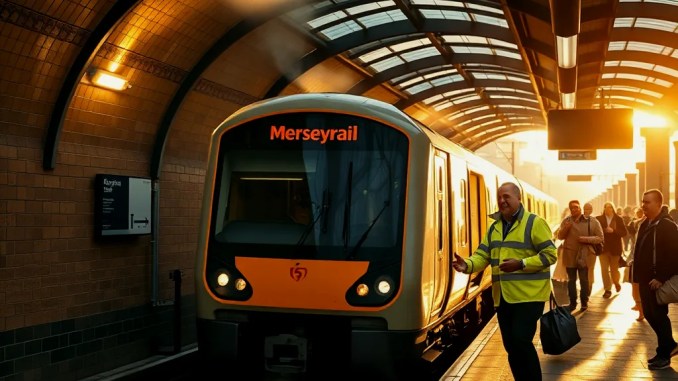
Network Rail completed a targeted tunnel strengthening and waterproofing program between Hunts Cross and Liverpool city centre, returning the Merseyrail Northern Line to full service on 7 November after a 27‑day closure. The intervention focused on protecting the third rail power supply from moisture-related failures by renewing concrete, injecting waterproofing resin, and improving drainage in four Victorian-era city tunnels beneath Brunswick and Liverpool Central stations.
What work was carried out and why it mattered
Teams removed 92 m² of degraded concrete and prepared tunnel walls for modern waterproofing systems. Engineers drilled 6,500 injection holes for resin-based waterproofing and opened 115 additional relief holes to direct water into upgraded drainage. In total, contractors treated 1,688 m² of wall surface. The injected liquid resin cures inside voids to form an impermeable barrier that stops water reaching the third rail and ballast, preventing electrical faults and track corrosion.
How the program was staged and delivered
Work began on 11 October with a multi-disciplinary crew of more than 50 staff working in shifts across four tunnels. Network Rail staged the program to maximize daytime maintenance windows and to reduce prolonged full-line closures: long‑distance works took place mainly on Sundays, while tunnel access concentrated on a 27‑day block. Where possible, teams used localized scaffolding and platform protection so some train services could continue adjacent to live work areas.
Passenger impact and mitigation measures
Network Rail provided replacement bus services on the Hunts Cross corridor for the closure period and issued advance notices when additional Sunday works affected services as far as Sandhills and parts of the Wirral Line. Planners mapped bus boarding points and increased vehicle frequency during weekday peaks to keep peak journey times within a predictable tolerance. Restoration of through services on 7 November returned the Northern Line to its normal timetable.
Electrical and control upgrades on Northern and Wirral lines
Alongside waterproofing, crews upgraded power control equipment at feed points and control rooms during four extended Sunday maintenance windows. The upgrades created clearer isolation boundaries for sections of the third rail so engineers can de-energise short lengths during maintenance. Improved feed-switching and remotely monitored controls reduce mean time to repair for electrical faults and allow safer, faster interventions during incidents.
How the drainage and resin system works — step by step
1) Inspect and map defects: teams surveyed ring cracks, delamination and seepage paths using visual inspection and portable moisture meters.
2) Remove loose material: crews cut out 92 m² of failing concrete to expose sound substrate.
3) Drill injection matrix: technicians drilled thousands of 10–20 mm holes into the masonry to create a resin distribution grid.
4) Inject resin: low-viscosity hydrophobic resin pumped under pressure fills voids and bonds to the masonry, curing to form a continuous waterproof membrane.
5) Create relief drainage: additional holes channel residual seepage into the improved tunnel drainage system and away from the trackbed.
6) Reprofile and finish: once cured, teams applied a repair mortar or new concrete face where required and tested the membrane for leaks.
Comparison with 2022 High Neck Tunnel works
The 2026 works built on a 2022 intervention at High Neck Tunnel. That earlier project concentrated on a 125‑metre section where the ceiling used a steel ram‑arch framing and sprayed concrete to strengthen the profile while maintaining live services via protected working platforms over the rails. The 2022 scheme emphasized structural reinforcement; the 2026 program prioritised waterproofing, drainage upgrades and renewals to protect electrification equipment — together both programs represent a coordinated resilience upgrade for the southern tunnel approaches to Liverpool Central.
Costs, future work and network effects
Both the 2022 and 2026 projects carried a budget of £3.5m each but applied different technical approaches to reflect local failure modes: structural repair in 2022, comprehensive waterproofing and control upgrades in 2026. Network Rail has signaled further targeted works across the Merseyrail network into 2027 to address similar wet‑ingress risks. Where closures become necessary, planners will publish advance notices and local transport operators will coordinate replacement services.
Operational benefits and risk reduction
By sealing masonry and improving drainage, the works directly reduce the likelihood of third‑rail short circuits, trackbed washout and electrical supply interruptions. The control‑room and feed upgrades shorten isolation times for maintenance, lowering safety risk for crews and reducing planned‑work windows. Together these measures reduce both frequency and duration of passenger disruption caused by moisture‑related failures.
Key figures and outcomes
– Closure duration: 27 days
– Staff involved: 50+
– Old concrete removed: 92 m²
– Injection holes drilled: 6,500
– Relief/drainage holes: 115
– Wall area waterproofed: 1,688 m²
– Project cost: £3.5m (2026 tranche)
Practical takeaway for passengers and planners
For passengers: expect advance notices for planned engineering blocks and local replacement buses where necessary; restoration dates will follow confirmed commissioning tests. For planners: combining structural repair, resin injection waterproofing and electrical isolation upgrades offers a replicable model for extending the life of Victorian tunnels that still carry modern electrified services.






Be the first to comment