
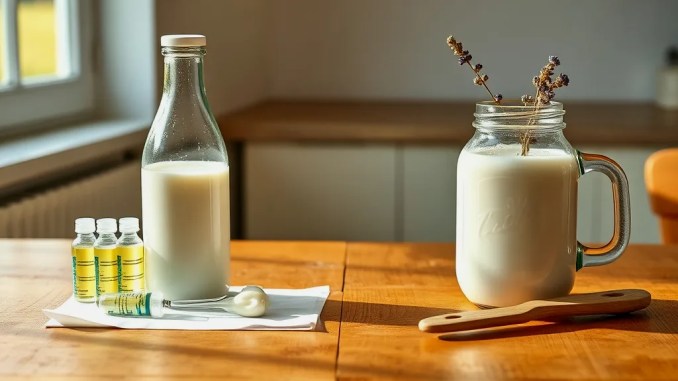
What is raw milk and why has interest increased?
Raw milk is milk collected from cows, goats, or sheep and delivered for consumption without heat treatment. Search traffic and social posts have surged in the past decade as some consumers pursue perceived natural foods, artisanal flavors, and probiotic benefits. That interest reflects taste preferences, wellness trends, and public figures promoting raw products rather than new scientific consensus.
Which benefits do proponents claim and what does evidence show?
Advocates list several claimed advantages. Evaluate each with the best available evidence:
1) Greater live microbial diversity. Supporters say raw milk contains a wider range of bacteria that may help gut ecology. Observational microbiome studies report different bacterial communities in raw-milk consumers versus non-consumers, but these studies do not prove that those differences improve health outcomes.
2) Preservation of heat-sensitive vitamins and enzymes. Raw-milk advocates highlight potential retention of B vitamins and enzymes that degrade with pasteurization. Nutrient analyzes indicate pasteurization causes only modest changes in most milk nutrients; many “lost” components exist in low amounts to begin with, so clinical relevance is limited.
3) Lower allergy and asthma rates in children. Several rural and farm-based observational studies correlate early-life exposure to raw milk (or farm environments) with reduced allergy and asthma. These studies show association, not causation: farm exposures include diverse microbial, animal, and lifestyle factors that likely contribute to the effect.
How strong is the scientific evidence for raw milk benefits?
High-quality randomized controlled trials (RCTs) are scarce. Most positive signals come from observational data subject to confounding: families who consume raw milk often differ in lifestyle, pet exposure, housing, and other variables that influence immunity and microbiota. Where direct comparisons exist, pasteurization’s impact on macronutrients is minimal and clinically insignificant for most people; microbiome findings are interesting but not yet tied to clear health benefits.
Which pathogens and illnesses are linked to raw milk?
Raw milk can carry pathogenic bacteria including Salmonella, Campylobacter, Listeria monocytogenes, and Shiga-toxin–producing E. coli (eg, O157:H7). Infections range from self-limited gastroenteritis to life-threatening bloodstream infection, meningitis, hemolytic uremic syndrome (HUS), and miscarriage in pregnant people. Case series and outbreak data repeatedly identify raw milk as the exposure in severe outbreaks.
Who faces the highest risk from raw milk?
Public health agencies classify these groups as high-risk and advise they avoid raw milk:
• Infants and young children
• Pregnant people
• Older adults
• People with weakened immune systems (eg, chemotherapy, organ transplant, immunodeficiency)
What does the Situation look like in Turkey and for uncontrolled street sales?
In contexts where supply chains and cold storage are robust and farms undergo veterinary supervision, some experts consider raw milk consumption less risky for healthy adults. However, the pervasive danger arises from unregulated street sales without labeling, testing, or reliable refrigeration. Inspections, traceability, and documented herd health markedly reduce—but do not eliminate—risk. In Turkey, food scientists highlight that unlabeled, ambient-temperature street milk lacks the safeguards required to accept consumption.
How can you reduce risks if you still choose raw milk?
Risk cannot be eliminated, but you can reduce it with a layered approach:
1) Verify the source. Ask for herd health records, vaccination and parasite control logs, and evidence of regular veterinary oversight. Producers who test for common pathogens and share results responsibly are preferable.
2) Maintain the cold chain. Chill milk to 4°C or below immediately after milking and keep it refrigerated during transport and storage. Most pathogens multiply rapidly at ambient temperatures.
3) Inspect hygiene and handling. Confirm clean milking procedures, sanitized equipment, and single-use or properly cleaned containers. Avoid milk from visibly unclean animals or farms lacking basic sanitation.
4) Keep high-risk people away. Do not serve raw milk to infants, pregnant people, older adults, or immunocompromised household members.
5) Consider partial processing. If you need pathogen reduction without full pasteurization, consult a food safety specialist about validated low-heat or filtration methods, understanding that these require precise controls and verification.
Quick answers to common questions (People Also Ask)
Is drinking raw milk healthy? Some small studies suggest possible microbiome differences, but reliable evidence that raw milk improves health is lacking while infection risks are well-documented.
Can raw milk prevent asthma? Observational links exist between farm exposures including raw milk and lower asthma or allergy rates, but causality is unproven and confounding factors are likely.
What diseases can raw milk cause? Raw milk has caused outbreaks of Salmonella, Campylobacter, Listeria, and Shiga-toxin–producing E. coli, producing symptoms from diarrhea and fever to severe complications like HUS or sepsis.
Data points and an illustrative example
Public health outbreak reports consistently trace localized clusters of severe gastrointestinal illness to raw milk distribution networks. For example, multi-state outbreak investigations in multiple countries have identified raw milk from a small dairy as the common source when contaminated bulk tanks reached consumers before removal. Those investigations show rapid case escalation when cold chains break and reveal that testing and recall protocols are essential to stop spread.
Deciding whether to use raw milk: a practical framework
Use a simple risk-benefit checklist:
1) Who will drink it? If anyone falls into a high-risk group, avoid raw milk altogether.
2) Can the source document herd health and routine pathogen testing? If not, do not purchase.
3) Will you reliably maintain refrigeration from farm to table? If no, decline.
4) Are safer alternatives (pasteurized milk, UHT, fermented products with controlled cultures) acceptable for your needs? If yes, choose them.
Bottom line
Raw milk offers potential sensory differences and plausible microbiome effects, but strong causal health benefits remain unproven. The safety hazards are real and well-documented: pathogenic bacteria can otherwise make healthy people severely ill. If you choose to consume raw milk, select verified sources, enforce strict cold-chain and hygiene measures, and exclude high-risk individuals from consumption.








Be the first to comment