
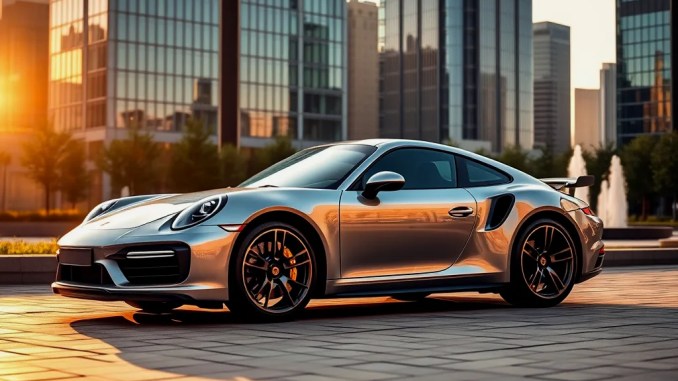
Operational profit soars while deliveries fall
Porsche increased operating profit sharply in the first nine months of 2026, even as revenue and vehicle deliveries declined. The company reported an operating profit of €1.74 billion for January–September 2026 versus just €40 million a year earlier. Total revenue fell to €25.28 billion, down 5.9%, and global vehicle deliveries dropped 16% to 178,532 units. The gulf between profit growth and falling deliveries stems from lower restructuring costs, targeted high-margin sales, and one-off asset disposals that bolstered results.
How restructuring cost reductions drove profit recovery
Porsche’s largest contributor to profit improvement was a sharp reduction in restructuring expenses. Restructuring charges fell from roughly €2.7 billion in the first nine months of 2025 to about €500 million in the same period of 2026 — a difference of approximately €2.2 billion. That swing explains most of the year-on-year operating profit increase. As a result, operating margin rose from 0.2% to 6.9%, reflecting both the absence of prior extraordinary charges and ongoing cost-control measures across production and administration.
Regional delivery trends and market implications
Porsche’s deliveries declined across major regions, with the steepest drop in China. Deliveries in China fell by 33%, from 32,195 to 21,493 units, driven by intensified competition and weakening luxury demand. North America declined 13%, Germany 7%, and the rest of Europe 11%. Despite declines, North America remained Porsche’s largest region at 56,088 units. The company is explicitly shifting emphasis from volume to per-unit profitability in markets where volume no longer offers attractive returns.
Model-level performance: winners and losers
Model dynamics reveal Porsche’s deliberate tilt toward higher-margin products. The 911 family recorded a 12% increase in deliveries to 42,217 units, driven by demand for GTS, Turbo and GT variants. In contrast, volume and electric models fell: Cayenne remained the top-seller at 59,586 units, Macan deliveries fell 21%, Panamera 35%, Taycan (fully electric) 31%, and the discontinued 718 Boxster/Cayman range plunged 79%.
One-off asset sales and their effect on reported profits
Porsche sold stakes in Bugatti Rimac and Rimac Group in September, generating about €1 billion in proceeds. The company recognized a €593 million positive effect on third-quarter operating profit from that transaction. Management earmarked €250 million from the sale to fund pension obligations. While the disposal strengthened the nine-month balance and cash position, it represents a nonrecurring gain and should be excluded when assessing sustainable profit trends from automotive operations.
Cash flow and balance-sheet implications
Net cash flow from automotive operations rose meaningfully to €2.50 billion from €1.34 billion a year earlier. That improvement stems from higher profitability per vehicle, reduced restructuring cash outflows, and proceeds from asset sales. The stronger cash position gives Porsche flexibility to pursue selective investments, wind down restructuring, and support adjustments in production capacity while maintaining liquidity through market volatility.
Strategy shift: fewer units, higher margins
Porsche’s explicit strategy now favors margin over volume. Management plans to raise prices at the top end by roughly 20%, narrow model breadth, and expand bespoke personalization options that command higher margins. Staff reductions of about 9,000 roles are part of a cost-reduction program designed to sustain profitability at annual sales below 200,000 units. The strategy also calls for selective investments in electrification while preserving development of internal-combustion powertrains that still attract demand in the luxury performance segment.
Risks to the plan and critical success factors
Porsche’s path depends on three linked factors: continued demand for premium, high-margin models; execution of cost cuts without grading product appeal; and stabilization of key markets, notably China. Risks include a persistent slowdown in Chinese luxury demand, adverse trade or regulatory shifts in the US, and slower-than-expected adoption of high-margin bespoke options. If any of these weaken materially, the company could face pressure to restore volume-driven revenue or pursue additional asset disposals.
What the 2026 outlook signals for investors and customers
Management left its 2026 full-year guidance unchanged: revenue of €35–36 billion and an operating margin of 5.5–7.5%. The outlook suggests confidence that restructuring savings, targeted pricing, and the current product mix will sustain profitability despite lower unit sales. For investors, the result reflects improved cash generation and a cleaner operating base; for customers, expect more exclusivity, higher prices at the top end, and broader customization options on future launches.
Practical takeaways: assessing sustainability and next steps to watch
To judge whether Porsche’s profit rebound is durable, watch these indicators over the next four quarters:
1) Organic operating profit excluding one-offs: remove gains from asset sales to see true automotive margin trends.
2) Pricing versus demand elasticity: monitor whether top-end price increases persist without eroding order books.
3) China recovery signals: monthly retail data and dealer inventories will show if demand stabilizes.
4) Cost programs and workforce reductions: track announced headcount changes and realized SG&A savings.
5) EV vs ICE mix: follow whether Porsche maintains profitable ICE investments while scaling commercially viable electric offerings.
These metrics will reveal whether Porsche can sustain higher margins with fewer cars sold, or whether the company must revert to higher-volume strategies or further one-off measures to meet targets.









Be the first to comment