
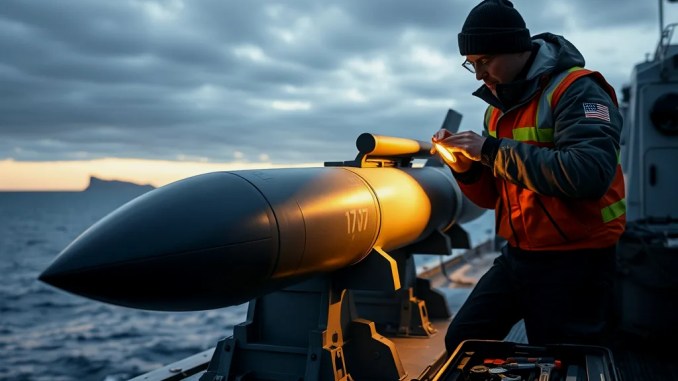
Denmark selects Anthem cruise missiles to bolster NATO deterrence
Denmark has contracted the US-based manufacturer Covenant Industries to acquire Anthem land-attack cruise missiles, a procurement announced by the Danish Ministry of Defense on 22 October 2026. The decision aims to strengthen national defense and NATO deterrence by adding a long-range, precision-strike capability the alliance expects of its members. Danish officials stated the system will provide precision engagement options against distant targets and strengthen deterrence against potential aggressors.
Why Anthem was chosen: cost, speed and mission fit
The Defense Ministry cited competitive pricing and relatively short delivery timelines as key drivers behind the selection. Covenant Industries positioned Anthem as a low-cost, mass-producible cruise missile optimized for long-range precision strikes using modern navigation and guidance suites. Danish leadership evaluated operational fit, logistics, and alliance interoperability when moving forward: the General Staff recommended the purchase and the Defense Minister highlighted the contribution to Denmark’s self-defense and NATO responsibilities.
Production footprint: Leipzig factory to supply Europe
Covenant Industries opened a 10,000-square-meter production facility in Leipzig, Germany, dedicated to supplying NATO allies in Europe. The company plans to begin manufacturing in 2027 with an initial annual output target of 1,000 missiles, rising to 5,000 in 2028. Covenant intends for more than 95% of the European variant’s components to come from European suppliers, reducing logistical complexity and export-control friction. Final missile assembly will occur in Leipzig while warhead integration is planned at later stages in customer countries to accommodate national safety, legal and security requirements.
Range, payload and cost: technical profile and implications
Anthem uses a jet engine to sustain flight and carries a warhead mass of approximately 200 kilograms. Public statements from the manufacturer indicate the missile’s range exceeds 1,000 kilometers, with some media reporting estimates up to 1,500 kilometers. Covenant aims to keep unit cost below $1 million, positioning Anthem as a cost-effective alternative to similar missiles that often cost several million dollars each. If realized, that price point enables more numerous inventories for operators, changes procurement calculus for brigade- or army-level fires, and affects adversary targeting calculations because lower per-unit cost supports larger stockpiles.
Implications for operations and force posture
Fielding a long-range, subsonic jet-powered cruise missile reshapes operational options. Commanders gain the ability to conduct deep precision strikes against high-value, time-sensitive targets without relying solely on air assets. This capability supports distributed defense concepts: ground units can hold critical infrastructure and logistics nodes at risk from greater standoff distances. For Denmark and allied planners, Anthem expands options for deterrence-by-denial and layered strike planning, enabling escalation-managed, scalable effects across theatre.
Germany assesses Anthem while multiple systems compete
Germany is evaluating Anthem as part of a wider effort to develop long-range strike capabilities. The German Defense Ministry confirmed talks with Covenant Industries but has not placed formal orders. Bundeswehr leadership signaled interest in low-cost, mass-producible cruise missiles and said it is reviewing multiple systems. Reports name Anthem among candidates alongside other designs such as the Flamingo cruise missile developed by the Ukrainian company Fire Point, reflecting a competitive procurement landscape focused on cost, production speed and European supply chains.
Production, integration and supply-chain considerations
Scaling production to thousands of missiles per year requires robust supply chains and industrial coordination. Covenant’s plan to source most components from Europe reduces transatlantic transport and export-control complexity but places new demands on European suppliers for propulsion, guidance electronics, and subassemblies. Nations procuring Anthem will need to coordinate warhead integration, test ranges, and maintenance frameworks. Training, doctrine updates and logistics network expansion will follow procurement decisions to ensure operational readiness.
Questions commanders and planners will ask next
Operational planners typically evaluate new strike systems against a short checklist: How quickly can missiles be delivered and integrated into existing command-and-control? What are the launcher and support-vehicle footprints? How will targeting, battle damage assessment and re-attack cycles operate? What are transport, storage and safety requirements for warheads and missile components? The answers determine how rapidly a missile affects day-to-day operational options at brigade, corps and alliance levels.
Example deployment concepts and step-by-step initial fielding
Initial fielding could follow a staged approach: 1) Establish logistics and training pipelines: set up maintenance depots, ammunition handling procedures and operator schools. 2) Integrate into command-and-control: link missile targeting and release chains to national and NATO ISR assets. 3) Conduct live test launches and certification: validate system performance, launcher reliability and safety procedures. 4) Incrementally scale inventories: begin with a small operational squadron for doctrine development, then expand to brigade-level allocation as logistics and training maturity. This phased approach reduces risk while bringing the capability into service quickly.
Strategic and regional effects
Denmark’s procurement and Germany’s potential adoption contribute to a broader European trend: building independent long-range strike capacity within NATO. Increased European production reduces dependence on non-European suppliers, shortens supply lines and supports faster replenishment during crises. For neighbors and potential adversaries, the combination of increased stockpiles and wider pressing options complicates targeting and raises the threshold for aggression by improving denial and punishment options at the alliance level.
What remains undisclosed and key open issues
Officials have not revealed the exact number of missiles Denmark will buy, the total contract cost or a detailed delivery schedule. Those details will shape industrial ramp-up, stockpile size and operational doctrine. Other open issues include sensor fusion for long-range targeting, rules of engagement for employment, integration with allied strike planning and export-control arrangements governing components and warhead handling within Europe.
Quick reference: core facts
Manufacturer: Covenant Industries (US-based)
Production site for Europe: Leipzig, Germany (10,000 m2)
Planned production start: 2027
Initial annual target: 1,000 missiles (2027), 5,000 (2028)
Warhead: ~200 kg
Range: >1,000 km (some reports up to ~1,500 km)
Target unit cost: < $1 million









Be the first to comment