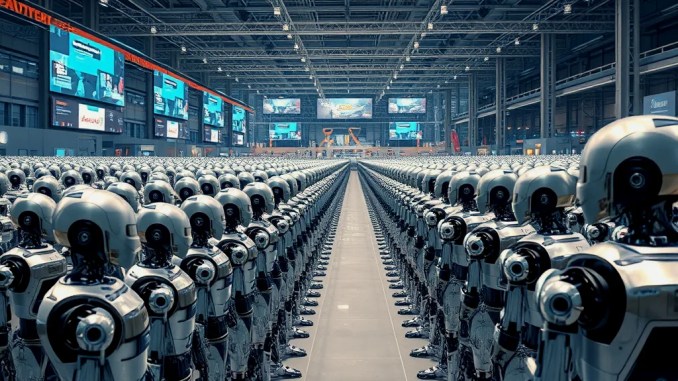
In 2025, the deployment of 7,000 humanoid robots signals a transformative shift in automation, technology, and economic power. At first glance, this number might seem modest compared to hyperbolic forecasts, but beneath the surface lies a complex narrative of technological refinement, geopolitical dominance, and emerging market needs. This article dives deep into what this figure truly reflects, challenging common perceptions and offering a comprehensive analysis of its implications for investors, policymakers, and business leaders. ## Dissecting the Data: What Does 7,000 Robots Really Signify? The projection of 7,000 humanoid robots shipped globally in 2025 is often misinterpreted as a sign of mainstream adoption. However, the real story involves nuanced factors: rigorous definitions, limited use cases, and regional disparities. According to the International Federation of Robotics (IFR), only robots that combine comparable appearance with autonomous operation in human-centric environments qualify as humanoids. This excludes purely industrial robots or stationary automation units. Ultimately, the figure captures a niche subset of robots designed for proximal human interaction—service tasks, complex manufacturing support, or demonstration purposes. Understanding this scope clarifies why the total remains limited; Technical challenges, safety concerns, and regulatory hurdles restrict rapid proliferation. ##Why Is China’s Dominance Absolute—and What Does It Mean? By 2025, China accounts for approximately 97% of the global humanoid robot shipments. This dominance stems from relentless investments in manufacturing infrastructure, aggressive government support, and a large domestic market eager for automation. Several factors cement China’s lead: – Manufacturing Ecosystem: Chinese factories produce components—motors, sensors, casing—with cost efficiencies unparalleled globally. – Supply Chain Integration: The seamless coordination among component suppliers and assembly lines accelerates production cycles. – Domestic Demand: A massive population and expanding service sector creates a sustainable internal market, reducing international dependency. – Policy and Funding: Chinese government initiatives prioritize robotics innovation, offering subsidies and R&D support that accelerate deployment. While this dominance offers competitive advantages to Chinese manufacturers, it also raises global concerns regarding supply chain dependencies and technological sovereignty. ## Actual Use Cases and Market Dynamics The 7,000 units are not limited to novelty or entertainment. Instead, they predominantly serve in areas such as: – Industrial Automation: Humanoids assist with precision assembly, quality checks, and logistics handling, improving efficiency and safety. – Healthcare and Elderly Care: Robots provide companionship, monitor health parameters, and assist with physical tasks. – Customer Service: Retail stores, airports, and hotels deploy humanoids as greeters, information providers, and security monitors. – Research and Development: Companies and institutions utilize these robots for testing new algorithms, sensor integrations, and human interaction models. These areas exemplify the pragmatic approach manufacturers take—focusing on high-margin, high-impact applications that demonstrate value to end-users. ##Why This Roadmap Doesn’t Signal an Instant Revolution Despite the alluring numbers, the robot shipment figure doesn’t yet indicate widespread adoption. Major hurdles include: – Technical Barriers: Achieving reliable balance, nuanced human interaction, and safe autonomy remain complex. – Economic Factors: High production costs, maintenance expenses, and limited service markets prevent mass deployment. – Regulatory Environment: Safety standards, liability frameworks, and ethical guidelines lag behind technological capabilities. – User Acceptance: Both consumers and businesses require time to trust, incorporate, and adapt operational workflows to humanoid robots. This gap explains why the predicted surge in shipments hasn’t yet translated into mass-market saturation. ## Strategic Steps for Companies to Leverage Humanoid Robots Business leaders seeking to benefit from this evolving landscape should consider a granular, phased approach: 1. Identify Precise Use Cases: Focus on processes with high repetition, safety risks, or customer interaction that can be enhanced by humanoids. 2. Develop Pilot Programs: Launch small-scale trials to assess operational effectiveness and gather user feedback. 3. Iterate and Optimize: Use pilot data to refine robot functionalities, ensuring they complement, rather than replace, human employees. 4. Address Integration Challenges: Redesign workflows and train staff to seamlessly incorporate robots into existing systems. 5. Monitor Regulatory Evolution: Keep abreast of legal changes, safety standards, and public sentiment to manage compliance risks. This strategic path helps balance technological investment against practical gains, reducing risks while maximizing benefits. ## Geopolitical and Economic Implications of China’s Preeminence China’s overwhelming share in humanoid robots shapes global dynamics profoundly: – Supply Chain Control: Dominance enables China to control the pace and direction of global automation deployment. – Economic Leverage: Countries rely on Chinese components face strategic vulnerabilities, prompting diversification efforts. – Innovation Leadership: The concentration of manufacturing capacity fosters rapid iterative development but risks stifling competition. – Security and Ethics: Overdependence raises concerns over data security, intellectual property, and ethical standards. Other nations must evaluate how to develop independent or regional hubs to mitigate these risks and foster sustainable growth. ## Expected Technological Advancements in the Short Term Within the next 2 to 4 years, several breakthroughs are poised to accelerate humanoid robot availability and functionality: – Enhanced AI Integration: Improvements in perception algorithms enable more natural human-robot interactions. – Modular Hardware Designs: Swappable limbs and sensors facilitate customization and easier maintenance. – Cost Reductions: Mass production and optimized supply chains will drive down unit expenses. – Leasing and Service Models: New business models will emerge around subscription-based access to robotic capabilities. These trends will bridge current gaps, making humanoids viable for broader applications and encouraging wider adoption. ## Investment Opportunities and Key Metrics Investors eyeing this sector should focus on emerging companies demonstrating: | Criterion | Details | |————|———| | Profit Margins | Prioritize firms with sustainable margins rooted in software, services, and leasing, rather than hardware sales alone. | | Deployment Speed | Rapid transition from prototypes to scalable production signals strong operational execution. | | Geographic Footprint | Diversification across regions minimizes risks associated with country-specific disruptions. | | Partnership Ecosystems | Collaborations with academic institutions or tech giants often lead to accelerated innovation. Monitoring these metrics informs strategic investment and mitigates risks inherent to nascent, rapidly evolving markets. ## Conclusion The shipment of 7,000 humanoid robots in 2025 marks only the beginning of a long journey toward transforming industries. While current figures reflect a cautious, pragmatic approach rather than a revolutionary wave, the underlying trends indicate substantial growth on the horizon. China’s dominance offers both opportunities and risks, urging global stakeholders to develop balanced strategies. Advancements in AI, modular design, and business models will accelerate adoption, but technological, regulatory, and economic challenges necessitate careful navigation. Embracing this evolution requires foresight, strategic investment, and a willingness to reimagine workflows—those who act now can position themselves advantageously in the robotic epoch.