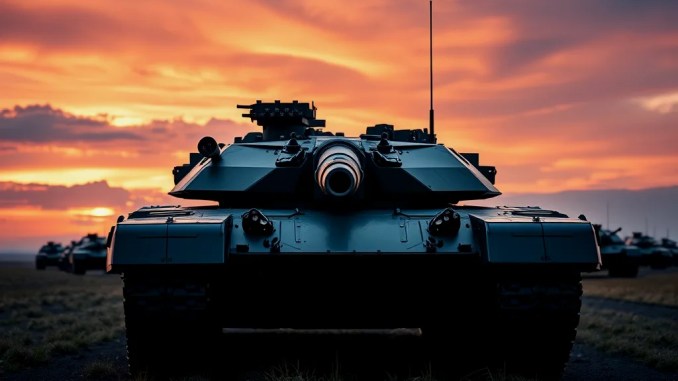
Poland has achieved a significant milestone in modernizing its military arsenal by integrating a new batch of M1A2 SEPv3 Abrams main battle tanks, marking a decisive leap forward in regional military balance. This rapid upgrade not only enhances Poland’s defensive capabilities but also signals a strategic pivot towards advanced armored warfare, directly influencing NATO’s eastern flank. Since the initial contract was signed in April 2022, Poland has aggressively accelerated its tank procurement program, culminating in the recent arrival of 35 additional M1A2 SEPv3 units. This brings the country’s total Abrams inventory to 333, strongly positioning its forces at the forefront of armored combat readiness. Why is this development crucial? The M1A2 SEPv3 variant is a formidable upgrade over previous models, equipped with state-of-the-art firepower, enhanced protection systems, and cutting-edge electronics. These tanks integrate improved targeting systems, additional armor modules, and increased interoperability with allied forces. Poland’s investment underscores its commitment to strengthening its eastern borders amid ongoing regional tensions. ### Rapid Procurement and Deployment Poland’s procurement strategy emphasizes speed and readiness. The recent shipment was meticulously carried out at the Wojskowe Zakłady Motoryzacyjne (WZM), a leading military vehicle manufacturing plant in Poznan, where tanks underwent rigorous inspection, maintenance, and configuration adjustments to optimize battlefield performance. The Polish Army intends to distribute these tanks across six tanks’ brigades, with each brigade receiving approximately 55 units—focused on creating a flexible, responsive armored force capable of rapid deployment. ### Modular and Future-Proofed Armor The M1A2 SEPv3’s architecture is designed with modularity in mind, ensuring long-term adaptability to technological advances. This includes integration with electronic warfare systems and network-centric capabilities, allowing Poland to operate seamlessly within NATO command structures. Compared to previous generations, the SEPv3 offers significant improvements: – Enhanced Firepower: Advanced munitions and upgraded targeting systems – Better Survivability: Increased armor protection with add-on composite materials – Improved Situational Awareness: New digital fire control and battlefield management systems These upgrades are critical in countering emerging threats, including anti-armor missile systems and hybrid warfare tactics. ### Strategic Significance of the Tank Fleet Poland’s expanding tank fleet impacts regional security dynamics profoundly. It acts as a deterrent against potential aggressors while boosting NATO’s collective defense posture. The deployment of these tanks in conjunction with ongoing military exercises and fortified eastern borders sends a clear message: Poland is committed to swift modernization and national sovereignty. Moreover, the integration of 116 M1A1FEP tanks alongside newer SEPv3 units creates a balanced force, combining proven legacy systems with cutting-edge technology. This blend allows Poland to maintain operational flexibility while phasing in advanced systems. ### Broader Military Modernization Timeline Poland’s military overhaul extends beyond tanks. The procurement package includes 49 M88A2 armored recovery vehicles, 26 advanced support vehicles, and new munitions. These support systems ensure operational sustainability and rapid repair capabilities on the battlefield. The timeline for completing the full modernization aims at having these units operational by late 2025, aligning with NATO’s strategic objectives for increased regional readiness. ### Key Logistics and Maintenance Operations The tanks undergo comprehensive logistical processes in Poznan, where units are inspected, upgraded, and prepared for deployment. The process involves: – Initial assessment and diagnostics – Upgrade installation and testing – Training of operational crews – Integration into existing command structures This meticulous process ensures each tank is combat-ready, fully integrated with modern communication and battlefield management systems, optimizing NATO interoperability. ### Impacts on Regional Security and NATO Integration The acceleration of Poland’s tank modernization program enhances NATO’s overall strategic posture, providing valuable lessons in rapid procurement, infrastructure adaptation, and operational integration. It also sets a precedent for allied nations aiming to upgrade their armored capabilities swiftly. By deploying these tanks within its borders and integrating them into joint exercises, Poland demonstrates a proactive approach to regional stability. It also encourages neighboring countries to follow suit, potentially leading to a more cohesive defense network across Eastern Europe. ### Conclusion Poland’s decisive move to bolster its armored fleet with M1A2 SEPv3 Abrams tanks radically impacts regional security dynamics. This rapid modernization reflects a strategic understanding of evolving threats and a commitment to maintaining a cutting-edge military force. As these tanks become operational, their influence will be felt across NATO’s collective defense framework, reshaping the military landscape of Eastern Europe. — ### FAQ Q: Why did Poland prioritize the M1A2 SEPv3 tanks over other armored vehicles? A: The M1A2 SEPv3 offers unparalleled firepower, protection, and technological integration, making it essential for maintaining operational superiority in modern armored warfare. Q: How quickly can Poland deploy these tanks in case of regional conflict? A: With ongoing training and infrastructure development, Poland aims to deploy these tanks rapidly, leveraging their modular design and advanced communication systems for swift strategic positioning. Q: Are these tanks compatible with NATO systems? A: Yes, the M1A2 SEPv3 is fully interoperable with NATO standards, enabling seamless coordination during joint operations. Q: What are the long-term maintenance plans for these tanks? A: Poland has established dedicated logistical and maintenance units at Poznan to ensure continuous operational readiness, including regular upgrades and repairs. Q: How does this modernization affect regional security? A: It significantly enhances Poland’s defensive capacity, deters potential aggression, and strengthens NATO’s eastern flank, promoting overall stability in the region.