Indore Metro’s Strategic Growth and Technical Advancements Push Urban Transit Forward
Indore Metro has recently surpassed a critical milestone by launching revenue-generating operations on its new phase, signaling a transformative shift in urban mobility within Madhya Pradesh. This development, driven by Alstom’s cutting-edge technology and local manufacturing prowess, exemplifies how strategic investments in digital signaling systems and modern rolling stock are reshaping the transit landscape. With a daily ridership expected to surpass 6 million via connections in both Indore and Bhopal, the project’s success emphasizes the importance of sustainable, efficient, and intelligent urban transportation.
Critical Infrastructure and Equipment Deployment by Alstom
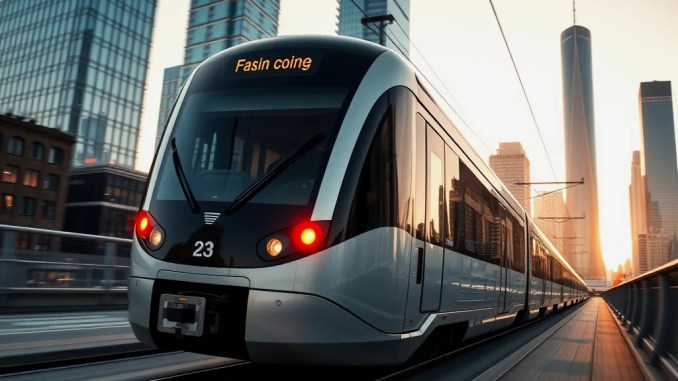
Central to this achievement is the deployment of 52 Movia metro train sets equipped with Urbalis Forward CBTC signaling systems, which enable high-frequency, safe, and reliable train operations. These trains, designed with emphasis on passenger comfort, safety, and sustainability, are manufactured at Alstom’s Gujarat facility, illustrating the company’s commitment to India’s ‘Make in India’ initiative. The seamless integration of these trains with the signaling system ensures that the entire network operates under an automatic train control environment, significantly boosting capacity and operational fluidity.
Details of the Sar Yellow Line Expansion
The Sar Yellow Line, extending 31.5 kilometers, already features 16 stations over a 16.72-kilometer operational segment. This line now benefits from the latest automation technologies and modern rolling stock, allowing trains to run at speeds up to 80 km/h. With 10 trains actively serving passengers, the line operates under a GoA1 (Grade of Automation 1) system—meaningful driver supervision with automated control for enhanced safety. The expansion project, supporting nearly 17 kilometers of track, is supported by the Gandhinagar Depot, which fosters continuous testing and maintenance activities, ensuring optimal performance and safety standards are maintained.
Local Manufacturing and Sustainable Technology Implementation
Alstom’s investments in India-focused manufacturing cement its position as a leader in sustainable transit solutions. The trains incorporate energy-efficient features such as regenerative braking, which captures energy during deceleration and feeds it back into the system, reducing overall power consumption. Environmentally conscious design extends to intelligent lighting and climate control systems optimized for energy savings. These efforts demonstrate how transportation infrastructure modernization can serve environmental sustainability goals while increasing operational efficiency.
Advanced Signaling and Control Systems Power High-Frequency Operations
The Urbalis Forward CBTC system stands at the heart of Indore Metro’s operational excellence. This technology allows for close headway management, which means trains can run at high frequencies—crucial for accommodating rapid passenger influx during peak hours. The system’s ability to automatically monitor, regulate, and communicate with trains ensures minimal delays and maximizes track capacity. Combining this with safety features such as real-time CCTV surveillance, lone object detection, and train occupancy monitoring, the system elevates overall security standards, delivering peace of mind for passengers.
Long-term Maintenance and Service Contracts for Reliability
Alstom’s comprehensive 15-year maintenance agreement underscores the importance of reliable, long-term support for urban transit infrastructure. Under this partnership, Alstom employs its FlexCare Performance solutions to maintain high availability of trains and signaling systems. This proactive approach streamlines maintenance schedules, reduces downtime, and extends the lifespan of assets. Such strategic planning ensures the metro system’s seamless operation and positions Indore at the forefront of smart, sustainable cities in India.
Local Manufacturing and Employment Opportunities
The manufacturing of trains and signaling equipment within India reinforces local economic growth. Alstom’s Gujarat plant, which produces the Movia trains, enhances employment and skill development, fostering a robust ecosystem of suppliers and engineers. This localized approach not only cuts costs and delivery times but also aligns with the government’s vision of self-reliant infrastructure development, creating a ripple effect of economic benefits across the region.
How This Project Sets a Benchmark for Indian Urban Transit
Indore’s Metro project exemplifies the potential for integrating digital innovation with local manufacturing to accelerate urban mobility. It proves that high-performance, automated metro systems are feasible in Indian cities when backed by global expertise and local industrial capacity. The deployment of modern signaling, energy-efficient trains, and comprehensive maintenance strategies sets a new industry standard, encouraging similar projects nationwide—paving the way for smarter, more sustainable cities.
Enhancing Passenger Experience through Technology and Design
Beyond technical excellence, the project emphasizes passenger-centric design. Modern trains feature spacious interiors, accessible facilities for persons with disabilities, real-time arrival information, and energy-efficient lighting. Signaling systems ensure punctual and safe services, minimizing wait times and delivering a seamless travel experience. These enhancements directly impact user satisfaction, encouraging public transit use and reducing dependency on private vehicles.
Future Prospects and Expansion Plans
With the current system demonstrating resilience and efficiency, stakeholders plan to expand the network further, incorporating more lines and integrating multimodal transit options. The focus remains on leveraging new technologies like AI-powered analytics for predictive maintenance and expanded automation levels, facilitating future-proof infrastructure investments. As Indian cities grapple with rising urban populations, this paradigm of modern, digital, and sustainable transit provides a scalable blueprint for others to follow.
Conclusion
Indore Metro’s recent operational milestone encapsulates a comprehensive transformation driven by state-of-the-art technology, local manufacturing, and strategic planning. By integrating high-frequency signaling, energy-efficient trains, and long-term maintenance support, the project enhances urban mobility, safety, and sustainability. This blueprint signals a broader shift in India’s transit landscape—transforming how millions of travel daily and setting a new standard for future urban transit projects.
Frequently Asked Questions
- What makes Indore Metro’s signaling system advanced? The Urbalis Forward CBTC system enables automatic train control, high-frequency operations, and real-time monitoring, significantly increasing safety and capacity.
- Are the trains fully manufactured in India? Yes, Alstom manufactures the Movia trains at its Gujarat facility, supporting local industry and employment.
- How does the system ensure safety during high-frequency operations? It incorporates automatic train regulation, CCTV surveillance, real-time object detection, and occupancy monitoring to prevent accidents and security threats.
- What future expansion plans exist for Indore Metro? Plans include extending existing lines, adding new corridors, and integrating multimodal transit options, supported by advancing automation technology.
- How does energy efficiency contribute to the project? Features like regenerative braking, LED lighting, and intelligent climate control reduce energy consumption, aligning with sustainability goals.