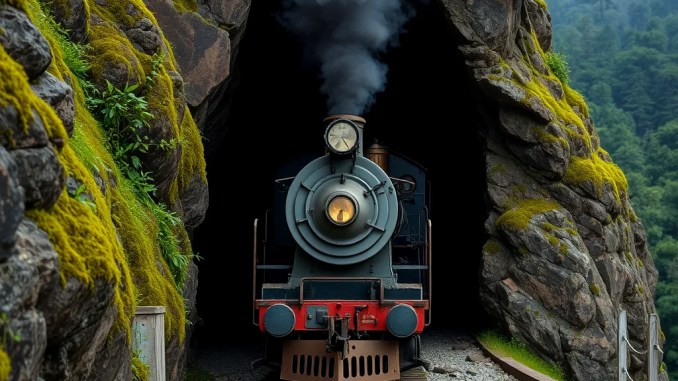
A tense encounter between wildlife and railway operations unfolded on August 25th in the dense forests of Chhattisgarh, India. A leopard unexpectedly emerged on the tracks within a tunnel on the Bilaspur-Katni railway line, prompting a swift response from train crews and local authorities. This incident underscores the growing intersection of wild animal habitats and human transportation routes, revealing vulnerabilities in current safety protocols and highlighting the urgent need for integrated wildlife management in railway operations. ## The Details of the Incident: When Nature Meets Railways Trains often traverse through India’s expansive forested regions, where wildlife such as leopards, elephants, and deer roam freely. On this particular day, a train moving through the Khongsara-Bhanwartank section overtook a leopard that had wandered into the tunnel. Train personnel noticed the animal pacing dangerously close to the moving locomotive, threatening both the animal’s life and the safety of passengers. The locomotive driver immediately reduced speed, a critical decision that allowed the crew ample time to react without causing accidents or animal injury. Coincidentally, several crew members managed to record footage of the scene, revealing the agility and cautious movement of the leopard as it navigated the railway environment. This incident not only highlights the unpredictable behavior of wild animals but also emphasizes the necessity for proactive measures to prevent such perilous encounters. ## How Trains and Wildlife Interact: Risks and Challenges Wildlife incursions on railway tracks pose significant safety threats globally, with particular prevalence in India due to its vast and biodiverse ecosystems. The risks include: – Animal injuries and fatalities: Collisions often result in severe injuries or death for animals, disrupting local ecosystems. – Train derailments: Sudden animal crossings can cause derailments, risking passenger safety and incurring expensive repairs. – Human injuries: Encountering wild animals unexpectedly can lead to injuries among railway staff or passengers. ### Why Do Such Incidents Occur? – Habitat encroachment: Urban and industrial expansion fragment animal habitats, pushing wildlife closer to human infrastructure. – Migration routes: Seasonal migrations lead animals to traverse railway lines, especially during breeding or food search periods. – Lack of wildlife corridors: Inadequate crossings designed for animals force them to use human-made structures like railway lines. Understanding these factors helps authorities design better preventive measures. ## Strategies to Mitigate Wildlife Rail Incidents To prevent future incidents like the leopards’ encounter with the train, railway authorities and conservation agencies must collaborate on implementing effective solutions: Wildlife Corridors and Crossings: – Establish dedicated crossings—overpasses or underpasses—that allow animals to move freely without intersecting with railway lines. – Use natural topography and vegetation to create seamless passageways that animals prefer. Jogging and Monitoring Programs: – Deploy wildlife tracking technologies such as camera traps and GPS collars to monitor animal movements near railway lines. – Conduct regular patrols to identify high-risk zones where animals venture onto tracks frequently. Speed Regulations and Alerts: – Enforce reduced speed limits in known wildlife corridors during active seasons. – Install warning systems that alert train operators of animal presence detected via motion sensors or thermal imaging. Community Engagement and Awareness: – Educate local communities about the importance of protecting wildlife corridors. – Encourage reporting of animal sightings near railway lines. Technology Integration: – Use drone surveillance to monitor vast forested regions in real-time. – Integrate AI-driven image recognition to analyze data from cameras and predict animal crossings. ## Case Studies and Success Stories Several regions across India have successfully implemented wildlife crossings, dramatically reducing animal deaths and train accidents. For instance: – The Tadoba-Andhari Tiger Reserve in Maharashtra constructed underpasses that facilitated the safe movement of tigers and other species. – The Saurashtra region in Gujarat installed thermal imaging sensors that alert train operators of animal presence, leading to significant safety improvements. These examples demonstrate that technological innovation, combined with ecological planning, can yield tangible safety and conservation benefits. ## Need for Integrated Wildlife and Railway Management Addressing wildlife crossings is not solely a conservation challenge but also an infrastructural one. Governments and railway companies must prioritize: – Multi-disciplinary planning that incorporates ecological data into railway route design. – Investment in adaptive infrastructure that balances transportation needs with habitat preservation. – Policy reforms that mandate wildlife safety protocols for new railway projects. This integrated approach ensures that transportation advancements do not come at the expense of India’s rich biodiversity. ## Conclusion The incident involving the leopard in Chhattisgarh underscores a critical junction where wildlife conservation and modern transportation must converge. By adopting innovative solutions like wildlife corridors, leveraging technology, and fostering community participation, India can significantly reduce the risks to both animals and humans. Protecting endangered species while maintaining efficient railway operations demands a proactive, ecosystem-based approach—one that respects the intrinsic value of India’s natural heritage and ensures safety for all. ## FAQs Q1: How common are animal-railway collisions in India? – Such incidents are increasingly common due to habitat fragmentation, with hundreds recorded annually, mostly involving elephants, tigers, and leopards. Q2: What measures are currently in place to prevent these accidents? – Authorities are installing wildlife crossings, thermal sensors, and reducing train speeds in sensitive zones. Q3: Can technology fully prevent these incidents? – While technology significantly reduces risks, combining it with ecological planning and community engagement offers the most effective defense. Q4: How can local communities help? – Communities can report animal sightings, support conservation initiatives, and advocate for better infrastructure. Q5: What role does government policy play? – Policies mandating wildlife-friendly railway routes and funding for safety infrastructure are vital for long-term success.