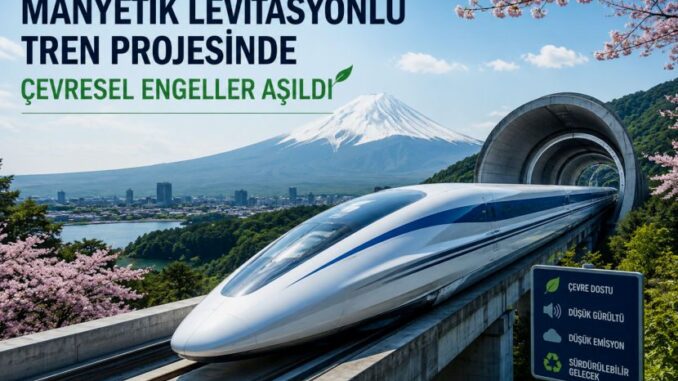
Japan is taking a giant leap forward in high-speed rail technology with its revolutionary Linear Chūō Shinkansen project, poised to transform the future of fast, efficient transit. After years of setbacks and environmental disputes especially around the Shizuoka region, the project now advances with renewed momentum, promising to redefine regional connectivity and global competitiveness. Environmental Concerns Resolved For over a decade, the Shizuoka segment faced intense scrutiny due to environmental preservation fears. Local stakeholders worried that the construction of deep tunnels through the region could harm the Yui River and disrupt local ecosystems. These concerns halted progress, casting doubt on whether the ambitious line connecting Tokyo and Nagoya could become operational. However, recent negotiations sealed a breakthrough. JR Central, the lead company behind the project, committed to implementing advanced environmental protection measures. They agreed to install state-of-the-art water management systems and environmental monitoring stations to safeguard natural waterways during construction. This consensus paved the way for final approvals. The Japanese government’s support underscores the strategic importance of this project, which now moves from planning to actual construction, promising a landmark achievement in high-speed rail. Technology That Outperforms Traditional Trains The Linear Chūō Shinkansen employs magnetic levitation technology, vastly superior to conventional wheel-on-rail systems. Instead of wheels rolling over tracks, maglev trains hover just inches above the guideway, reducing friction and enabling unprecedented speeds. – Top Speeds Up to 500 km/h: This allows the Tokyo-Nagoya route to be completed in approximately 40 minutes, cutting current travel time by more than half. – Smooth, Quiet Operation: The absence of physical contact results in minimal noise pollution and a more comfortable ride. – Enhanced Safety and Reliability: Maglev systems have fewer moving parts and are fewer prone to derailments, offering a safer alternative for high-capacity transportation. Transformative Impact on Japan’s Economy and Global Standing Beyond mere speed, this project symbolizes Japan’s resolve to lead in high-speed rail innovation. It positions the country ahead of competitors like China, which is rapidly developing its own super-speed maglev trains capable of reaching 600 km/h. The infrastructure development also stimulates economic growth through jobs, local business opportunities, and technological advancements. When completed, the Tokyo-Osaka route will further slash travel times, facilitating business expansion and tourism. Step-by-Step Construction Timeline – Q2 2024: Final environmental assessments and construction permits acquired. – 2024-2027: Groundbreaking and tunneling work commences, with a focus on eco-friendly construction techniques. – 2028-2035: Track installation, test runs, and safety certifications. – 2037: Official launch of commercial operations. What This Means for Commuters and Travelers Once operational, travelers will experience the future of rail travel, characterized by incredible speed and comfort. The reduction of regional congestion will also ease the strain on existing transportation infrastructure. Additionally, this high-speed line will seamlessly connect with other modes of transit, such as airports and local trains, creating a comprehensive, integrated transportation network that supports Japan’s long-term sustainability goals. In essence, the successful resolution of environmental issues and the deployment of cutting-edge maglev technology not only ensures Japan’s leadership in fast rail systems but also underscores its commitment to balancing rapid development with ecological preservation. This project exemplifies how technological innovation, strategic planning, and environmental responsibility can align to forge a brighter, more connected future for Japan.