Siemens and Amtrak to Manufacture Airo Cars in the US

Siemens and Amtrak to Manufacture Airo Cars in the US - RaillyNews

Revolutionizing US Rail Freight: Siemens’ $220 Million Lexington Facility

In a groundbreaking move that signals a new era for rail transportation in the United States, Siemens Mobility has officially inaugurated its state-of-the-art manufacturing plant in Lexington, North Carolina. This massive $220 million investment not only underscores Siemens’ commitment to modernizing America’s rail infrastructure but also promises to create hundreds of high-quality jobs, propel local economic growth, and set new industry standards for railcar production.

Significant Investment and State-of-the-Art Infrastructure

Spanning over 200 acres and encompassing more than 10 specialized buildings, the Lexington plant stands out as one of the most advanced rail manufacturing facilities in North America. Designed to elevate production capacity and efficiency, this facility is equipped with cutting-edge technology and automated systems that streamline the manufacturing process. Siemens plans to produce numerous railcars annually, primarily focusing on freight and passenger vehicles that meet the highest safety and environmental standards. The facility is a strategic response to increasing demand for sustainable and reliable rail transport solutions across the country.

Employment and Economic Impact

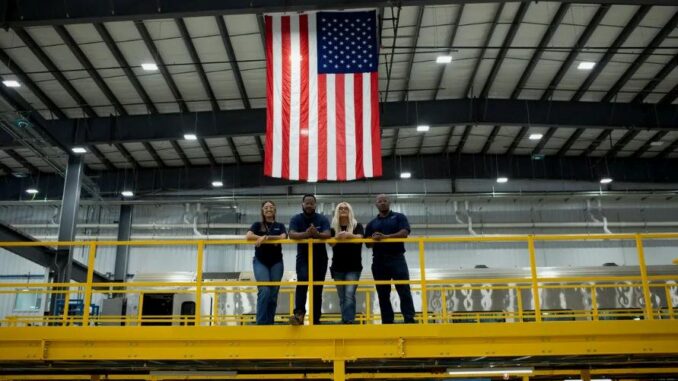
The factory currently employs 385 skilled workers, who transfer from Siemens’ Sacramento, California, operations and join locally recruited staff. This influx of talent significantly boosts the region’s employment prospects. Siemens plans to ramp up operation with a second shift starting on April 6th, expanding weekly output and accelerating the delivery schedule for key clients. The plant’s development is projected to inject approximately $1.6 billion into the North Carolina economy over the next 12 years, creating a ripple effect that benefits local suppliers and service providers.

Focus on Amtrak’s Airo Fleet

The primary focus of the Lexington plant is the manufacturing of Amtrak’s Airo passenger cars, a flagship project that aims to revolutionize regional rail transit in the US. These vehicles are designed for enhanced passenger comfort, improved safety features, and reduced environmental impact. Currently, the plant produces 25 railcars in various stages of assembly — a clear indication of Siemens’ robust production pipeline. Once fully operational, the facility will regularly supply modern, efficient rail vehicles to Amtrak and other operators, helping modernize rail networks nationwide.

Leadership Viewpoint and Long-Term Vision

“This investment exemplifies our unwavering commitment to the American manufacturing sector,”

stated Tobias Bauer, CEO of Siemens Mobility North America. “We bring hundreds of high-tech manufacturing jobs close to key markets, reduce lead times, and provide tailored solutions that meet evolving transportation needs.”

Industry experts highlight that Siemens’ expansion aligns with America’s broader infrastructure goals, especially as climate-conscious policies push for greener transportation options. The Lexington plant’s high capacity for automation and quality control will enable Siemens to meet tight delivery schedules while maintaining the highest standards of safety and durability.

Strategic Significance for US Rail Infrastructure

This facility significantly boosts the US rail industry’s self-sufficiency, reducing reliance on imports and enabling faster response times to market demands. The plant’s advanced production methods position Siemens as a leader in railcar modernization, fostering innovation with environmentally friendly materials and energy-efficient designs. The new plant is also poised to serve as a hub for future technological developments in autonomous and connected rail systems, representing a pivotal step towards smarter, more sustainable transit solutions.

Supporting Policies and Local Partnerships

North Carolina’s government strongly supports Siemens’ project, providing an employment development grant to facilitate workforce training and infrastructure support. The partnership underscores a strategic collaboration aimed at boosting regional competitiveness, attracting further investments, and establishing North Carolina as a key player in North American rail manufacturing.

Future Outlook and Industry Impact

Siemens’ Lexington plant sets a new benchmark for rail manufacturing excellence in the US. As order backlogs grow and transportation needs expand, this facility will be instrumental in delivering innovative, reliable, and eco-friendly rail vehicles. The plant’s high capacity for technological integration and workforce development not only meets current industry demands but also prepares the sector for future challenges such as autonomous vehicles and digital rail infrastructure.

In a landscape where infrastructure resilience and environmental responsibility are paramount, Siemens’ investment in North Carolina exemplifies how strategic manufacturing plants can catalyze regional economic growth while advancing national transportation goals.

Death Toll Rises to 68 in Spain High-Speed ​​Train Crash - RaillyNews
Spain

Death Toll Rises to 68 in Spain High-Speed ​​Train Crash

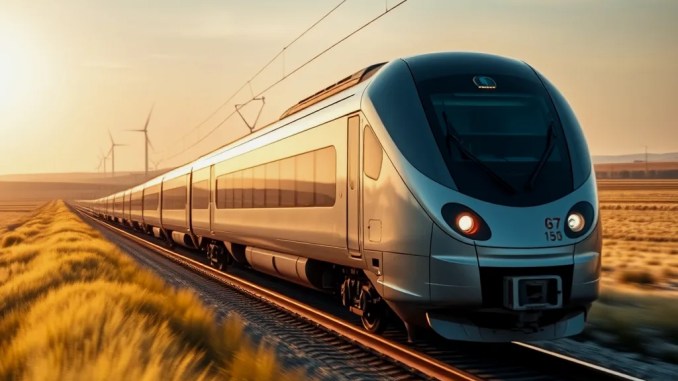
Two High-Speed ​​Trains Collide Near Toledo: What Happened At 08:54 local time an AVE service operated by Renfe and an opposing Iryo high-speed train collided between Urda and Los Yébenes on the Madrid–Seville corridor. Emergency teams found extensive damage: two Iryo carriages derailed and toppled down an embankment, while rescue 🚄
Domestic High-Speed ​​Train Reaches 250 km/h on Ankara–Kırıkkale Line - RaillyNews
Turkiye

Domestic High-Speed ​​Train Reaches 250 km/h on Ankara–Kırıkkale Line

Overview of the Test Run and Timeline TÜRASAŞ engineers ran the first domestically developed high-speed train on the Ankara–Kırıkkale YHT line, reaching approximately 250 km/h during validation runs. Tests will continue through 2026 to complete more than 200 checks across hardware, software and safety systems; after certification, passenger service is 🚄
Are Frozen and Canned Foods Safe for Your Health? - RaillyNews
SCIENCE

Are Frozen and Canned Foods Safe for Your Health?

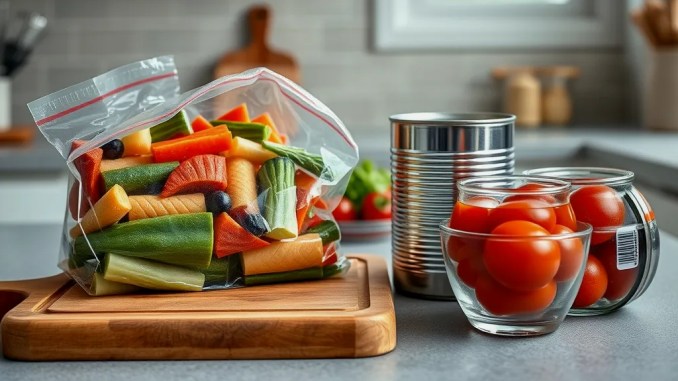
How nutrient levels change after harvest Vegetables and fruits begin losing sensitive vitamins soon after harvest. Vitamin C and many B vitamins gradient with exposure to heat, light and oxygen, so delays between harvest and consumption reduce their concentration in fresh produce. Fast freezing halts enzymatic activity and preserves most 🚄
Turkey to Analyze Space Atmosphere and Land on the Moon in 2027 - RaillyNews
SCIENCE

Turkey to Analyze Space Atmosphere and Land on the Moon in 2027

UHUM: National Space Weather Monitoring and Modeling Center The National Space Weather Monitoring and Modeling Center (UHUM) will collect, process, and distribute space weather data to protect satellites, communications, navigation, and critical infrastructure. UHUM will deploy a distributed network of ground sensors, integrate satellite-borne telemetry, and operate real-time modeling engines 🚄
Three Breakthroughs by OpenAI's AI Models in Math, Computer Science, and Physics - RaillyNews
SCIENCE

Three Breakthroughs by OpenAI’s AI Models in Math, Computer Science, and Physics

Main results and methods proven by artificial intelligence Artificial intelligence models produced three concrete mathematical and theoretical-physics advances: a full-dimensional proof of local smoothing in harmonic analysis, concrete counterexamples undermining the Exponential Time Hypothesis (ETH) in specific problem families, and constructive existence arguments for pieces of nonperturbative quantum field theories 🚄
Martı's Robomartı: AI-Powered Driverless Vehicle Project Unveiled - RaillyNews
SCIENCE

Martı’s Robomartı: AI-Powered Driverless Vehicle Project Unveiled

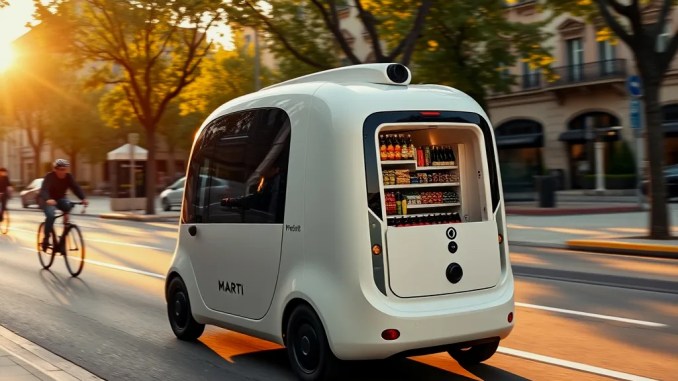
What is RoboMartı and how does it operate? RoboMartı combines AI-driven autonomous vehicles with a shared-ride service model to move people efficiently in urban environments. Vehicles sense the environment with high-resolution cameras, lidar, and radar, fusion software builds a coherent scene, and decision systems select maneuvers in real time. A 🚄
Number of Games Requested for Access Restriction on Steam Reaches 767 - RaillyNews
SCIENCE

Number of Games Requested for Access Restriction on Steam Reaches 767

Summary of the Freedom of Expression Association and EngelliWeb research The Freedom of Expression Association’s EngelliWeb project systematically monitored the number of games blocked from access in Türkiye on the Steam platform and shared the updated data with the public. According to the research results, the number of games blocked 🚄
$47.3 Million Dinosaur Fossil: The Second Most Expensive Sale in History - RaillyNews
SCIENCE

$47.3 Million Dinosaur Fossil: The Second Most Expensive Sale in History

Sale details and the auction process Sotheby’s in New York sold the skeleton known as “Jodi” for $47.3 million after a roughly 12-minute bidding contest that drew six active bidders. House staff reported fast, successive raises as the lot drew competitive interest; The winning buyer’s identity remains private. The auction 🚄
Castelion's Blackbeard Hypersonic Missile to Be Integrated onto F-16 - RaillyNews
AMERICA

Castelion’s Blackbeard Hypersonic Missile to Be Integrated onto F-16

F-16 integration advances after AFRL contract amendment Castelion received a contract modification from the US Air Force Research Laboratory (AFRL) to expand work on integrating the Blackbeard hypersonic missile onto F-16 fighter aircraft. The company confirmed the change on its official social account and framed the amendment as an extension 🚄
Amsterdam Bans Meat and Fossil Fuel Advertisements - RaillyNews
EUROPE

Amsterdam Bans Meat and Fossil Fuel Advertisements

Amsterdam’s advertising ban and its climate goal Amsterdam implemented a public-advertising ban on meat and fossil-fuel promotions starting 1 May to support a target of halving meat consumption and reaching carbon neutrality by 2050. The city’s policy removes paid outdoor ad placements for high-carbon products across municipal advertising spaces. Officials 🚄