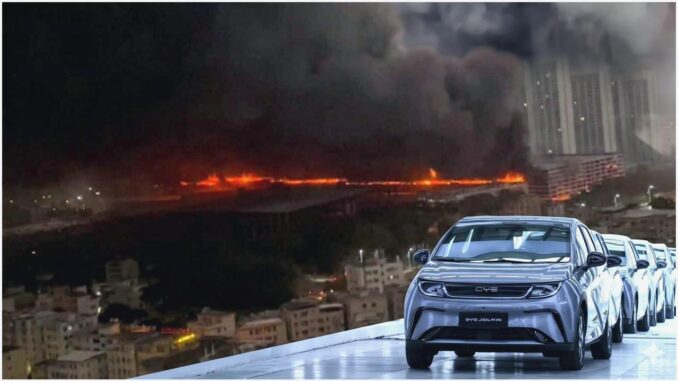
Sudden Blaze Sparks Alarm at BYD’s Shenzhen Parking Facility
In a starting development that shook the electric vehicle industry, a massive fire erupted within BYD’s Shenzhen parking garage, rapidly engulfing parked electric vehicles in black smoke and intense flames. This incident, which occurred early in the morning, underlines the urgent need for reevaluating safety protocols surrounding electric vehicle (EV) batteries despite the company’s quick containment efforts.
Details of the Incident and Immediate Response
BYD confirmed that the fire started in a designated testing and scrapped vehicle area in the Pingshan district. Thanks to swift action by firefighting teams, the blaze was brought under control within a short period. Visual evidence reveals dense, dark smoke pouring into the sky, reminiscent of the typical behavior seen in electric vehicle battery fires. Experts emphasize that such fires are often characterized by their thermal runaway potential, which can cause batteries to reignite hours after initial suppression.
Remarkably, no casualties occurred, and the event did not affect the company’s main manufacturing operations. The incident served as a stark reminder of the inherent risks associated with lithium-ion battery technology—a core component powering the electric vehicle revolution.
Mechanics of EV Battery Fires and Risk Factors
EV battery fires are complex phenomena primarily driven by thermal runaway. When internal cell damage, manufacturing defects, or external physical impacts occur, they can induce a rapid temperature increase inside the battery. This process follows a step-by-step chain:
- Overheating of individual battery cells due to defects or external factors.
- Thermal runaway begins, causing a chain reaction that releases flammable electrolyte gases.
- Gases ignite, resulting in intense flames and smoke; the fire spreads to adjacent cells.
- Re-ignition risks persist, especially if cooling efforts are insufficient.
Studies show that such fires can be more persistent than traditional internal combustion engine fires because the dense, compact battery packs trap heat and gases, complicating firefighting efforts.
Industry Standard Safety Measures and Innovations
Avoiding catastrophic EV battery fires requires comprehensive safety measures:
- Advanced Thermal Management: Incorporate liquid or phase-change cooling systems to control temperature.
- Robust Battery Design: Use fire-retardant separators, fireproof casings, and physical barriers to contain failure.
- Real-time Monitoring: Deploy sensors that detect early signs of overheating or cell failure, triggering automated shutdowns.
- Software Safeguards: Implement AI-driven algorithms that continuously analyze battery health and intervene proactively.
BYD, alongside other EV leaders, is investing heavily in next-generation battery chemistries like solid-state electrolytes, which inherently reduce fire risks due to their non-flammable nature.
Impact of the Shenzhen Fire on BYD’s Market Position
This incident shakes investor confidence, evident in the immediate decline of BYD’s stock by over 5%. While the company assures that key manufacturing lines remain unaffected, the event triggers widespread scrutiny over battery safety standards. Repercussions extend beyond BYD, influencing public perceptions and prompting stricter regulatory oversight across China’s rapidly expanding EV market.
Such safety concerns may lead to increased costs for compliance, more rigorous testing protocols, and accelerated adoption of safer battery chemistries. Additionally, automakers now face mounting pressure to develop transparent and verifiable safety practices, integrating comprehensive fire prevention strategies into their supply chains.
Learning from the Shenzhen Fire: Industry-Wide Response and Future Outlook
Leading EV manufacturers, including Tesla, Nissan, and LG Chem, respond swiftly by reviewing their safety procedures, pushing for innovation in battery thermal management, and adopting more conservative operational guidelines. The Shenzhen incident underlines the importance of:
- Enhanced testing: Conducting rigorous, real-world tests on large-scale batteries before deployment.
- Regulatory collaboration: Working with authorities to establish stricter safety standards and incident reporting protocols.
- Consumer education: Informing users about proper charging and handling practices to minimize risks.
In the long run, the growing focus on battery safety innovation and global industry standards will shape the future landscape, making electric vehicles safer, more reliable, and more acceptable to the mass market. The Shenzhen fire acts as a catalyst, driving accelerated R&D investments, cross-industry collaborations, and transparent safety evaluations—fundamental steps toward overcoming the safety challenges faced by the EV sector today.
Economic and Regulatory Ramifications
The immediate market response highlights a critical aspect: EV safety directly impacts investor sentiment. As BYD’s stock takes a hit, suppliers and competitors brace for tighter regulations, which could raise manufacturing costs but lead to overall improved safety standards. Governments worldwide, especially in China, may implement stricter rules governing battery manufacturing, testing, and recycling to avoid similar incidents in the future.
This incident amplifies the urgency for the EV industry to innovate faster, ensuring safety enhancements keep pace with rapid market expansion. Companies might need to increase their R&D budgets, diversify their supply chains, and develop more resilient, fire-resistant battery chemistries—an investment that ultimately secures user trust and sustains long-term growth in the EV sector.