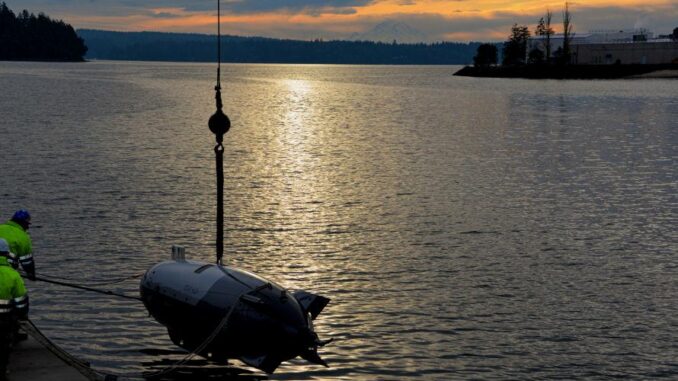
Unseen Dangers Beneath the Surface: The New Underwater Drone Threat
Recent advancements in underwater drone technology have transformed the landscape of maritime security. These autonomous or remotely operated devices now pose unprecedented risks to vital infrastructure such as ports, shipping lanes, and other critical maritime facilities. Their ability to silently approach, gather intelligence, or even launch attacks has prompted the Pentagon and UK defense agencies to innovate rapidly. The stakes are high, and the urgency to develop resilient countermeasure systems has never been greater.
Understanding Underwater Drones and Their Risks
Underwater drones, especially *unmanned underwater vehicles (UUVs)* and *unmanned surface vehicles (USVs)*, can operate stealthily across vast distances. They often incorporate sophisticated sensors, AI-driven navigation, and payloads capable of espionage or sabotage. Unlike traditional threats, these drones can deploy small-scale explosive devices, collect sensitive data, or disrupt port operations without immediate detection, making them a formidable foe in modern maritime security.
Furthermore, their versatility allows for deployment by state and non-state actors, increasing the complexity of defense. For instance, hostile nations could use underwater drones to monitor or attack underwater communication cables, vital for global internet connectivity, or target the ports of strategic allies.
Innovative Solutions: The US-UK Joint Effort
Recognizing the gravity of these evolving threats, the US and UK have launched a joint initiative focusing on integrated underwater security systems. This groundbreaking effort aims to develop an all-encompassing protective shield capable of detecting, identifying, and neutralizing underwater threats in real time.
This collaboration is driven by the Pentagon’s Defense Innovation Unit (DIU), which emphasizes deploying cutting-edge technology to meet future security challenges. The key goal is to create a comprehensive, scalable system that can be rapidly deployed in busy ports and along important maritime routes.
The REEF Project: Redefining Maritime Defense
The core of this innovation is the REEF project, a cutting-edge initiative designed specifically to shield ports and waterways from sophisticated underwater threats. REEF aims to deploy a network of smart sensors and autonomous detection units that work seamlessly to identify hostile underwater activity quickly and accurately.
These sensors are integrated with artificial intelligence (AI) systems capable of processing vast amounts of data in milliseconds. They can differentiate between hostile drones and benign marine life or commercial vessels, significantly reducing false alarms and increasing response accuracy.
Technologies Behind the Defense System
- Sensors & Sensor Fusion: High-resolution sonar and passive sensors establish a layered detection system that provides precise positioning and motion tracking of underwater objects.
- Active and Passive Sensors: Combining both techniques enhances detection range and sensitivity, making it possible to identify threats even in complex maritime environments.
- AI-Powered Threat Identification: Machine learning algorithms analyze sensor data, instantly classifying threats, and prioritizing responses based on risk levels.
- Decoys and Barriers: The system employs kinetic methods like smart nets, bubble screens, and synthetic barriers to neutralize threats without direct physical combat.
- Kinetic & Non-kinetic Neutralization Techniques: When necessary, the system escalates to acoustic energy blasts or physical disruptors to disable or reroute hostile drones.
Strategies for Threat Neutralization
The objective is to deploy non-lethal measures whenever possible, minimizing collateral damage and environmental impact. These include:
- Soft Kill Methods: Deploying entanglement nets, acoustic deterrents, or electromagnetic pulses to disarm or divert hostile units.
- Hard Kill Methods: Using underwater projectiles or active sonar to disable persistent threats when necessary.
This approach also emphasizes rapid response—ensuring threats are neutralized before reaching their targets, such as port infrastructure or shipping vessels.
Cost-Effective and Scalable Maritime Defense
One key advantage of the REEF system is its emphasis on cost efficiency. Instead of deploying expensive, manpower-intensive patrols, the system leverages automated sensors, AI algorithms, and modular decoys to provide a scalable solution adaptable to various maritime environments.
This setup is designed to be user-friendly, requiring minimal training for operators, which aligns with the project’s focus on ease of integration with existing naval command systems.
International Cooperation and Export Potential
Building on these technological advancements, the UK and US have negotiated mechanisms to facilitate exports and international sales. By simplifying export licensing and fostering multilateral collaborations, the goal is to develop a robust global maritime security market.
This cooperation not only enhances joint defense capabilities but also stimulates economic growth within allied nations, positioning the US and UK at the forefront of underwater defense innovation.
Future Directions and Challenges
While the REEF project represents a significant leap forward, there are ongoing challenges. These include adapting the system to different underwater terrains, ensuring cybersecurity resilience, and keeping pace with rapidly evolving drone technologies. Additionally, environmental concerns must be addressed, especially when deploying kinetic methods that might affect marine ecosystems.
Continued research and partnership expansion will be essential for refining these systems, ensuring they stay ahead of adversaries and maintain maritime superiority in an increasingly contested environment.
n