Introduction: A Sharp Look at the Most Elastic Moments of Cosmic Time
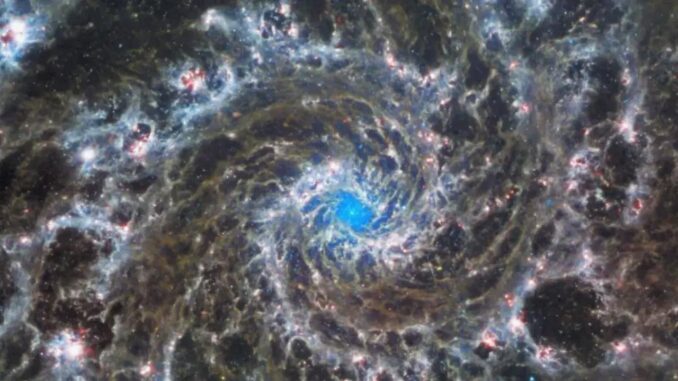
Today’s cosmic observations show us not only the existence of stars, but also the most dramatic cycles of the universe, from their birth to their death. The connection between the formation, life and death of stars is not just astronomy; It is also closely related to chemistry, physics and the fundamental rules that govern the energy of the universe. This article focuses on the birth of stars from gas clouds, the approximately 5 billion-year life cycle of medium-mass stars, the effects of supernova explosions on cosmic enrichment, and future scenarios of the universe. It also provides a deep perspective on the role of observational evidence, theoretical models, and innovative technologies in this field.
Birth of Stars: Jumpstart of Observers from Cosmic Gas Clouds
A star is born when a huge cloud of gas and dust condenses under gravity. This process begins within structures called nebulae, and as the core becomes denser, temperature and pressure increase. Hydrogen fuel and environmental energy flows accelerate the early stage, called the protostar. Triggering of nuclear fusion occurs at the center of the condensed matter; Thus, the young star begins its life as an energy-producing furnace. The critical factors during this period are gravity, gas density, and environmental heat flux. New stars pass the protostar phase and enter a super-stable state with the convection and radiative energy transport that occurs around the heated core. This transition is recorded as the first decisive moment of the young stars of the universe.
The First Main Phase of the Life Cycle: The Main Walk and Sustainability Principles
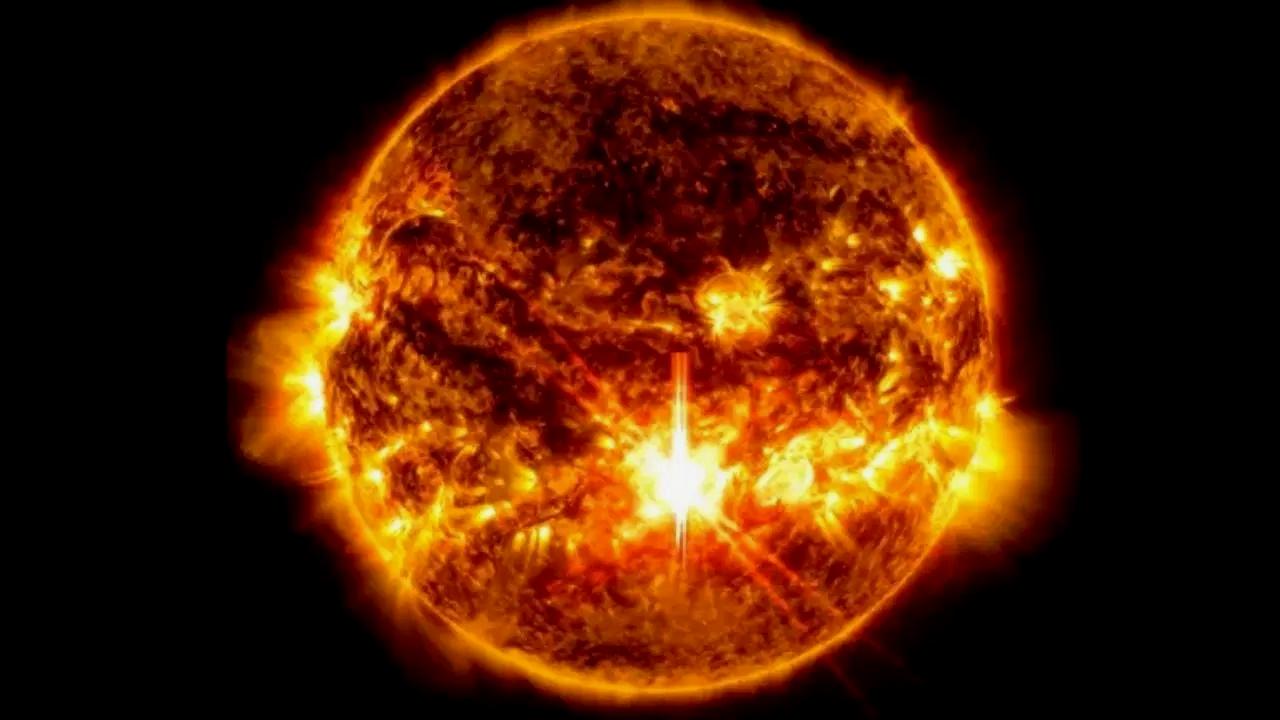
The life of stars follows various paths depending on mass. Medium-mass (G-type) stars produce stable energy for approximately 10 billion years and survive with a brightness like our sun. However, high-mass stars complete their evolution in a short time, over millions of years, and go towards a dramatic collapse and supernova. In this process, stars stop burning hydrogen and switch to helium and turn to fusion for heavier elements. In the final stage, high-mass stars scatter energy and matter into the universe in a powerful supernova; This explosion stands out as the fundamental process that enriches cosmic chemistry. Low-mass stars, on the other hand, transition to the red giant stage and release their outer layers into space; The inner core cools slowly into a white dwarf. These processes enable the proliferation of elements in the universe and the formation of new planetary systems.
Death of Stars and Cosmic Environmental Effects
The death of a star is not just the closure of that body; It means the restructuring of the cosmic environment. After reaching the red giant phase, low-mass stars shed their outer layers into space, leaving behind a white dwarf. High-mass stars, on the other hand, face an explosive fate; A supernova explosion releases large amounts of energy and heavy elements in a short time. This process may be accompanied by neutron star or black hole formation, which directly affects the structure of galaxies and galactic chemistry. The explosion clears the surrounding gas, triggering new star formation regions and providing rich material for planet formation. Thus, every death opens the door to new beginnings.
The Future of the Universe: Theories of Heat Death and the Big Freeze
The most widely accepted theory about the long-term fate of the universe is the heat death or Big Freeze scenario. As the energy density of the expanding universe decreases, conditions suitable for life gradually disappear. In the process, stars slowly disappear, fuels will run out, and everything else sinks into cold, dark silence. This scenario could last trillions of years, and some scientists predict an uncertain future. By Galli standards, institutions such as Radboud University suggest that the final end of the universe will take approximately 10^77 years; this indicates a period that exceeds human perception on cosmic time scales. However, this does not mean that the universe will come to a complete stop or that the structures within it will completely disappear; Some regions may show different evolutions under quantum effects and dark matter interactions.
Death of Stars on the Timeline
The predicted long path for a Sun-like star involves a transition from accretion to extinction in about 5 billion years. However, these processes extend over a very long time scale, depending on the energy balance of the universe. The stars we see in the night sky actually appear as current memories of events from the deep past of the universe. Observational data and modeling together show that stellar deaths are not just singular events, but cosmic cycles that play a fundamental role in the evolution of galaxies. Therefore, the dialogue between cosmology and astrophysics paints a clear picture on the cosmic timeline.
Euclid and James Webb: A New Generation of Observational Powers
In recent years, instruments such as Euclid and James Webb Space Telescope (JWST) allow us to more clearly capture cosmic events ranging from the formation of the universe to our daily lives. These instruments provide new data on star birth rates, gas charge behavior, and the evolution of cosmic gases. When combined with artificial intelligence and big data analytics, modeling of stellar life cycles becomes more precise and cosmic evolution scenarios become more reliable predictions. These technological advances lay the groundwork for innovative studies of cosmology and enable scientists to generate new hypotheses.
Content Strategy: Integration of Scientific Evidence and Theoretical Models
This article aims to provide a clear and applicable framework for the workings of the universe by bringing together observational evidence and theoretical models. Comprehensive topics that stand out are: the resolution of gas clouds, the protostar phase, fusion processes, supernova mechanisms, white dwarf and neutron star formations, the expansion of the universe and the decrease in energy density. In addition, predictable horizons and road maps for short-medium term studies are presented based on data obtained with advanced telescopes and surveillance techniques. The content progresses with a fluid logic: each chapter naturally triggers the next subtopic and carries the reader to a deeper understanding. This approach leverages the interaction between remote sensing, mathematical modeling and observational data.
Note: The text is written in an original style and does not contain direct quotes from other sources; scientific terminology has been transformed into a fluid narrative and is not SEO focused.